Why This Fails Locally
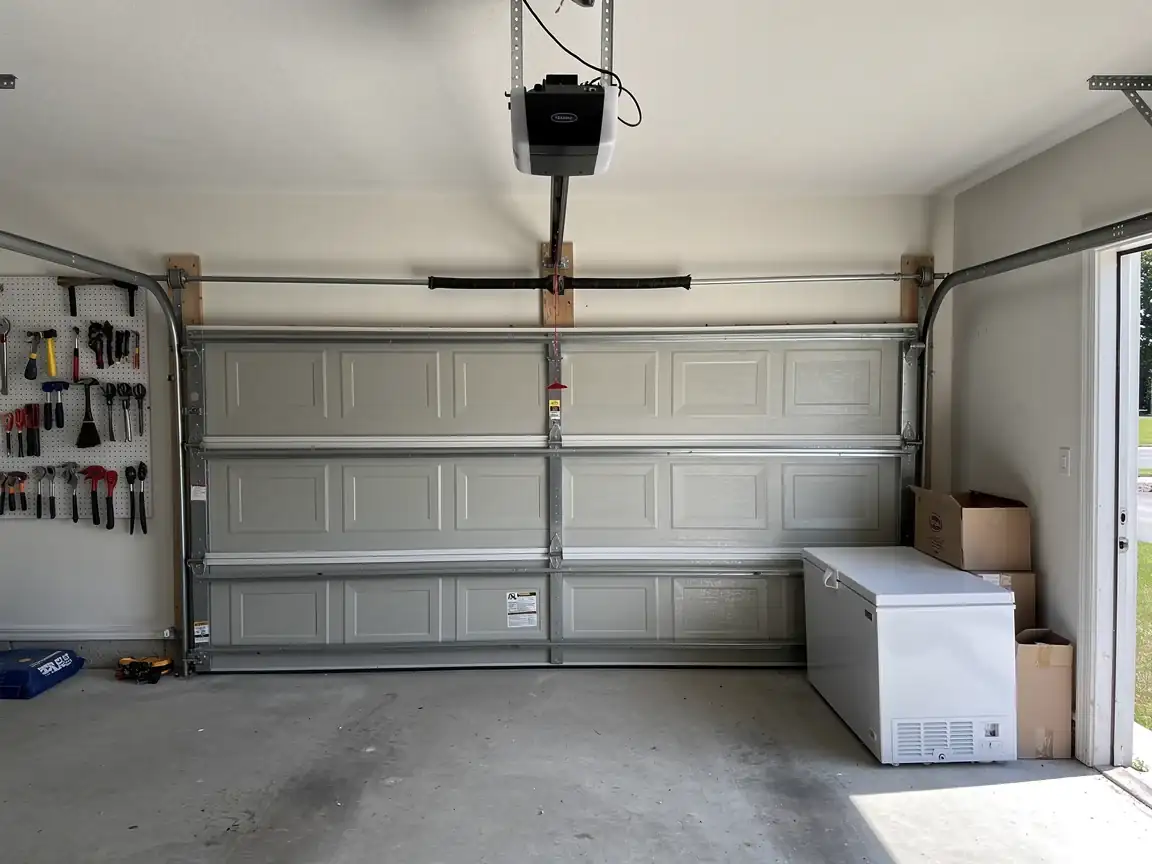
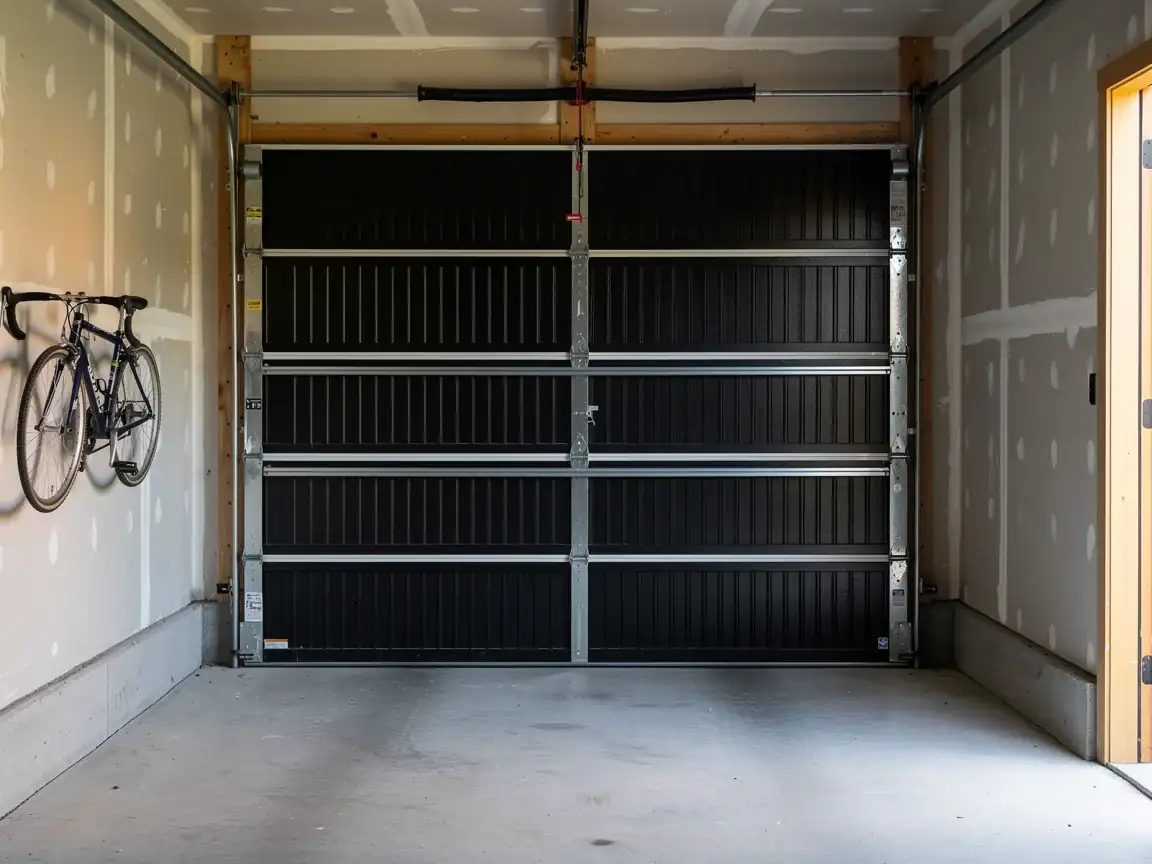
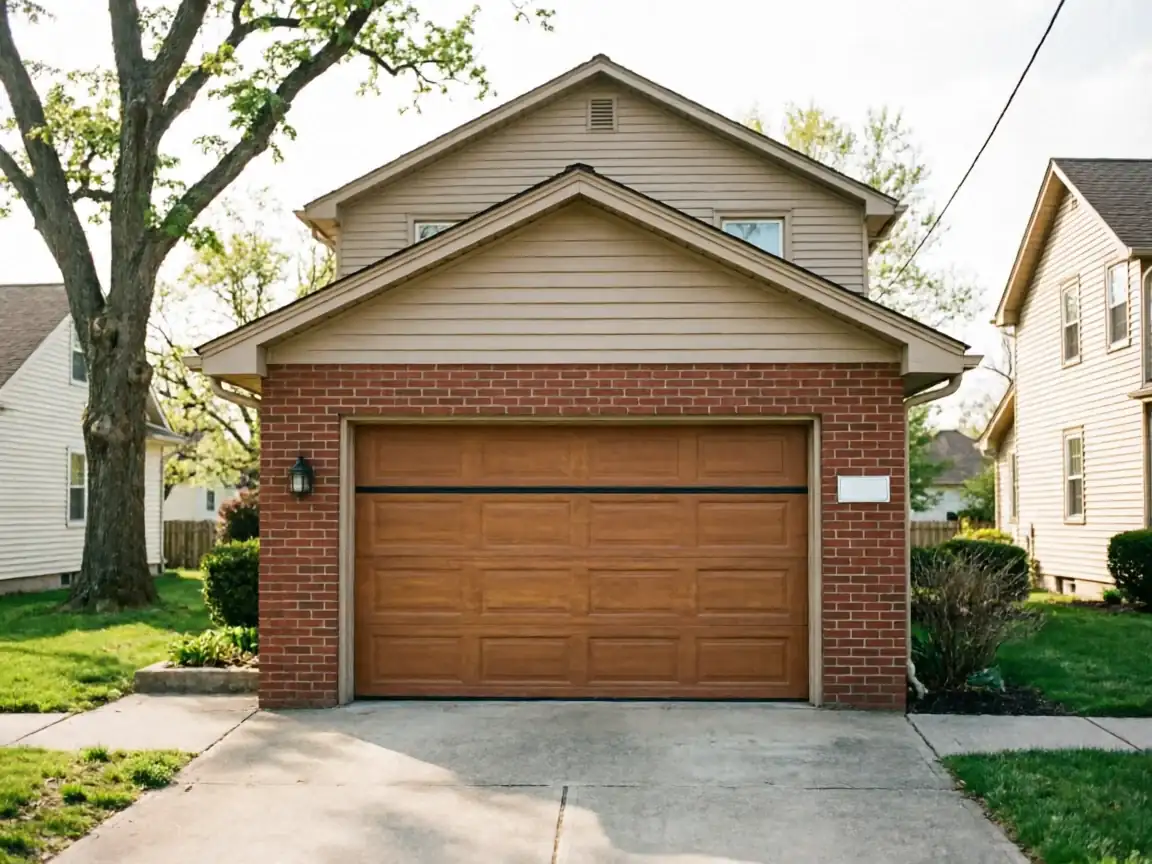
Most houses in Harwood went up around 1986, a decade before the broader Fargo service area's median year of 1999. That gap matters because the torsion spring hardware standard on doors in the mid-1980s was often sized light for a single spring on a 16-foot double door, a setup builders used to save cost and that was common for that decade before heavier insulated doors became standard. Thirty-plus years of winding cycles on a spring built that light wears it out faster than a correctly-sized pair would. Layer on the climate band here, which sits in the severe-cold range for the region, and you get steel that's already fatigued from undersized loading now also cycling through hard freeze-thaw swings every winter. Cold steel is less forgiving of fatigue cracking than steel at room temperature, so a spring that might have had another season left in a mild climate often doesn't here. That combination - original-era hardware plus winter stress - is why spring failures in Harwood tend to cluster on the same vintage of door rather than showing up at random.
Doing It Yourself
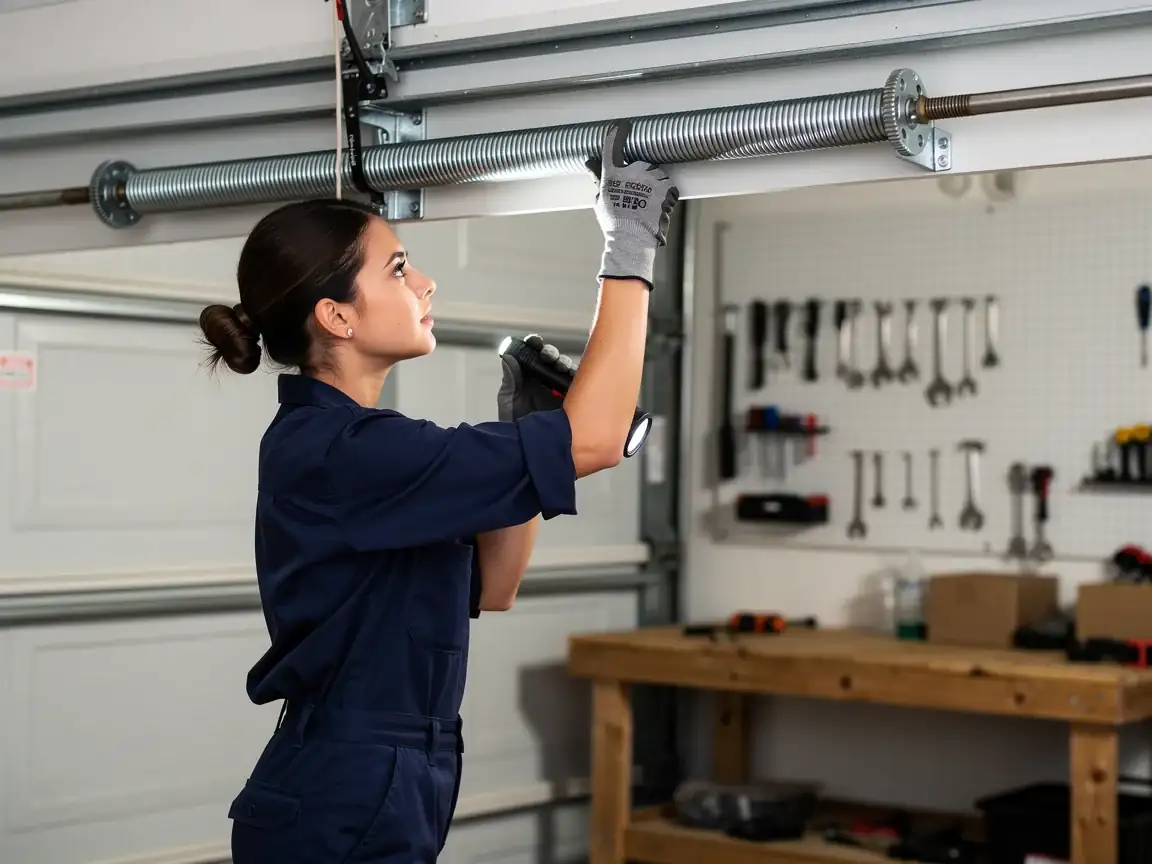
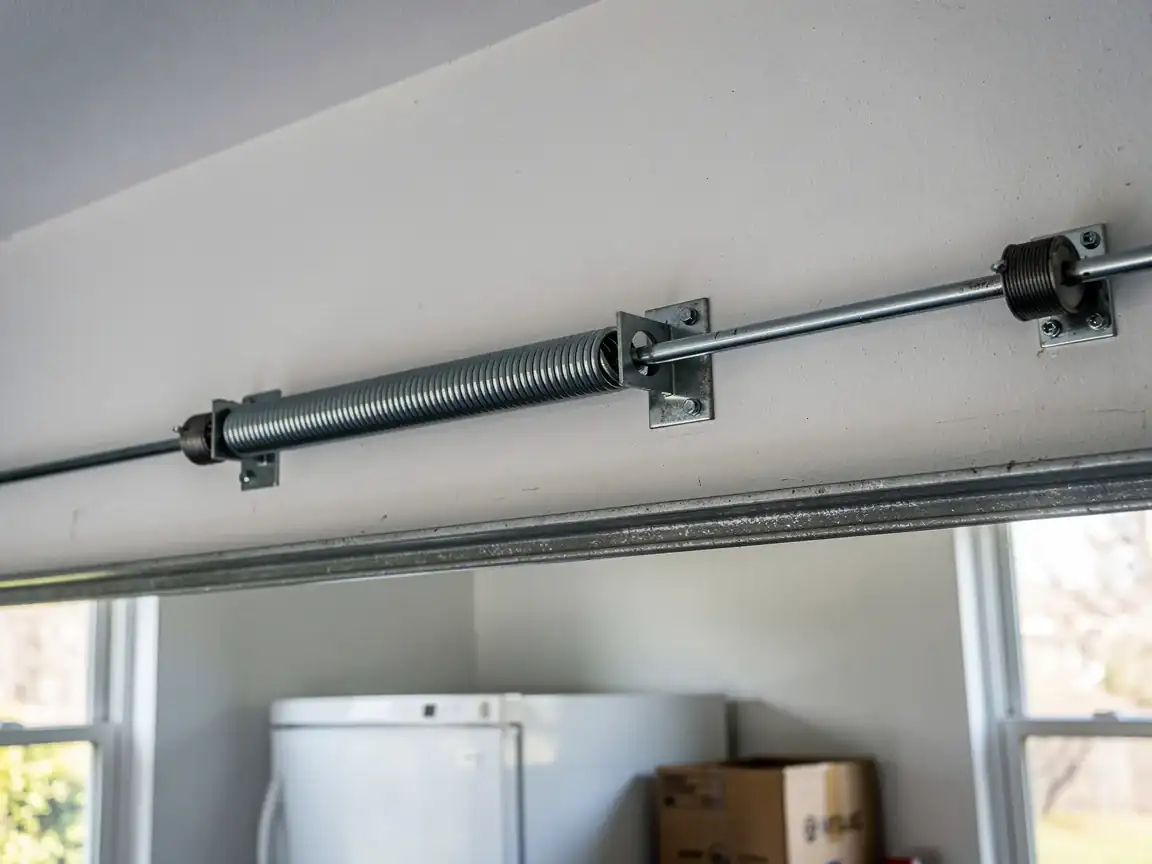
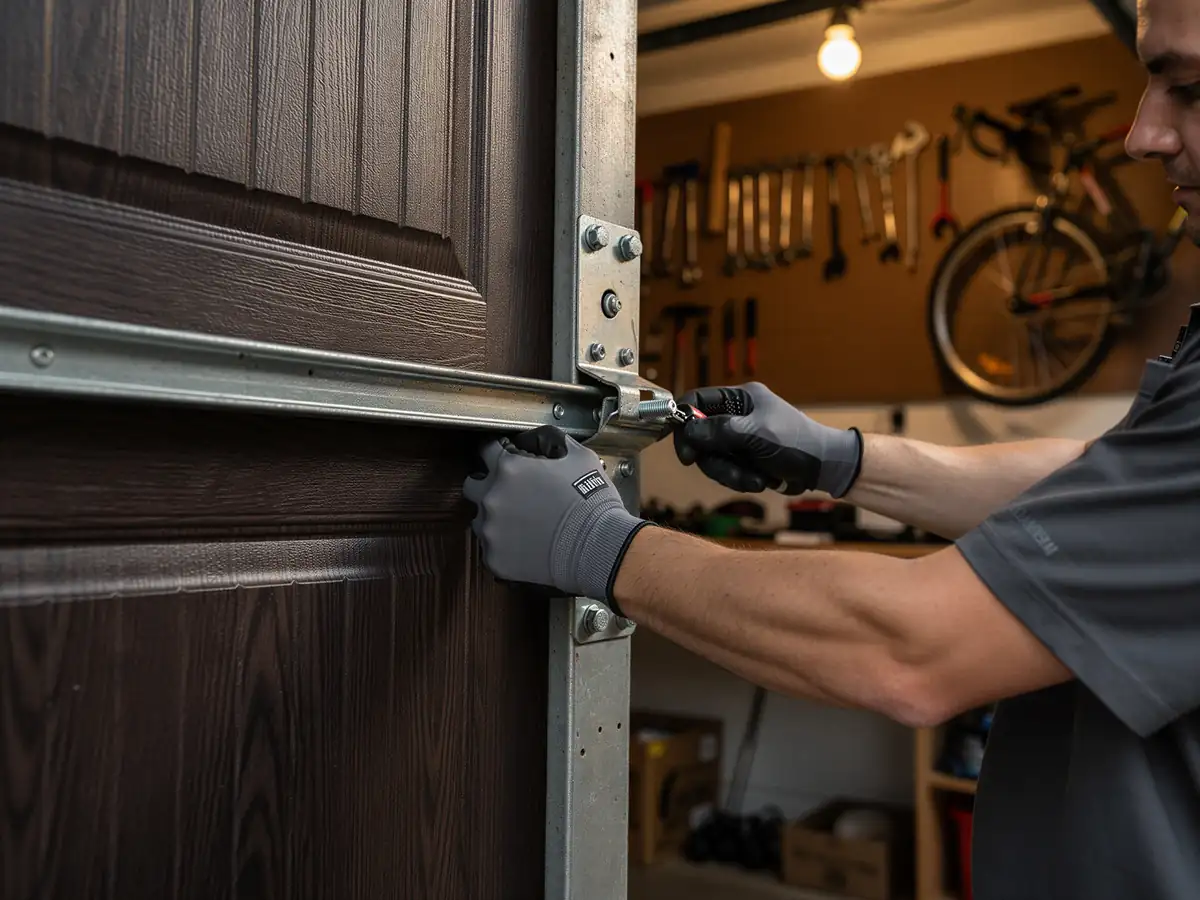
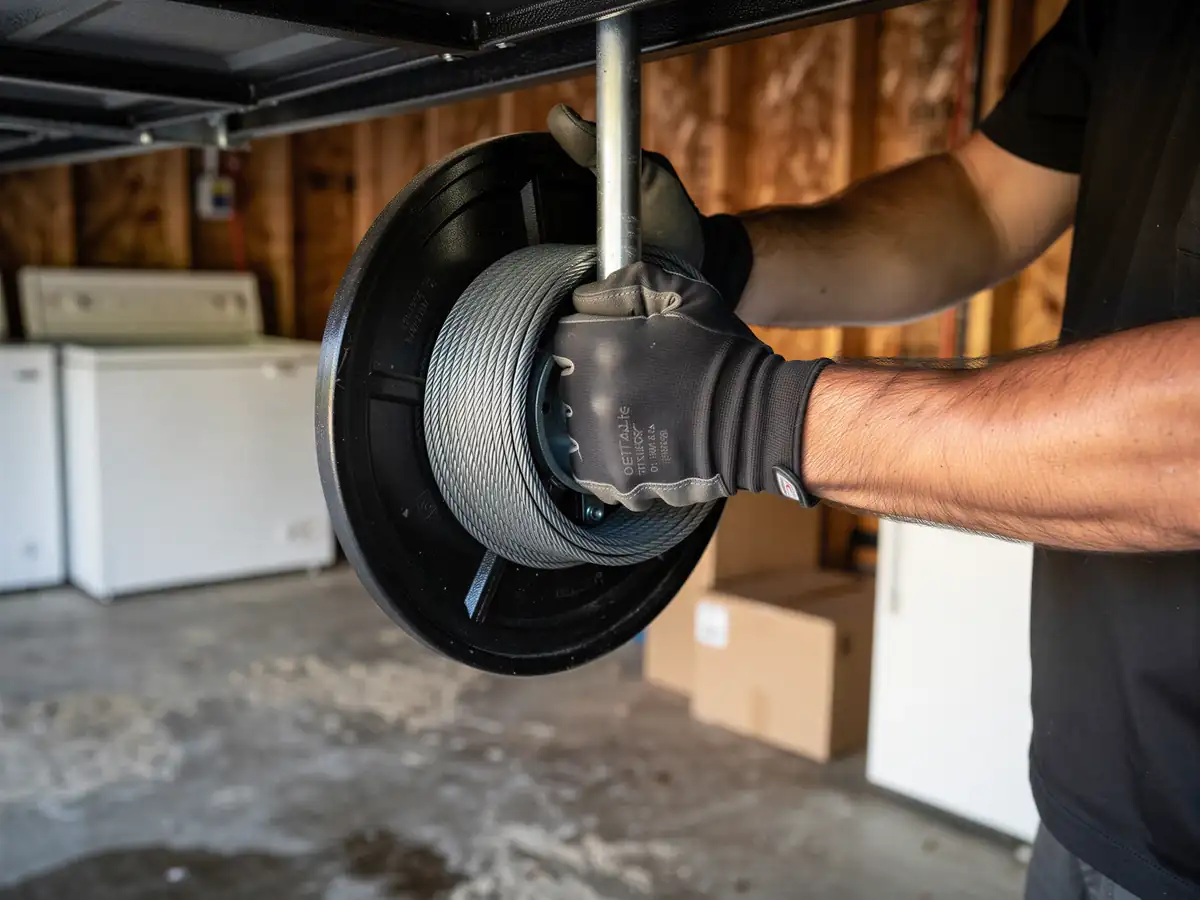
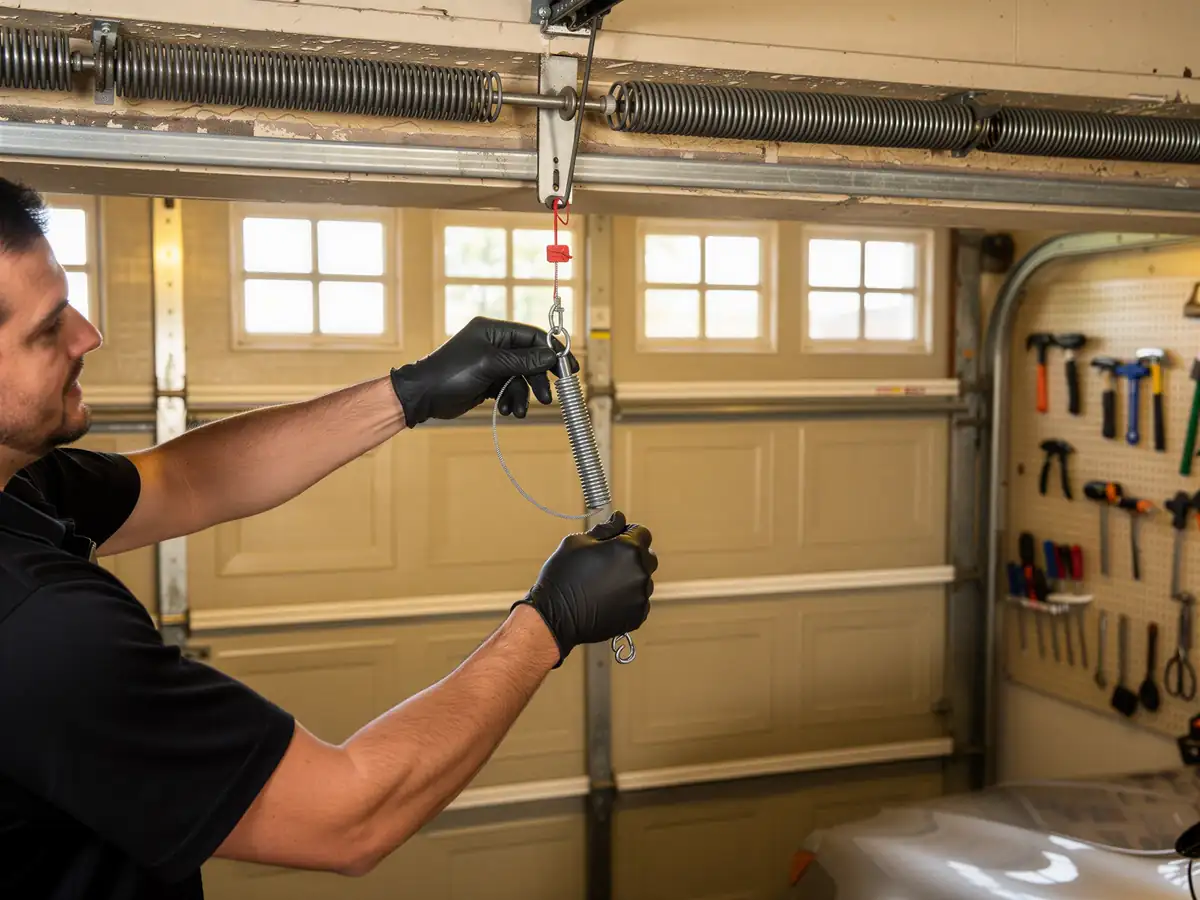
We'll be straight about this one: don't wind or unwind a torsion spring yourself. The forum advice about using a pair of screwdrivers instead of winding bars, or skipping the vice grips that lock the bar in place, is how people end up in the emergency room. What you can safely check yourself is whether it's actually the spring. If the door feels heavy to lift by hand with the opener disengaged, or you see a visible gap in the coil above the header, that's a spring. If the door runs but is noisy, jerky, or off-track, that's usually a roller or cable issue, not a spring, and worth mentioning when you call so the right parts come out on the truck. Extension springs - the kind mounted along the horizontal tracks rather than over the header - are a different animal and a smaller share of what we see in this housing vintage, but they're even less forgiving to diagnose without experience, since a worn safety cable on one of those is easy to miss.
The Symptom
A torsion spring failure almost always announces itself with a bang - a loud crack from the garage, often first thing on a cold morning, that sounds more like a gunshot than a mechanical fault. After that, the door either won't budge when you pull the release cord, or the opener strains and groans trying to lift weight the spring used to carry. Sometimes one side of a double-spring door drops lower than the other, which tells you one spring's gone while the other's still holding. Less dramatic failures show up as a door that's just gotten harder to lift by hand over a few weeks, which usually means a spring that's losing tension rather than one that's already snapped. Either way, once you hear that crack or feel that weight change, stop using the opener until it's looked at - running a garage door opener motor against a dead spring is the fastest way to burn out the opener on top of the spring repair.
See our Harwood garage doors page for other common issues on this vintage of door, or the Fargo spring repair page for how this job works across the rest of the service area.