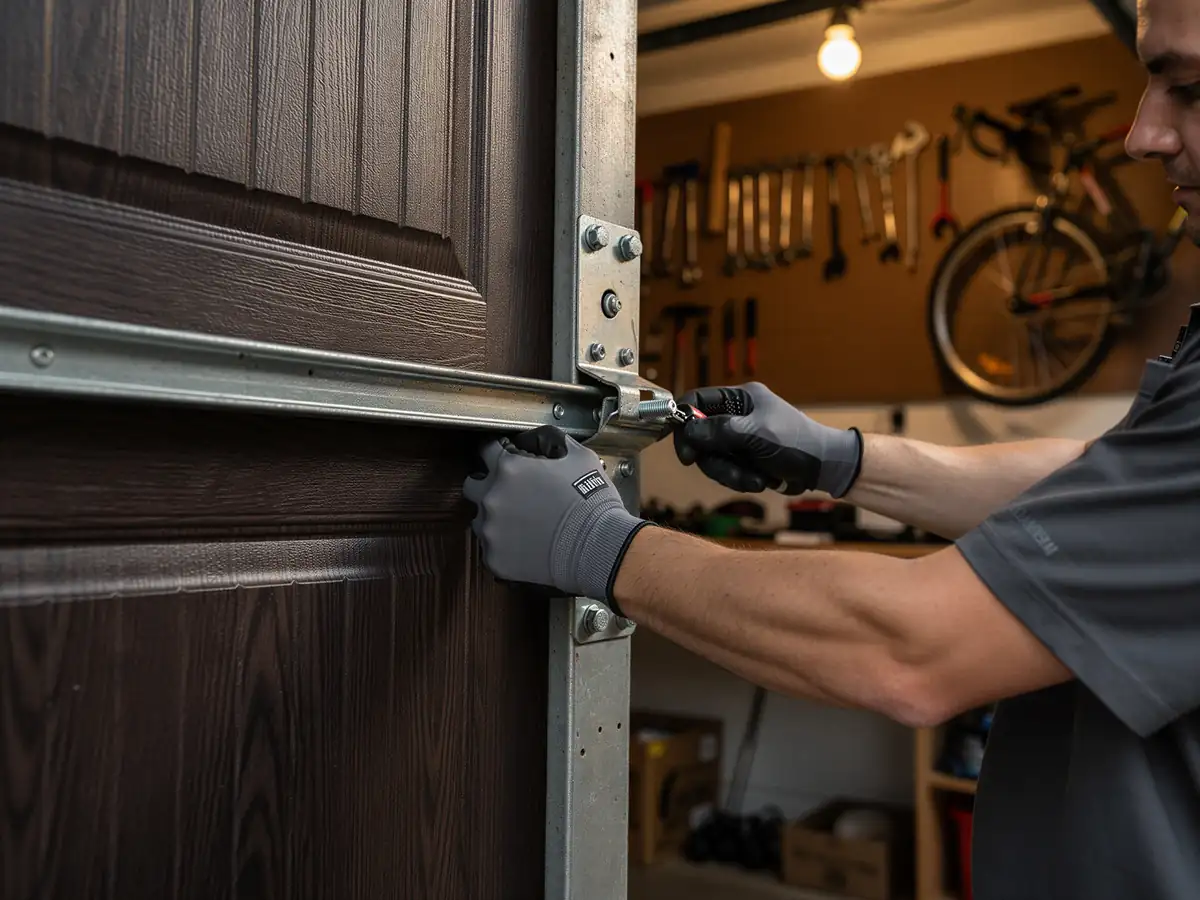
The Symptom
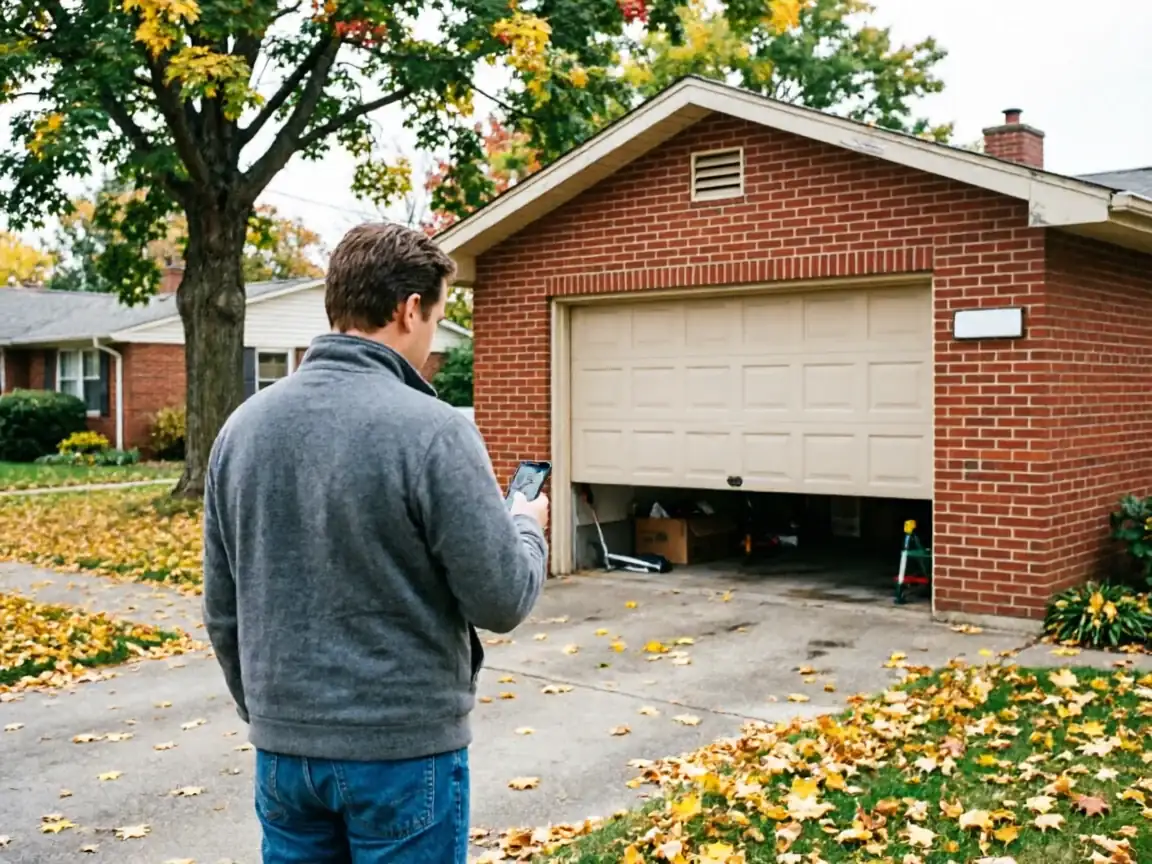
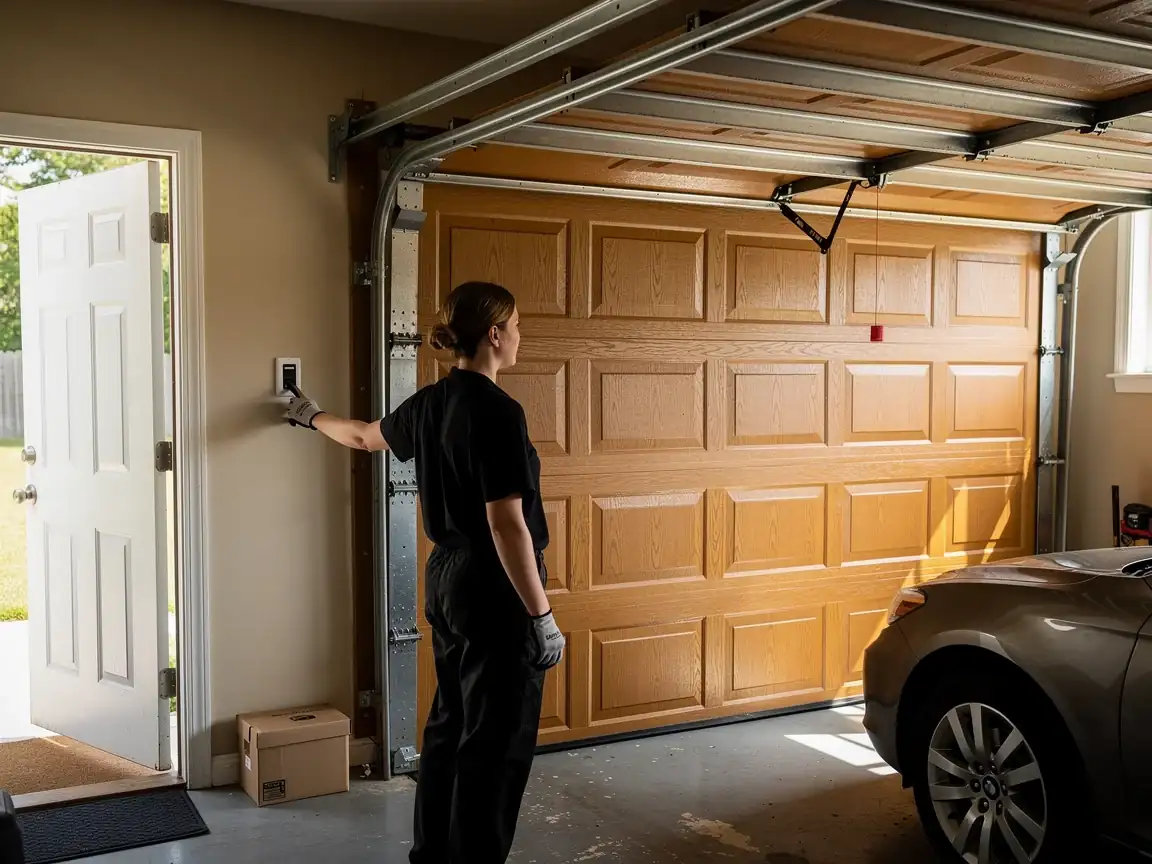
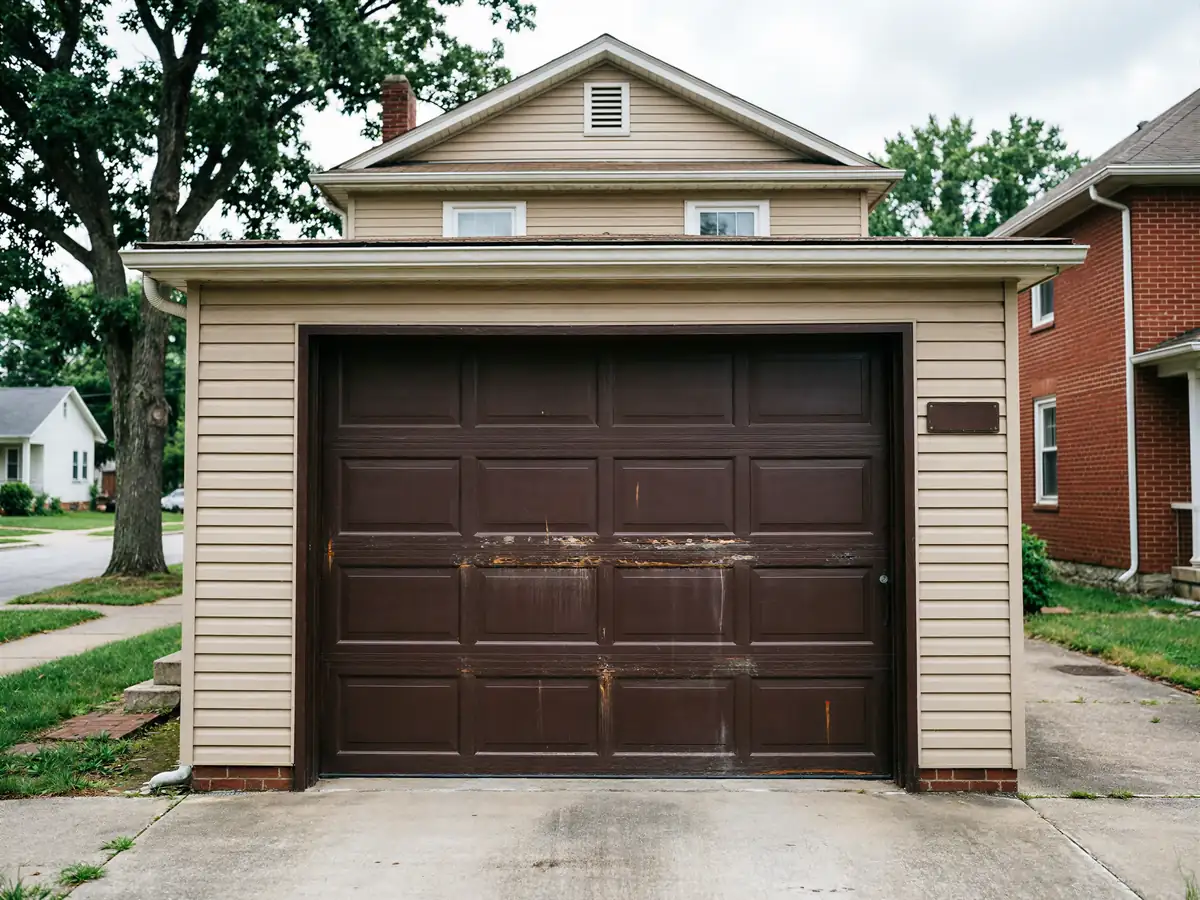
The door hesitates halfway up, or it reverses right after the opener tells it to close
Sometimes it's a grinding noise from one side of the track, or the whole panel shudders instead of sliding smooth. A lot of Fargo homeowners notice it first in late fall, when the garage goes from 60 degrees to well below freezing almost overnight. The door worked fine in September. By November it's fighting you every time.
This isn't usually one single part failing all at once
It's grease gone stiff, a roller that's been slightly out of alignment for months, or a spring that's been losing tension slowly since summer. Cold just takes whatever was marginal and makes it obvious. If your door is doing this on a day the temperature dropped fast, that timing is the clue, not a coincidence.
Why This Fails Locally
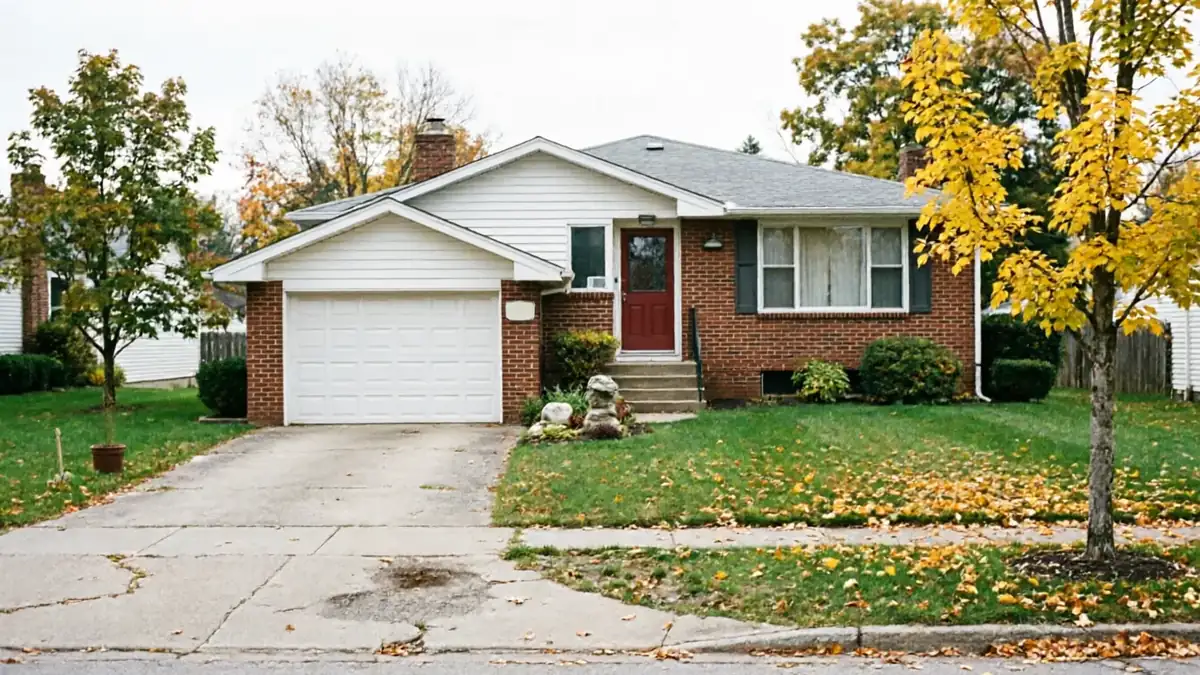
Most of the housing across this service area went up between 1969 and 2006, with a lot of it concentrated in the 1980s and 90s across the seven neighborhoods we work in regularly, including right near us. Doors and openers from that build era used lubricants and steel hardware that weren't spec'd for the kind of severe cold Fargo gets most winters. Grease that was fine in a showroom in Minneapolis turns to paste at negative 10.
Steel contracts in the cold too. Torsion springs lose a measurable amount of lifting power once the temperature drops hard, and tracks that were bolted level in July can be a hair out of square by January as the slab and framing shift. On a newer door this might just mean a slightly louder cycle. On a door installed during that 1969-2006 build window, with original rollers and a spring that's a few years past where it should've been replaced, that small shift is enough to cause binding, reversal, or a snapped cable. It's a mechanical problem that the climate band here turns into a seasonal one.
How Long It Takes
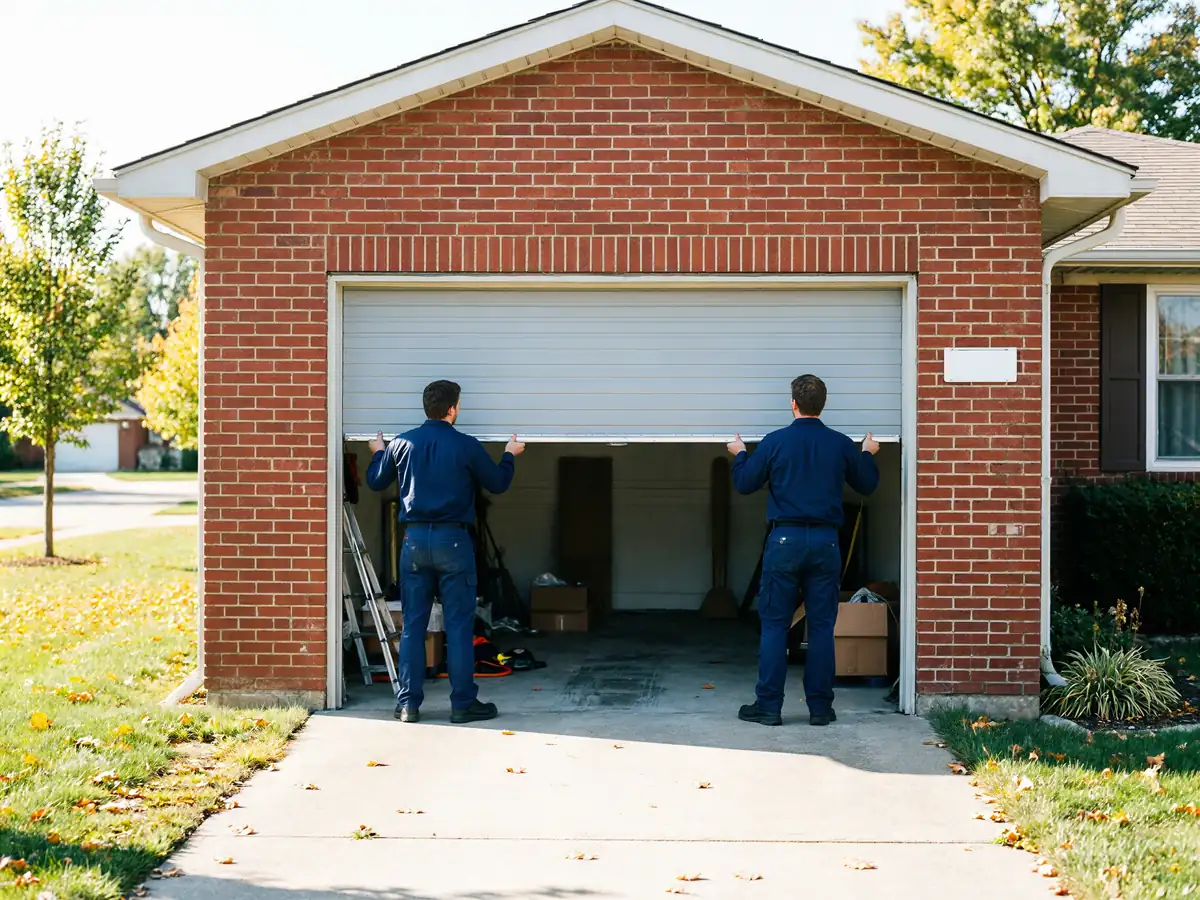
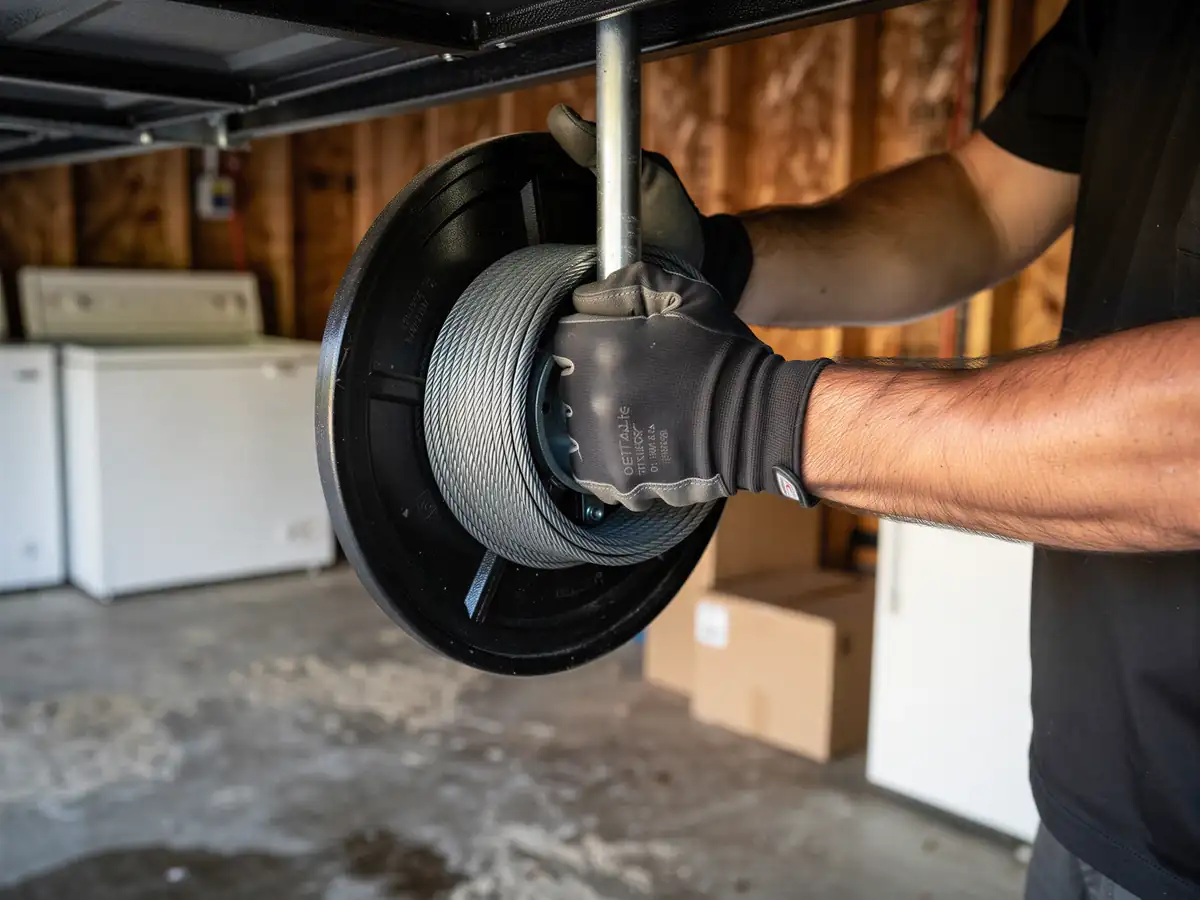
A straightforward spring replacement or roller swap on a standard residential door usually gets done in a single visit. If the issue is a bent track or a cable that's come off the drum, that's also typically a same-visit fix once we're on site and can see the actual damage.
Where it takes longer is when the opener itself needs replacing, or when the door has been forced hard enough that the frame or a panel is bent out of true. Those jobs sometimes need a part ordered in, which can add a few days depending on what's in stock. We'll tell you straight on the first visit whether we're looking at an hour of work or a return trip - we're not going to guess and have you wait around for nothing.
Doing It Yourself
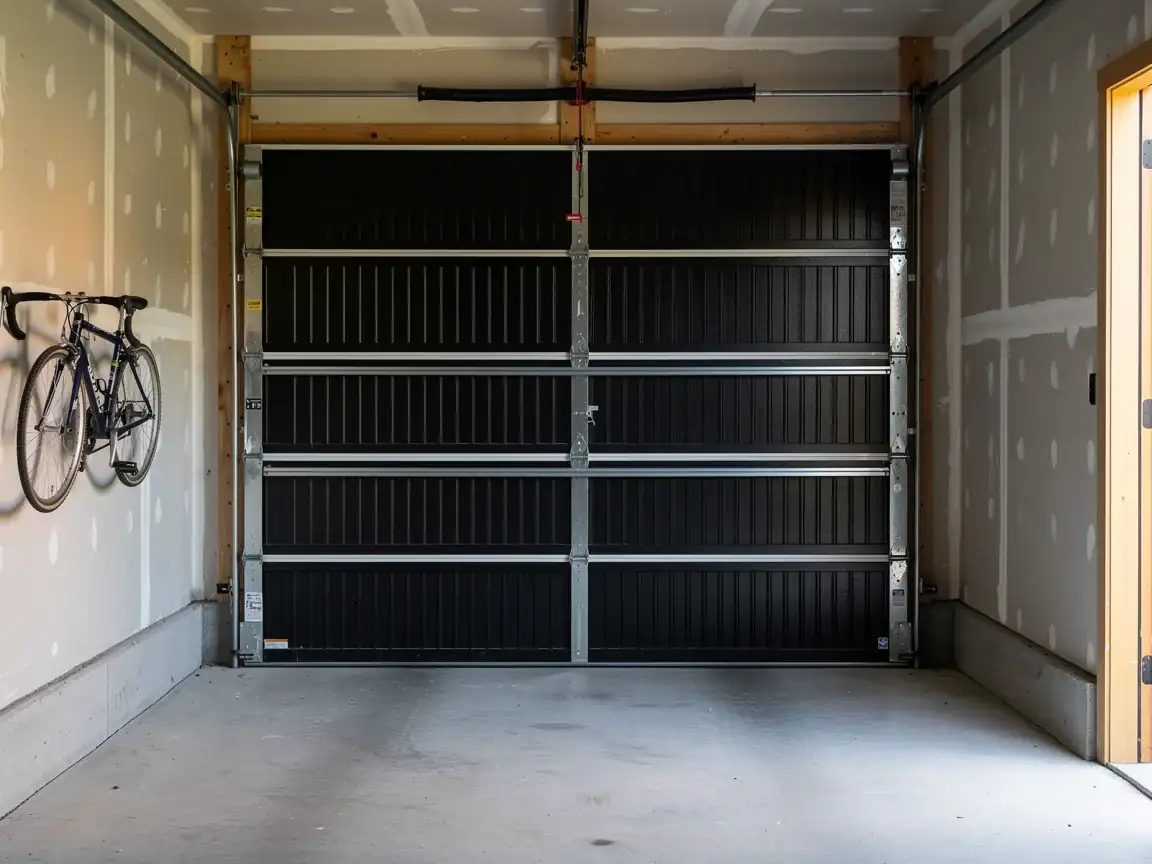
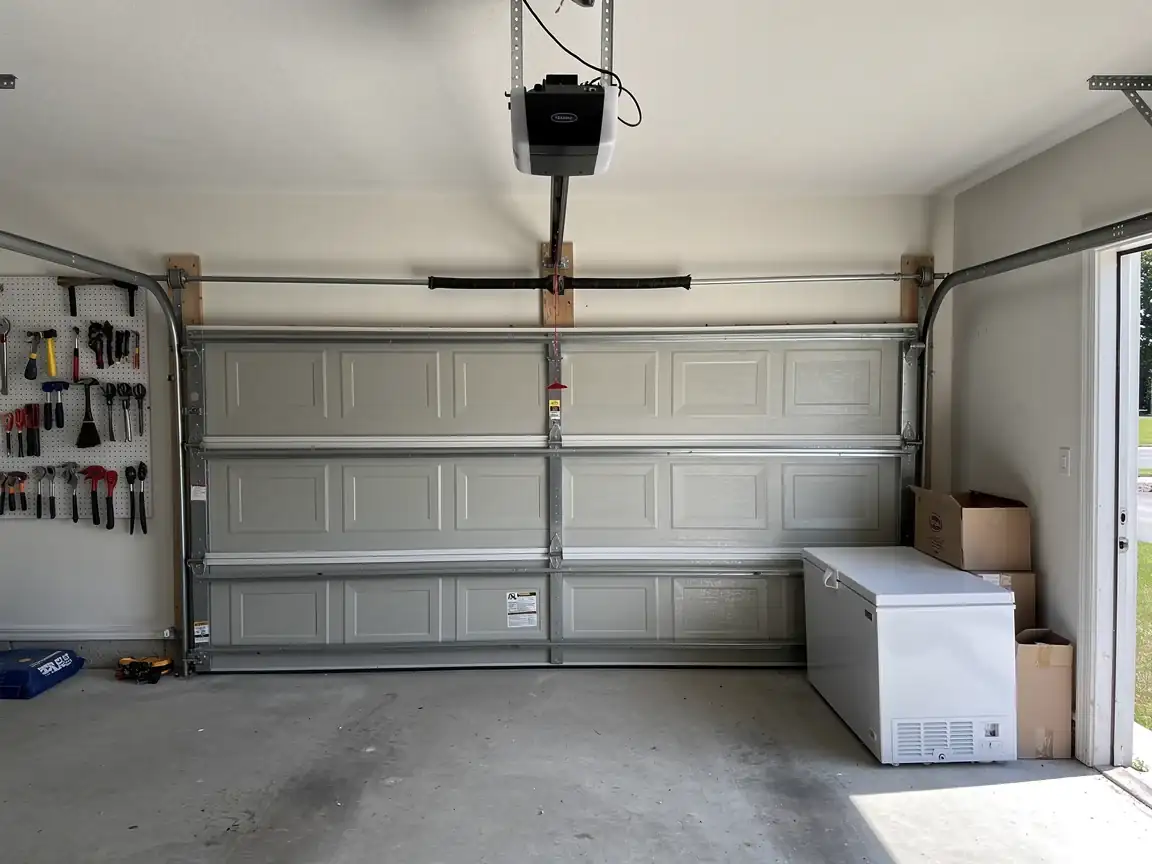
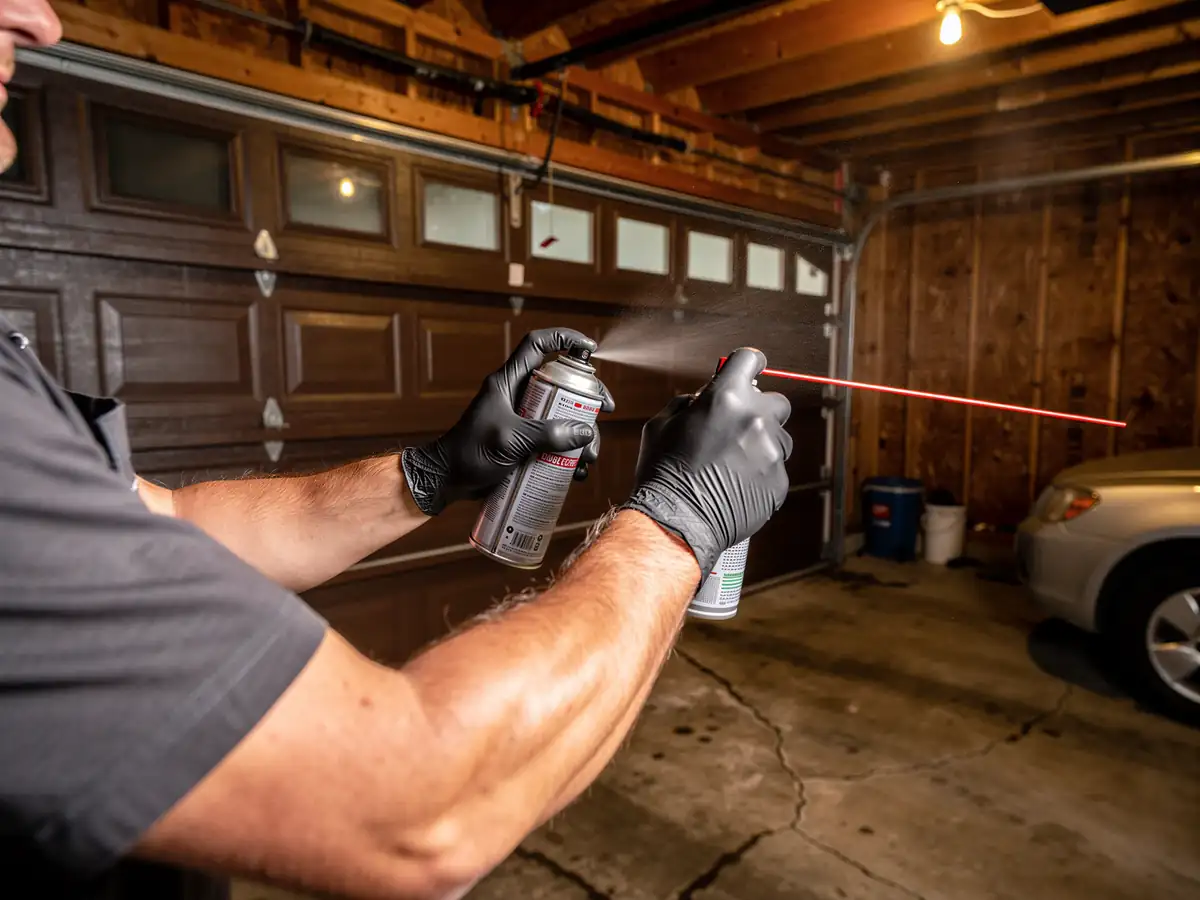
Lubricating the track and rollers with a garage-door-rated silicone spray before winter sets in is worth doing yourself
And it's cheap insurance given how common cold-stiffened hardware is in this area's older stock. Tightening visible bolts on the track brackets is fine too, as long as the door is down and the opener is unplugged.
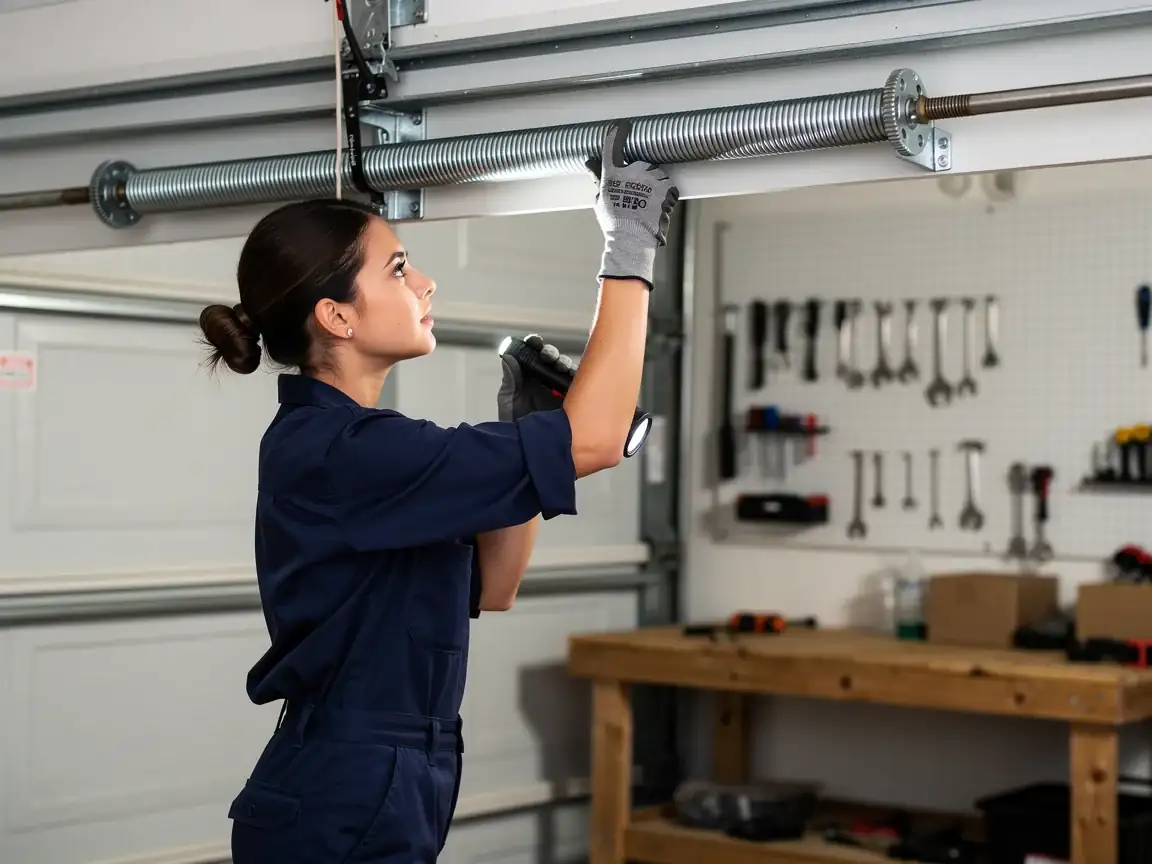
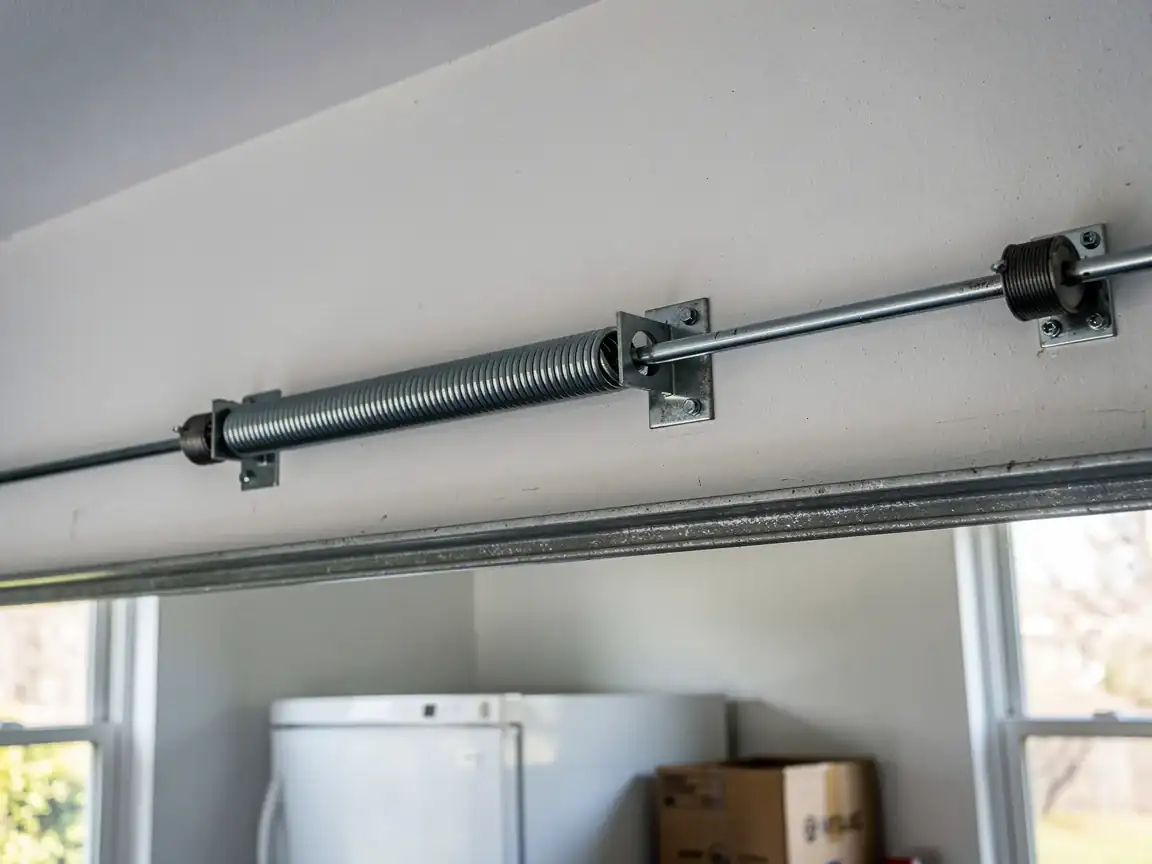
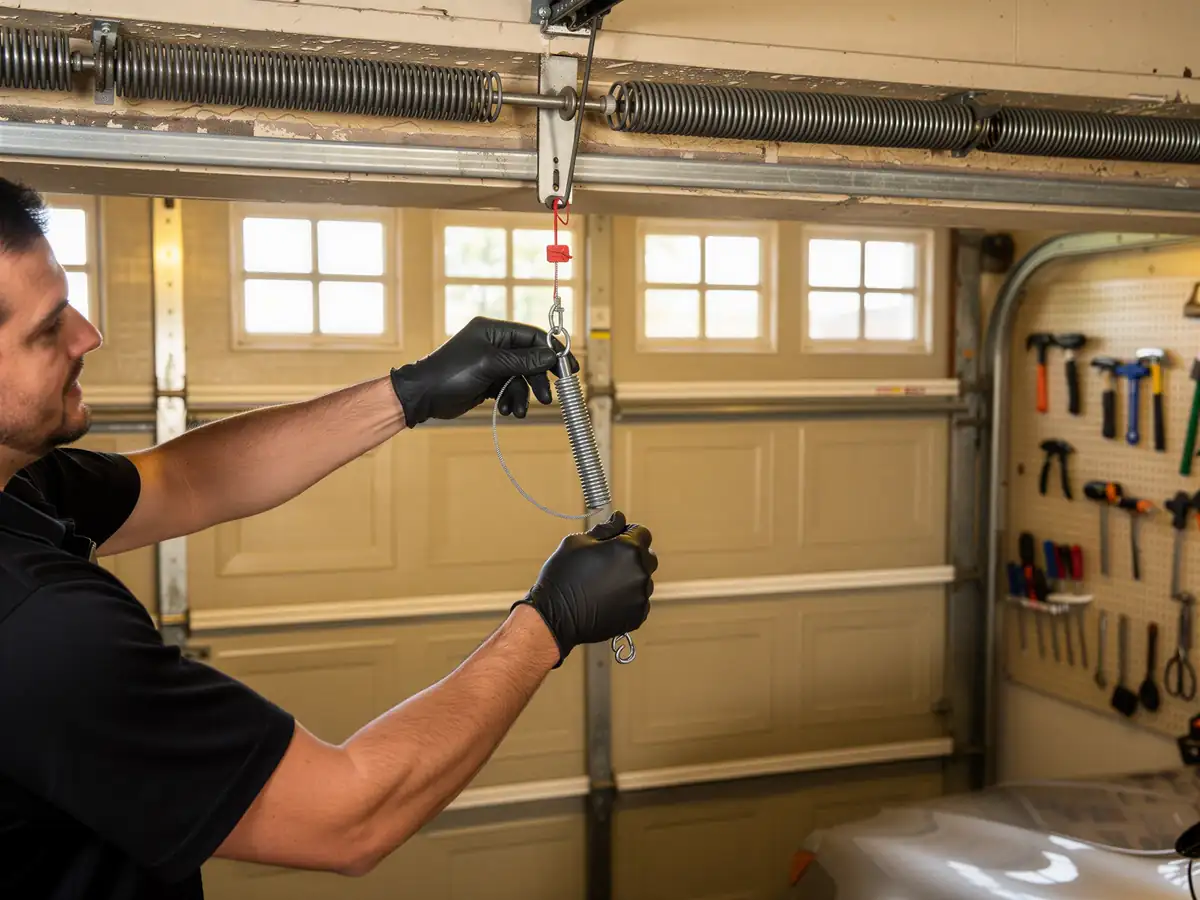
What you should not touch is the torsion spring
It's under enough tension to cause a serious injury if it lets go while you're working on it, and that's true no matter how simple the adjustment looks. If your door is heavy to lift by hand with the opener disconnected, or if a cable looks frayed, that's a call for us, not a weekend project. We'd rather tell you that upfront than have you find out the hard way.