What the Repair Takes
Harwood sits 8 miles out from Fargo
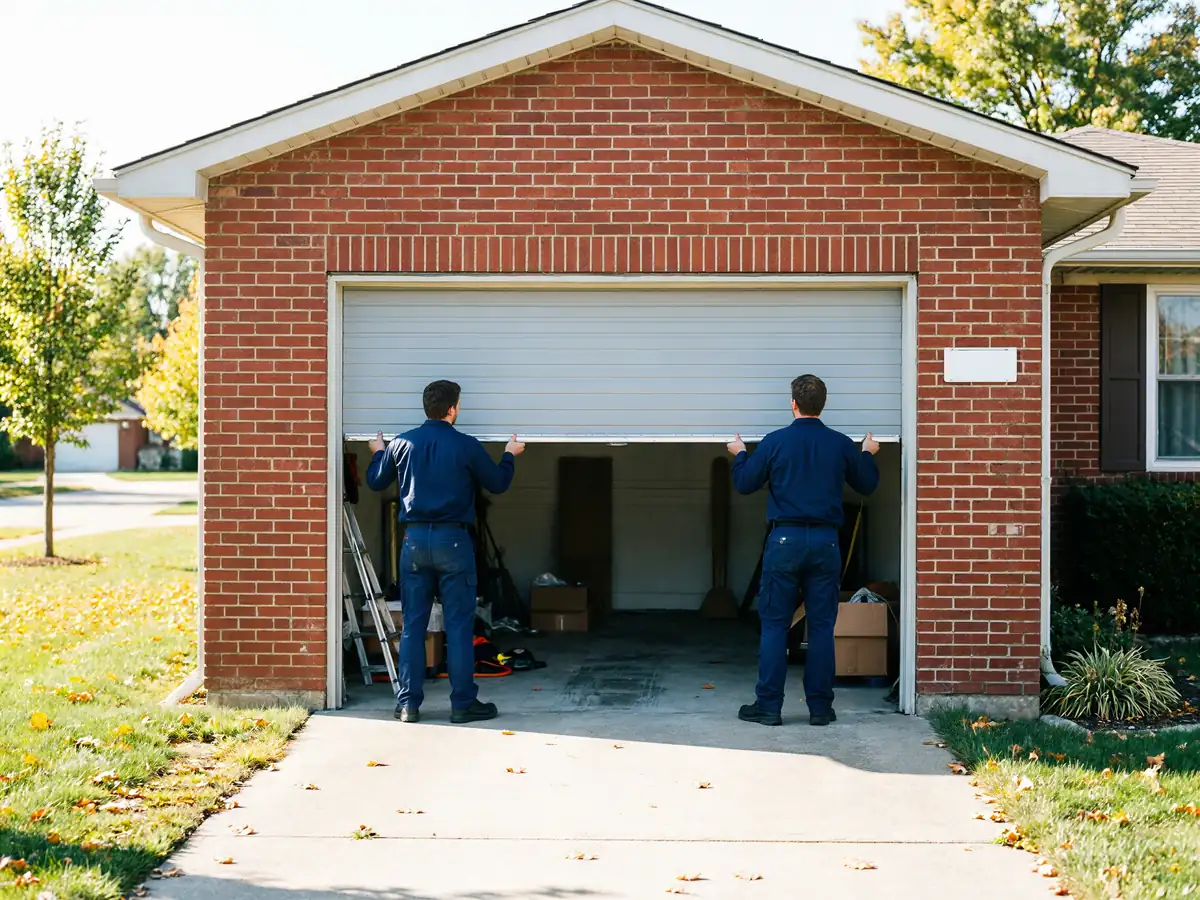
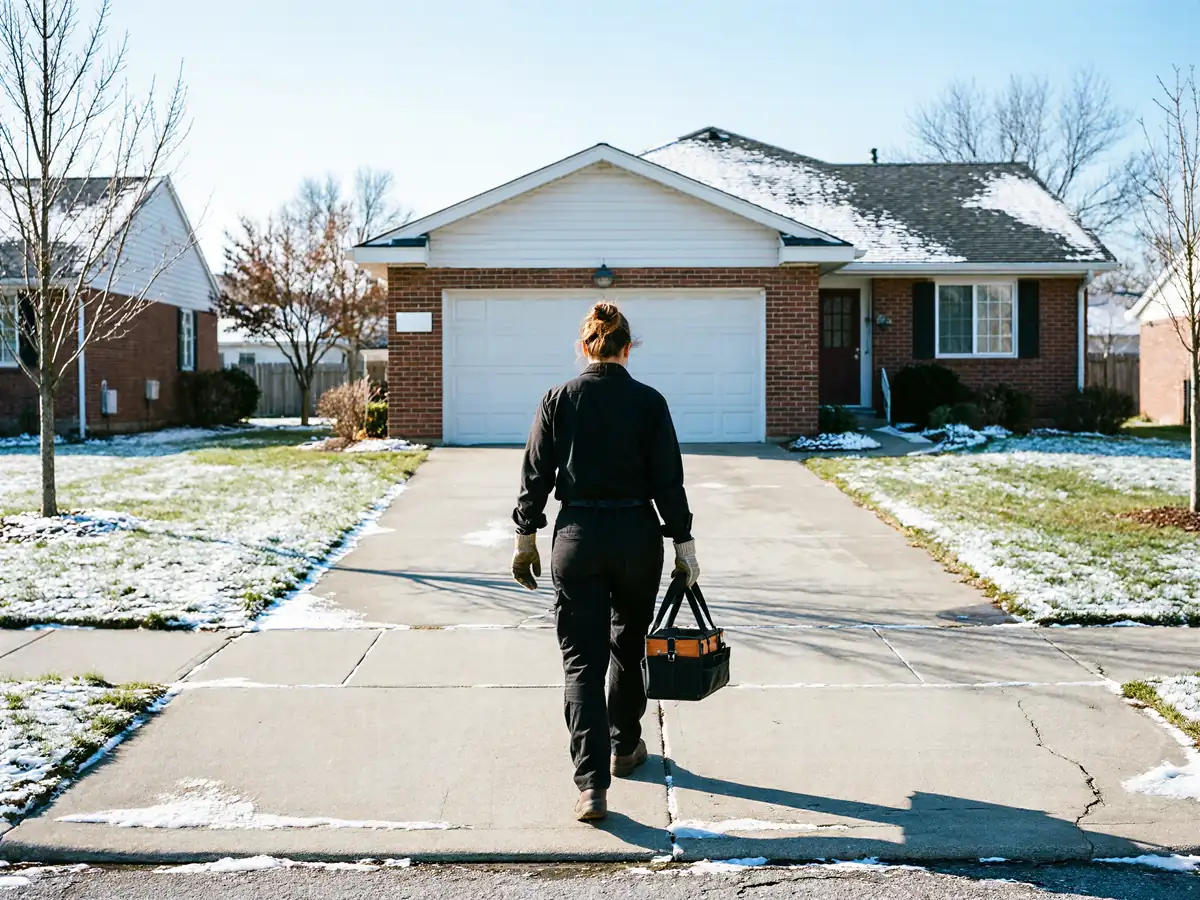
Which means a repair call here isn't a quick trip across town - it's a drive, and that shapes how the job gets scheduled and what goes on the truck before it leaves. We load for what the housing stock actually needs rather than guessing once we're on site, because driving back for a part nobody expected wastes half a day on either end.
- 8 miles
With roughly 248 households in Harwood, this isn't a market with dozens of garage doors failing on any given week
It's a smaller pool, and that matters for how we plan: fewer calls, each one worth getting right the first time, with the correct spring size and bracket already in the van instead of ordered after the fact. A torsion spring snapped on a double door, a bent track from a backed-into panel, a dead opener board - the fix itself is standard trade work. What changes with the drive is the prep before the truck ever leaves Fargo.
- 248 households
We don't keep a branch or a counter in Harwood
Every job here is dispatched from Fargo, and the quote you get accounts for that distance rather than pretending it doesn't exist.
Why This Fails Locally
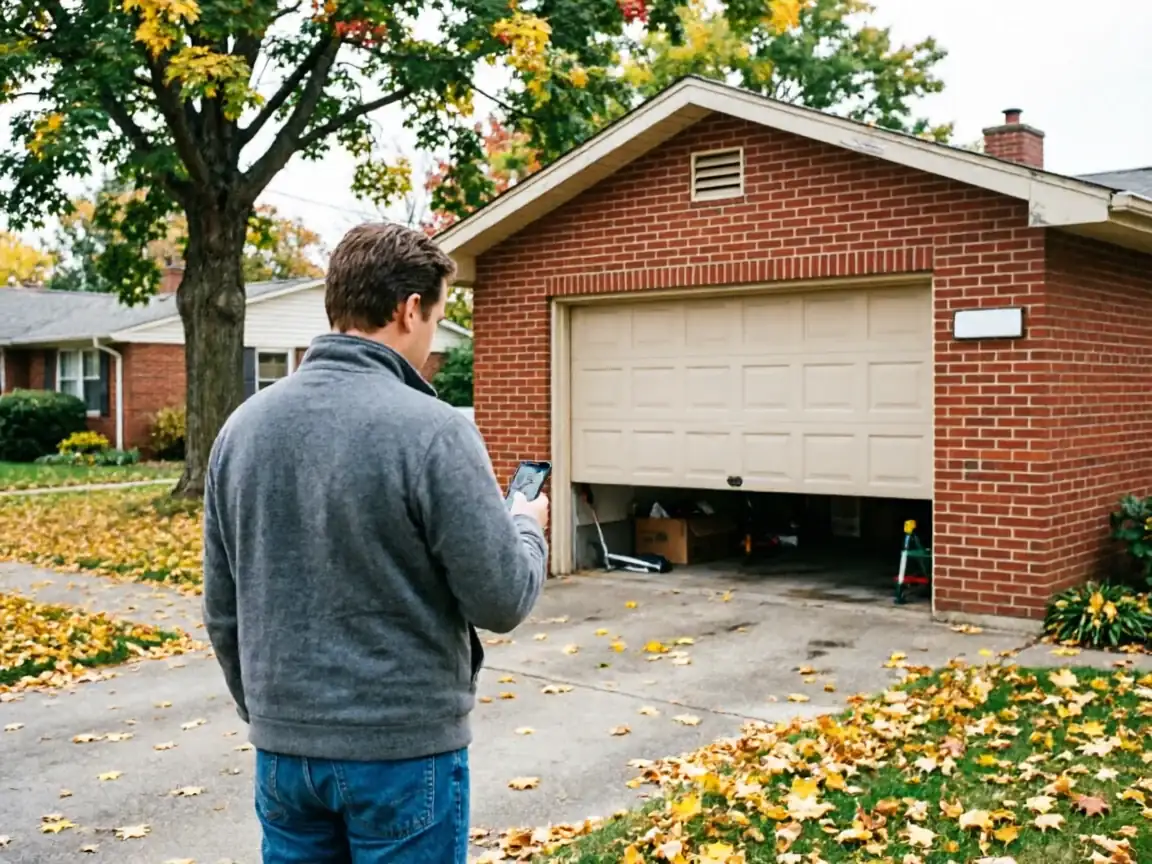
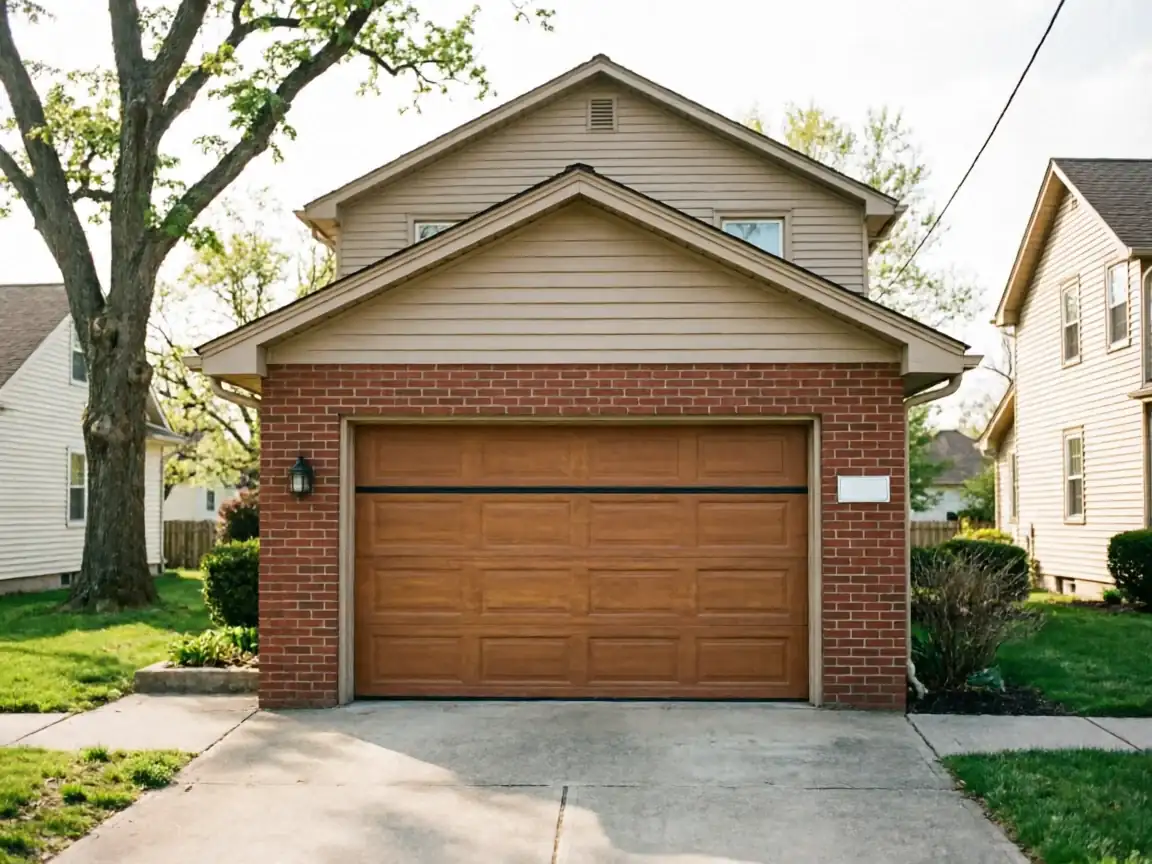
The median year built in Harwood is 1986, which puts a good share of its garage doors and openers well past the point where the original hardware is still serviceable. That's older than the broader service area's 1969-2006 range with a median around 1999 - Harwood's stock leans earlier, closer to the first wave of chain-drive openers and steel springs that were never built to run thirty-plus years without a rebuild.
Cold is the other half of it. This area sits in a severe cold climate band, and a door that's fine in August can bind hard in January as grease stiffens in the torsion spring and the track metal contracts just enough to throw rollers off their path. On a 1986-era door, the steel has already fatigued from three decades of that same cycle, so the first bitter week of winter is often when a spring that was close to failing finally lets go.
The combination - older hardware plus hard winters - is what actually drives the failure, not general wear. A door built in the 2000s handles that stress differently than one installed when Reagan was in his second term.
Doing It Yourself
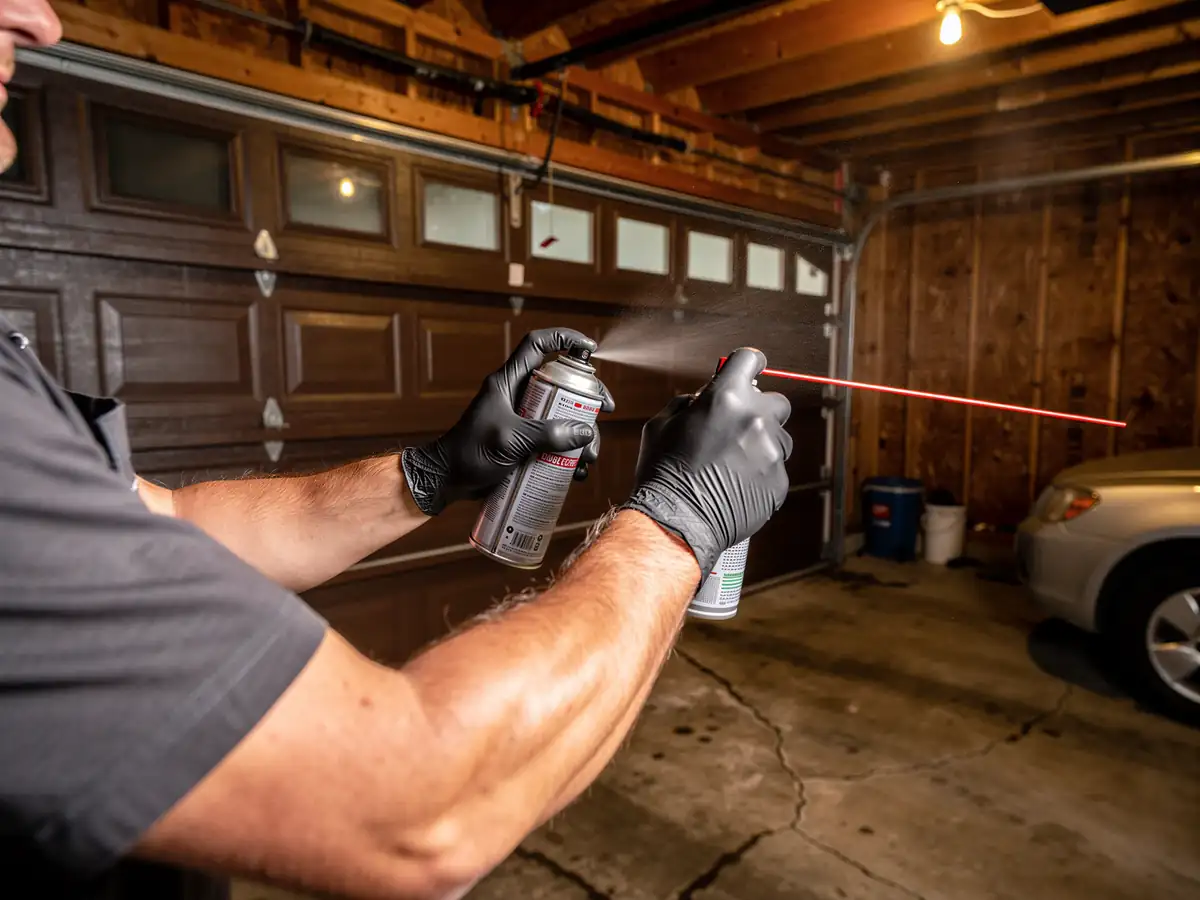
Some of this you can do yourself. Lubricating rollers and hinges, tightening loose bolts on the track, checking that the photo-eye sensors are aligned and clean - none of that needs a truck to show up. If your door is noisy but still moves evenly and closes flush, that's maintenance, not a repair call.
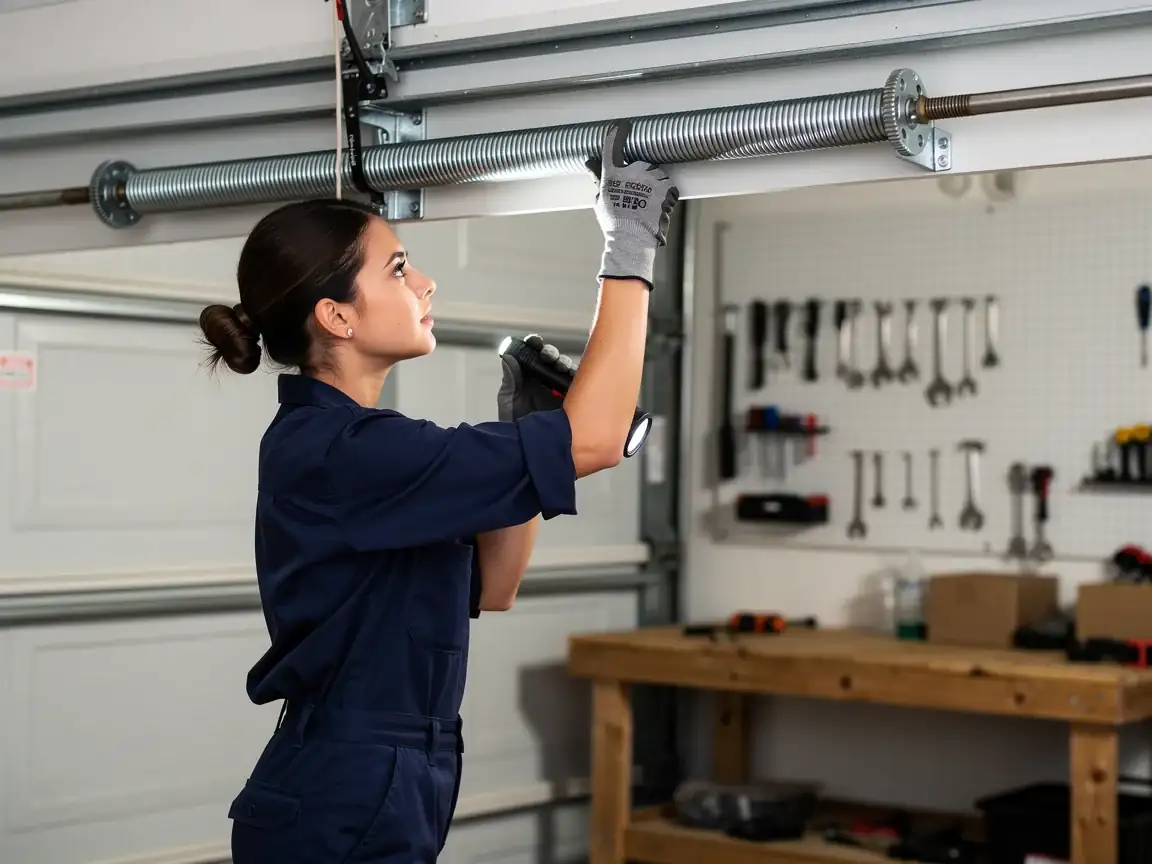
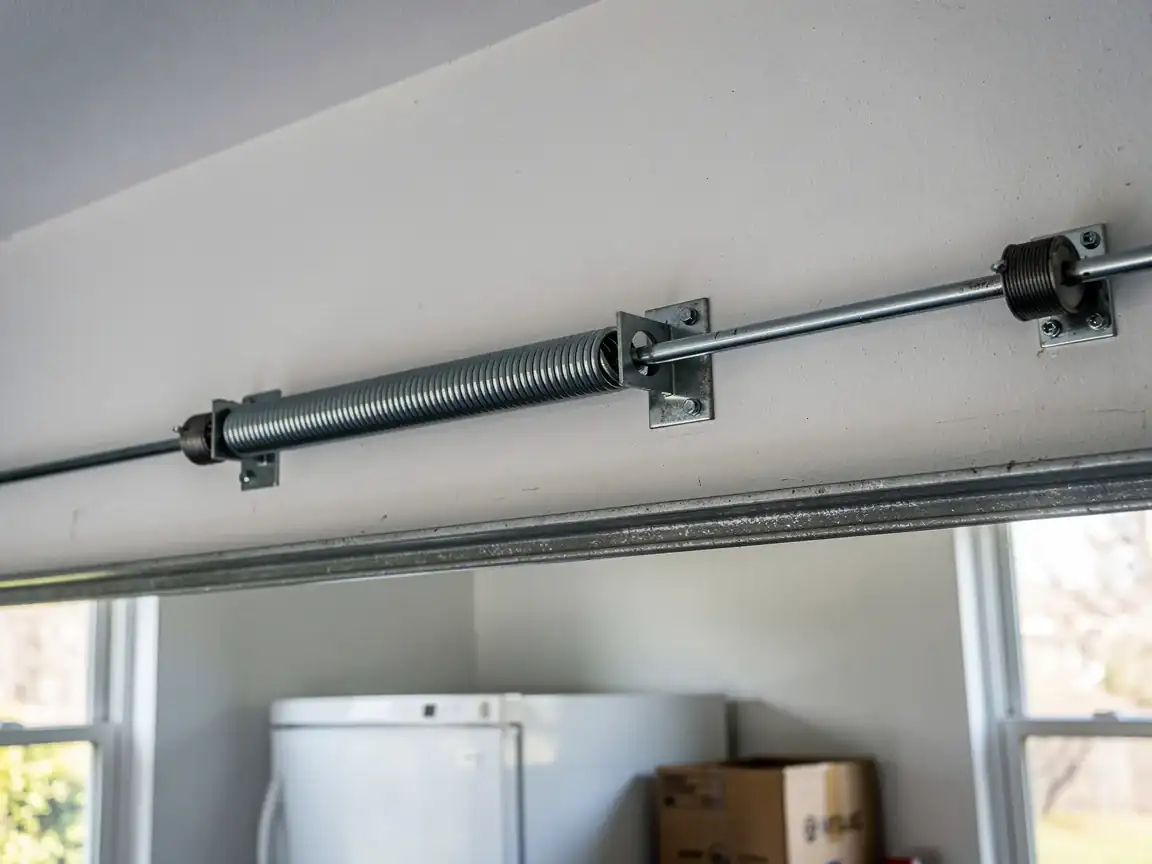
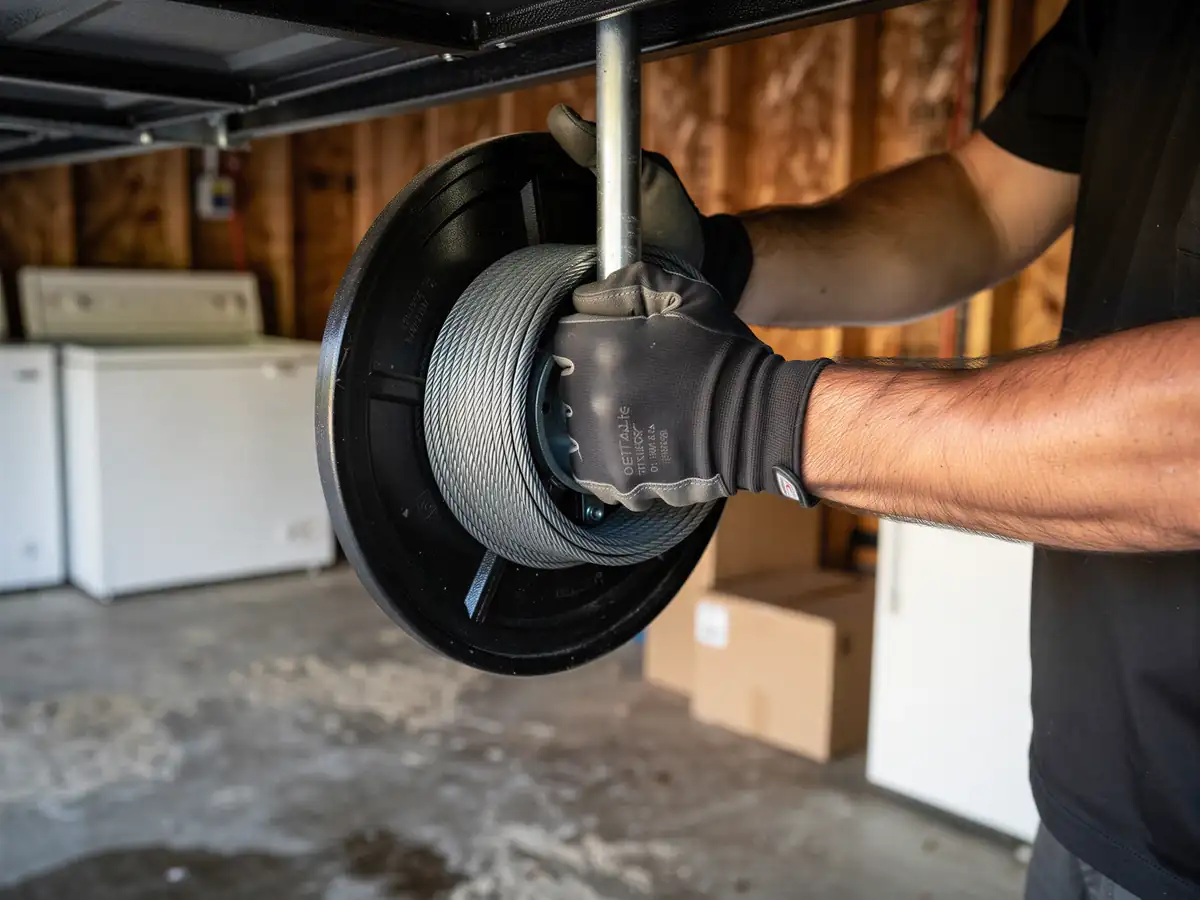
What you should not touch is the torsion spring. It holds enough tension to do real damage if it lets go while you're working on it, and on a door from the 1986 era that spring has likely never been replaced. Leave that one alone, along with anything involving the cables under tension.
Here's the honest limit: we don't do same-day emergency dispatch out to Harwood the way we might closer to Fargo. If your door is stuck open or closed and it's a safety issue - kids, a car trapped inside - call us and we'll tell you straight whether it can wait for the next scheduled run or needs to move up the list. We'd rather say that upfront than promise a window we can't hit from 8 miles away.
Stocked Parts
Because Harwood's housing leans toward mid-1980s builds, we carry the parts that era actually needs
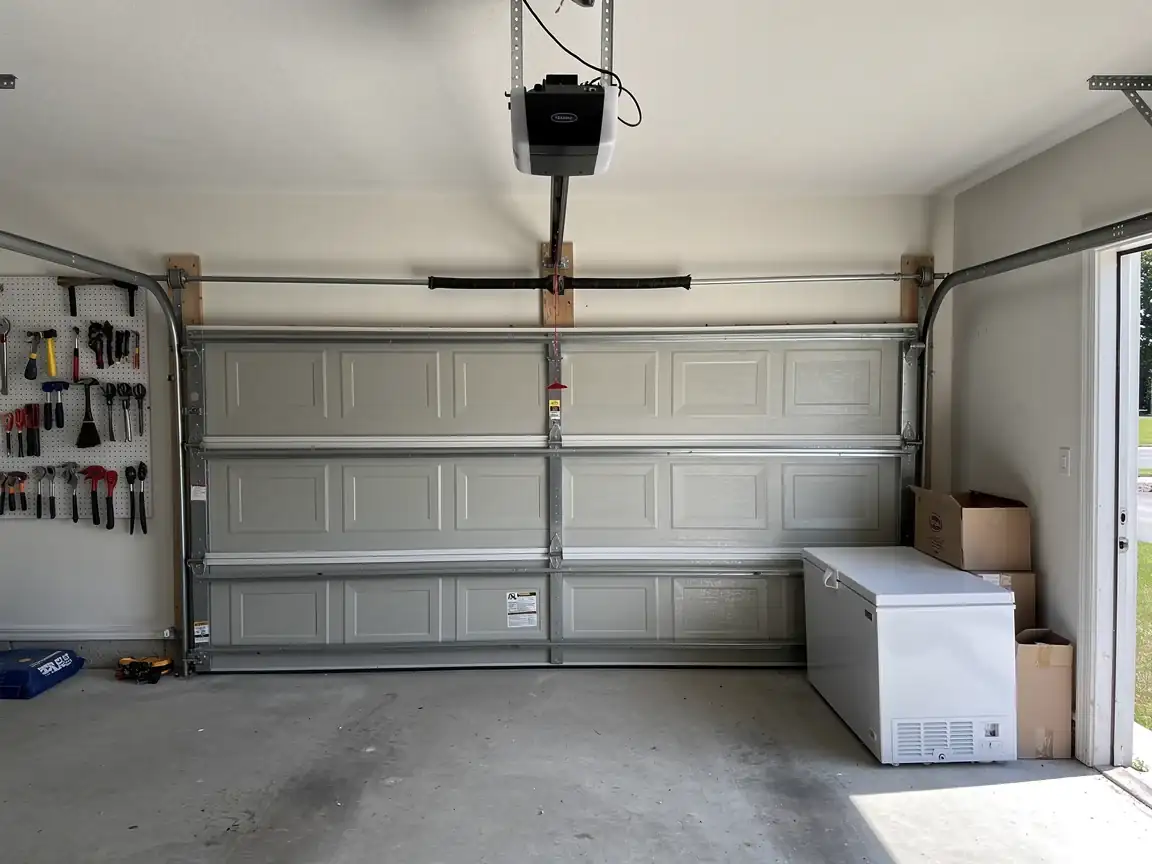
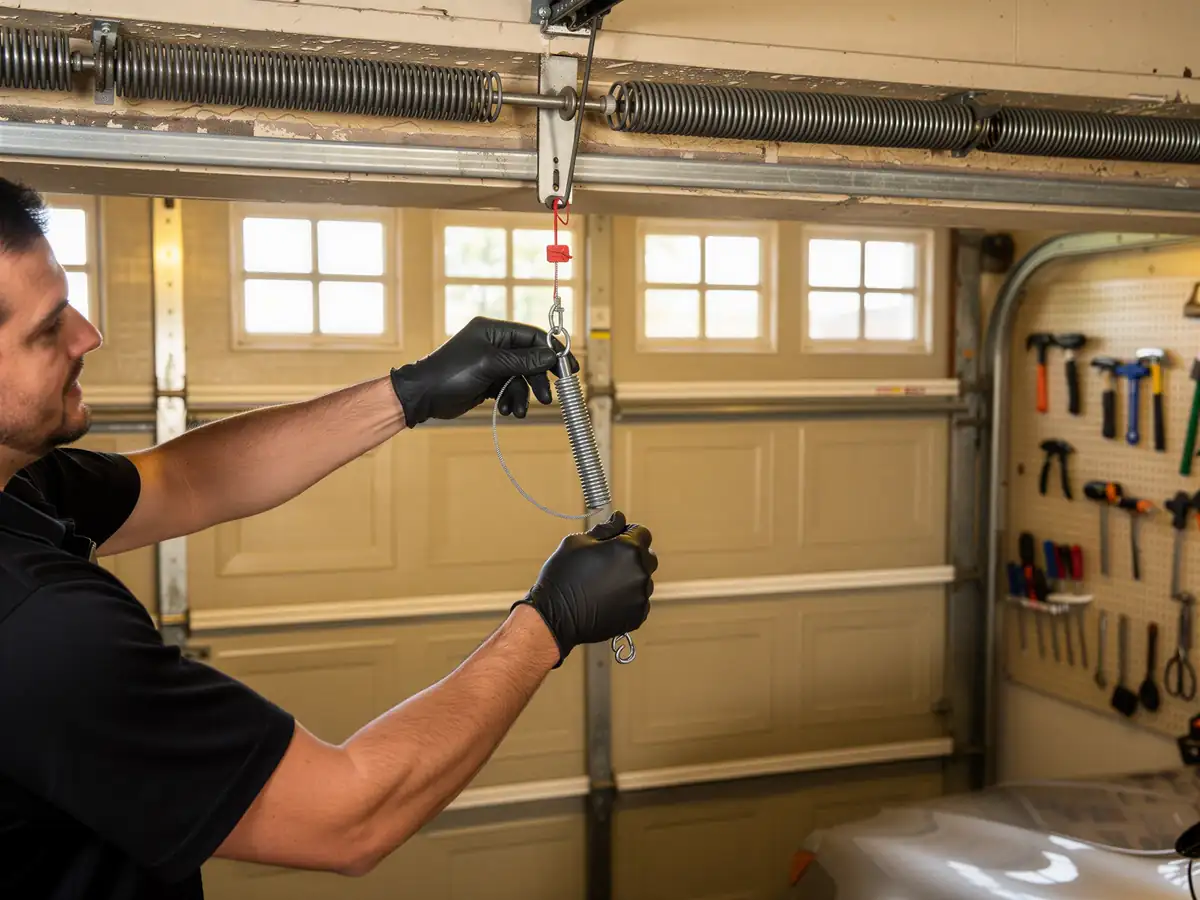
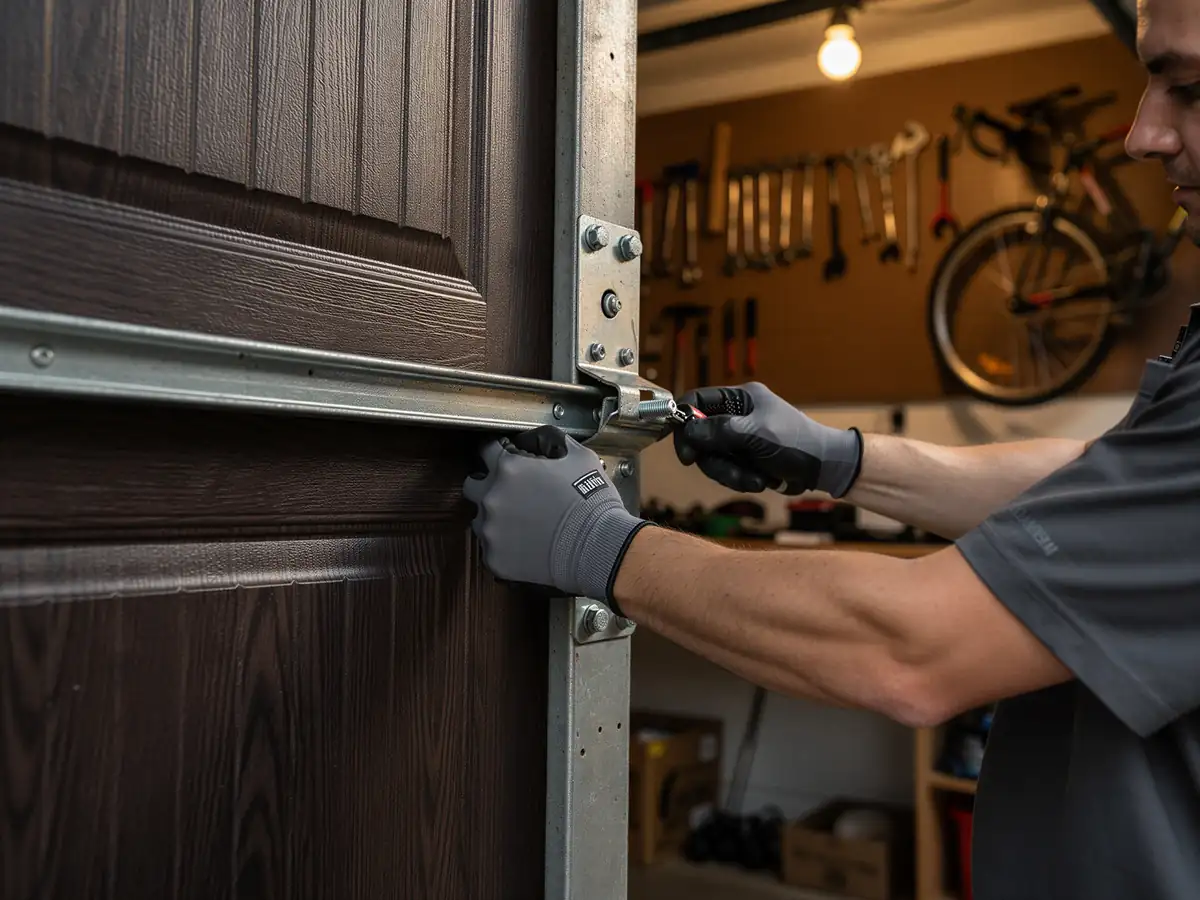
Torsion springs sized for the shorter, lighter sectional doors common to that period, steel rollers to replace the nylon ones that have gone brittle, and the extension-spring hardware still found on some older single doors that never got upgraded to torsion.
We also stock the common relay boards and logic boards for chain-drive openers from that generation
Since a failed circuit board is a frequent call on a door this age - often mistaken for a dead motor when it's really a $200 part instead of a full opener swap.
What we don't carry on the truck is anything custom-cut or a specialty insulated panel matched to a discontinued design
If your door needs one of those, we'll order it and tell you the lead time before we commit you to anything, rather than letting you assume it's a same-visit fix.
The Symptom
The call we get most from this part of the service area is a door that groans and jerks on the way up, then slams the last foot of travel down. On a door built around the median 1986 date, that's almost always a torsion spring that's lost tension unevenly - one side still has some spring in it, the other doesn't, so the opener is fighting an imbalance it was never designed to correct.
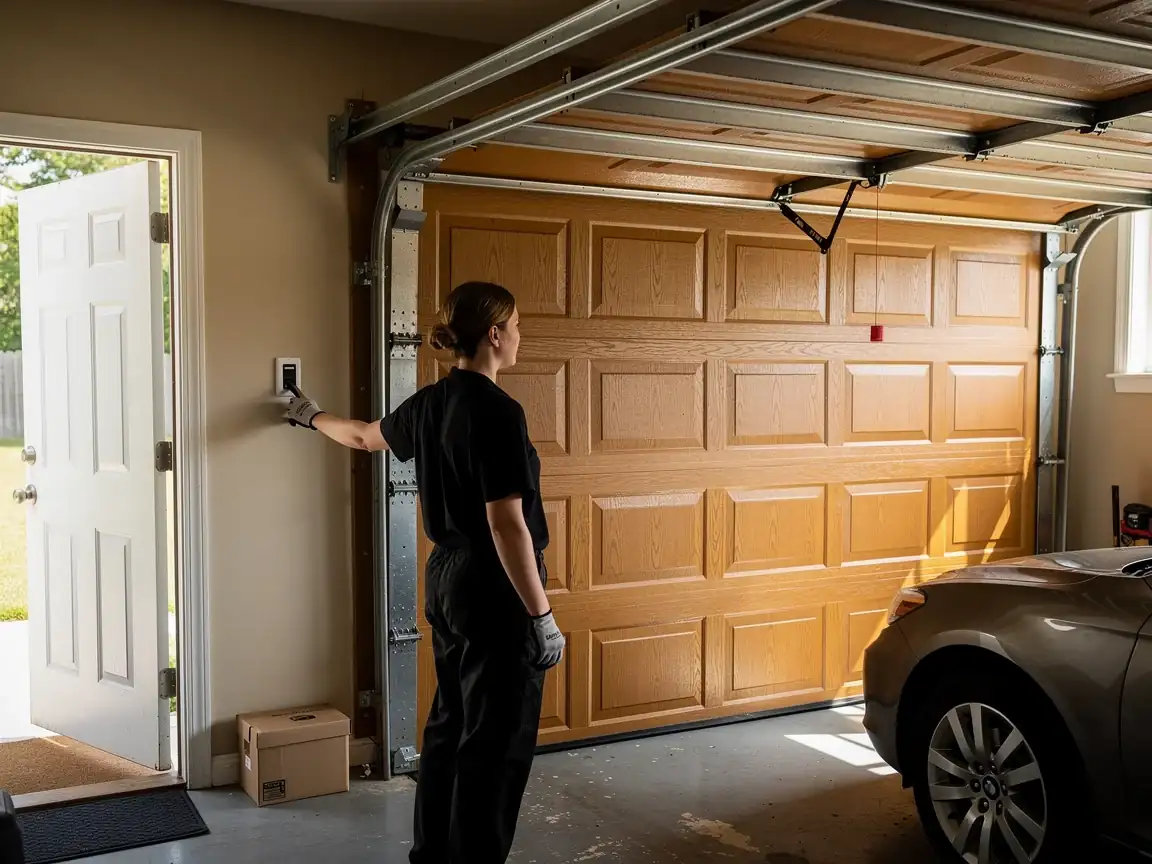
A second common symptom: opener runs, lights come on, but the door doesn't move at all. On hardware this age, that's usually a stripped gear inside the unit, not the motor itself - a part, not a replacement.
If you're hearing either of those and your house falls into the older bracket of Harwood's stock, don't keep cycling the opener trying to force it through. That's what turns a $150 spring job into a door off its track.