What the Repair Takes
Harwood is small
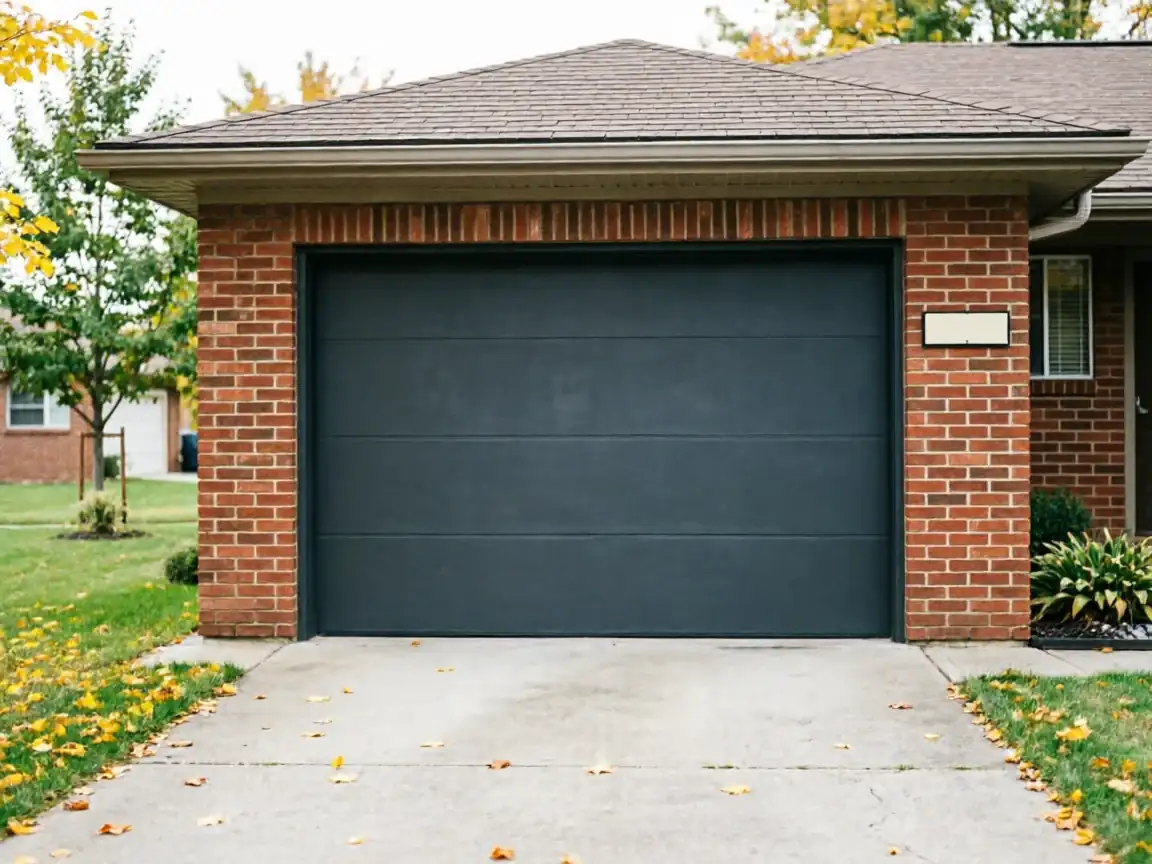
About 248 households sit here, compared to roughly 19,183 across the whole service area we cover out of Fargo. That matters more than it sounds like it should. In a town this size, the garage doors aren't a mixed bag of eras and builders - most of them went up around the same stretch of years, which means the same springs, the same openers, and often the same failure showing up on three houses on the same loop of road within a season of each other.
- 248 households
We come out from Fargo, about 8 miles down the road
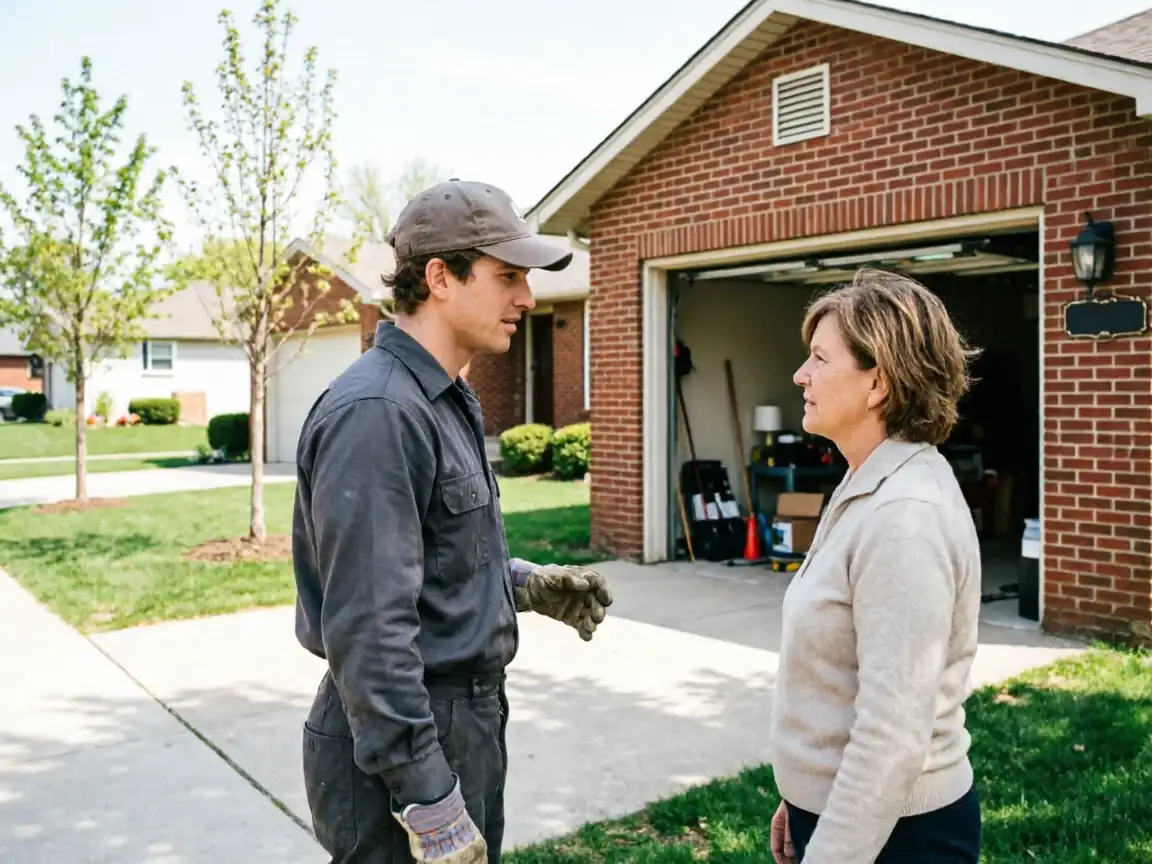
Which is close enough that a Harwood call isn't a special trip, but it also means we're not keeping a separate stock of parts sitting in town. What's on the truck is what's on the truck. For a town this size, that's rarely a problem, because the hardware here is consistent enough that we can guess what we'll need before we pull up the driveway.
- 8 miles
A small household count also means fewer total calls
But it doesn't mean simpler ones - a torsion spring job here is the same work as anywhere, it's just that we see the same door, same track, same opener bracket, call after call.
Why This Fails Locally
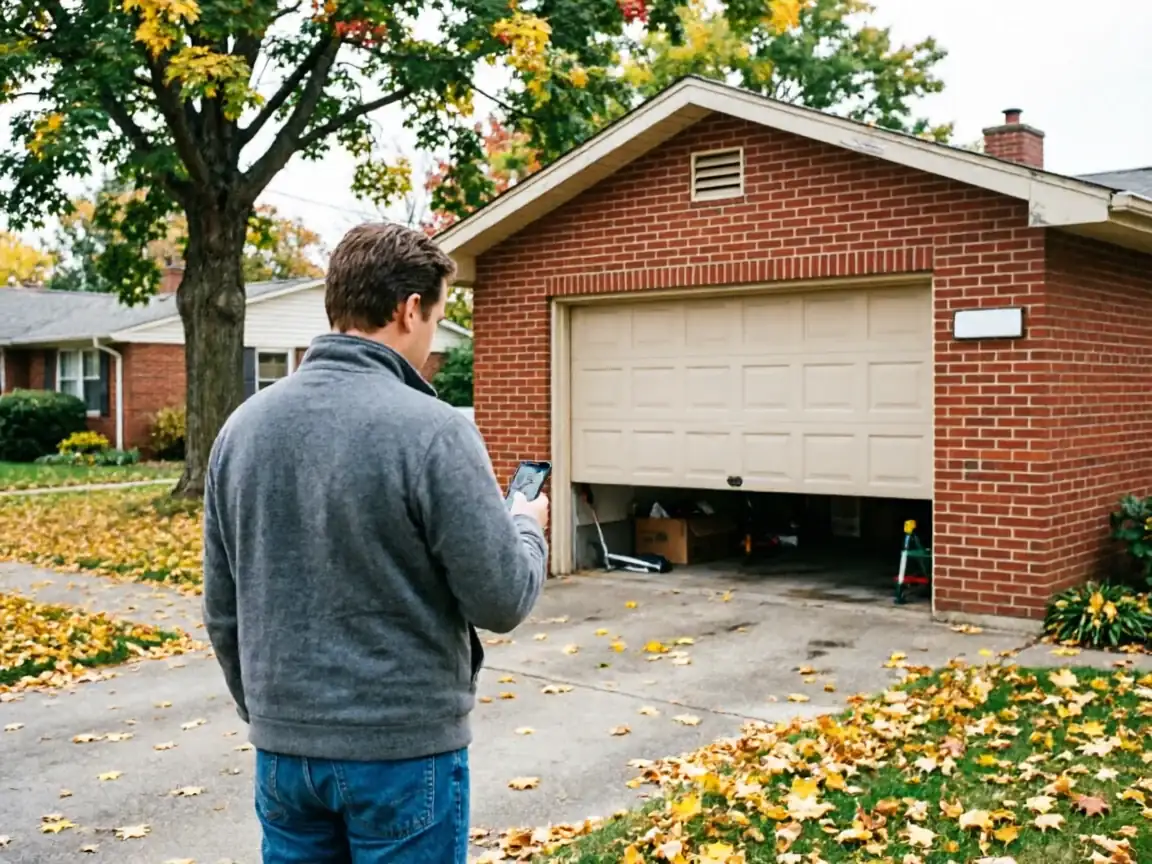
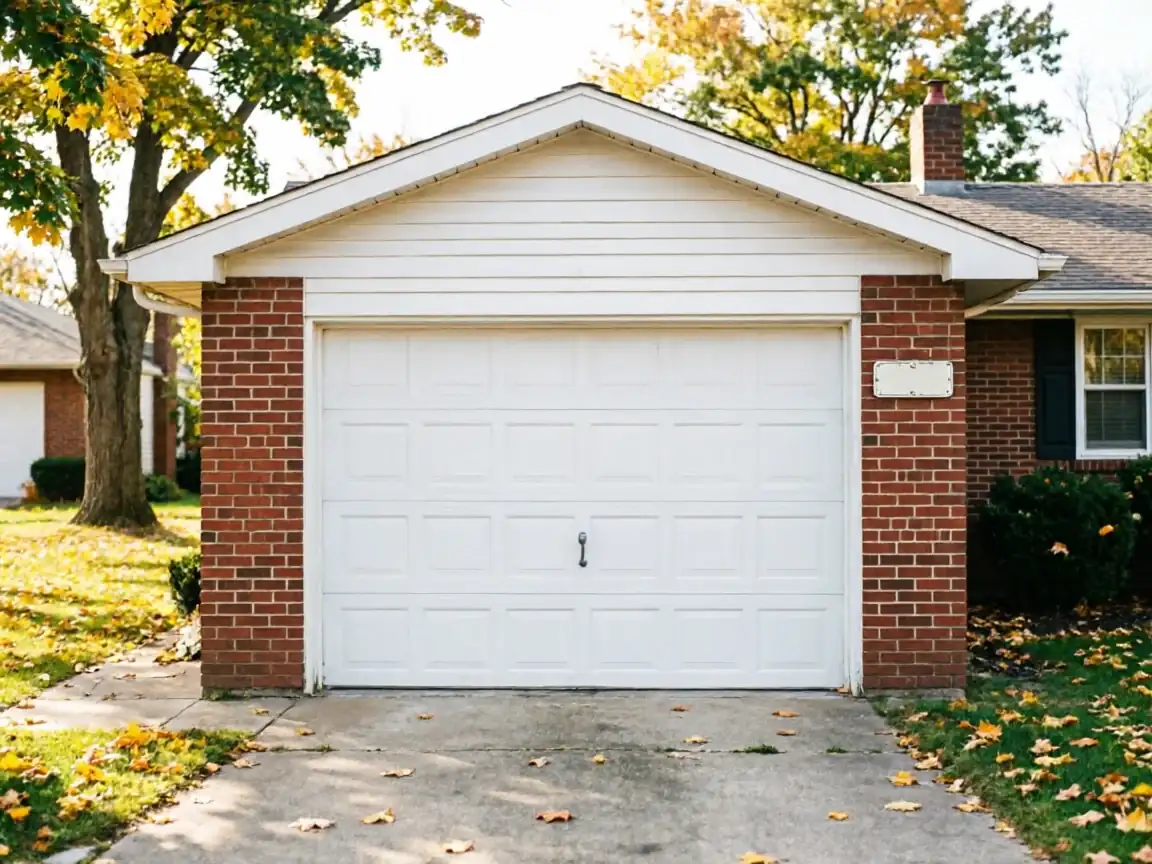
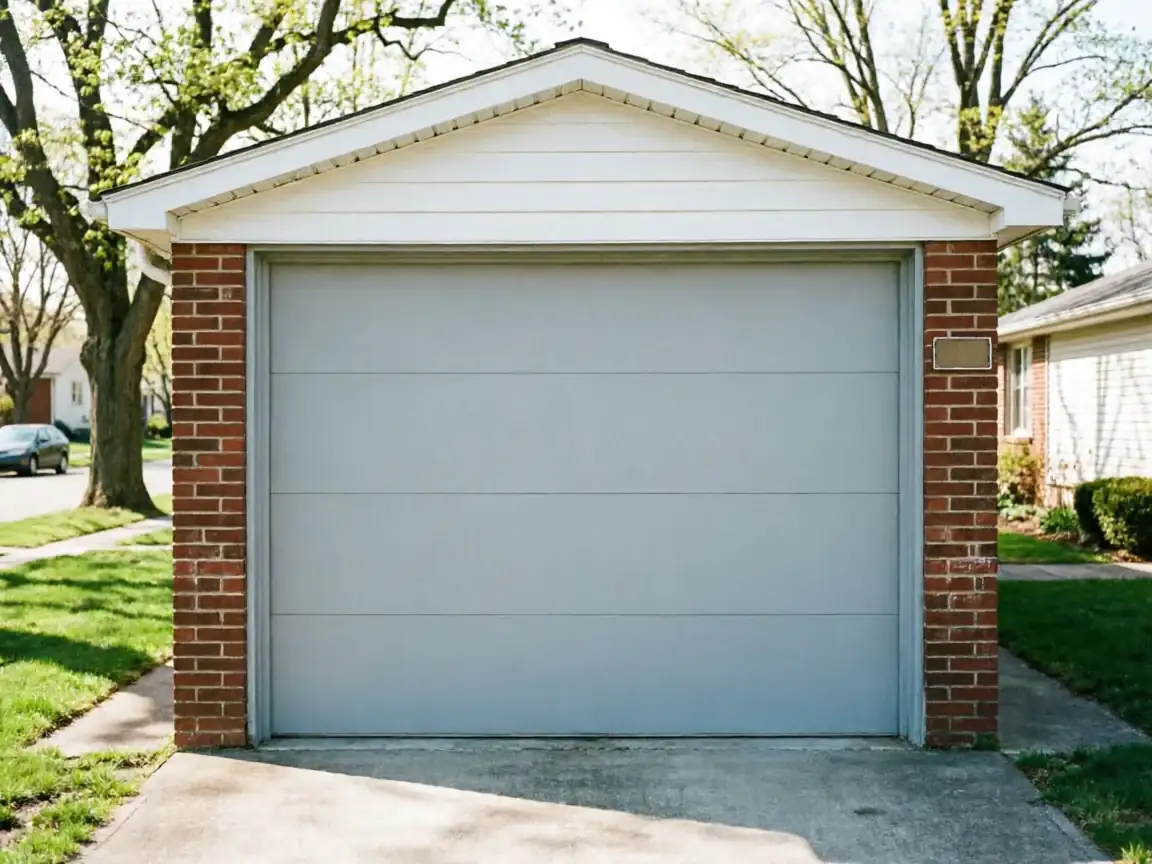
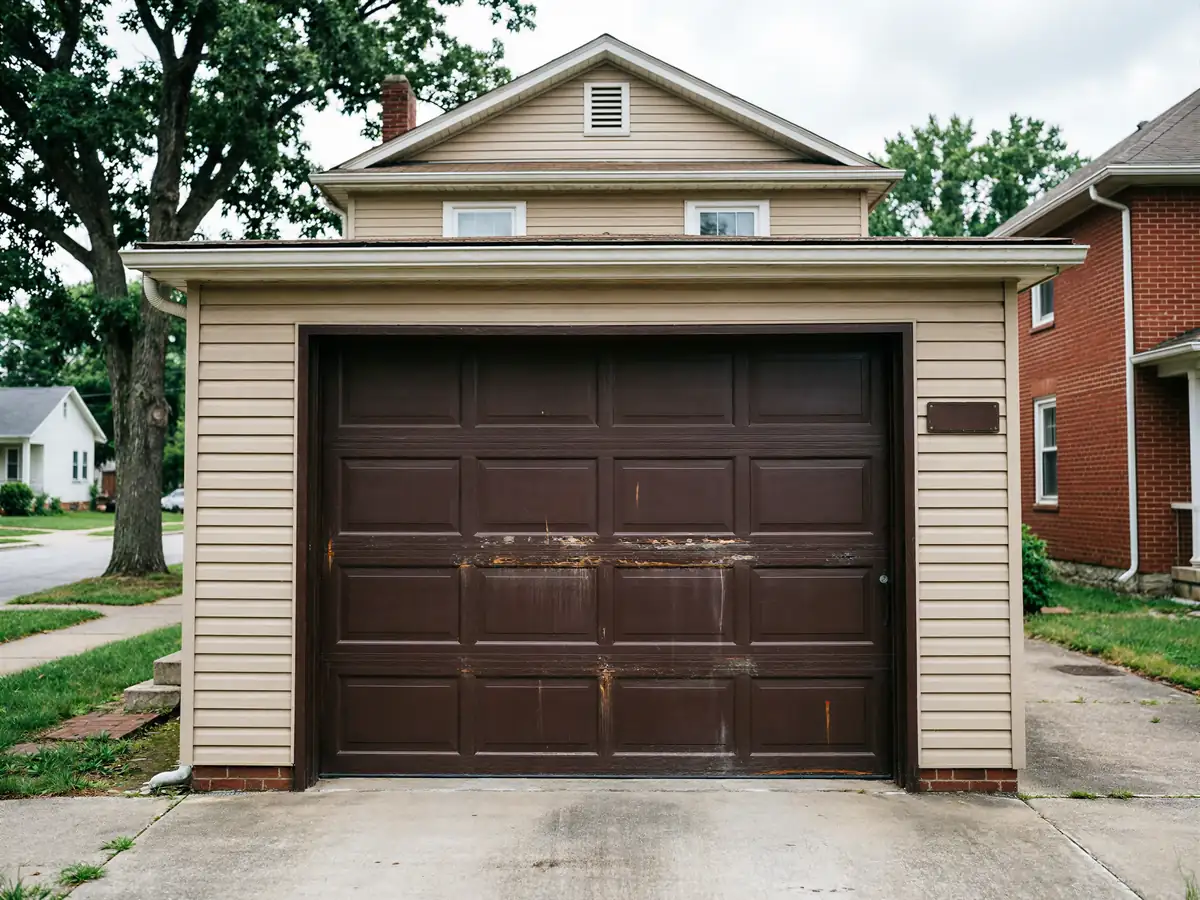
Most garages in Harwood date to around 1986, which puts them squarely in builder-grade torsion spring territory - galvanized springs rated for a set number of cycles, installed once, and never touched since. Thirty-eight years of lifting a door twice a day runs those cycles out, and the service area overall skews newer, with a median build year closer to 1999, so a 1986 door here is already past when a lot of the broader area's doors start seeing trouble.
The cold is the other half of it. This is classified severe cold climate territory, and steel contracts in it. A spring that's a few winters past its rated life doesn't ease into failure - it goes from fine to snapped on a hard freeze morning, usually right as someone's backing out for work. Nylon rollers from that era get brittle the same way, and the weatherstrip on original doors has usually hardened to the point it's not sealing anything.
None of this is unique to one house. It's the era talking. A town built in one wave ages in one wave too, and Harwood's wave lands right where original hardware starts giving out.
Doing It Yourself
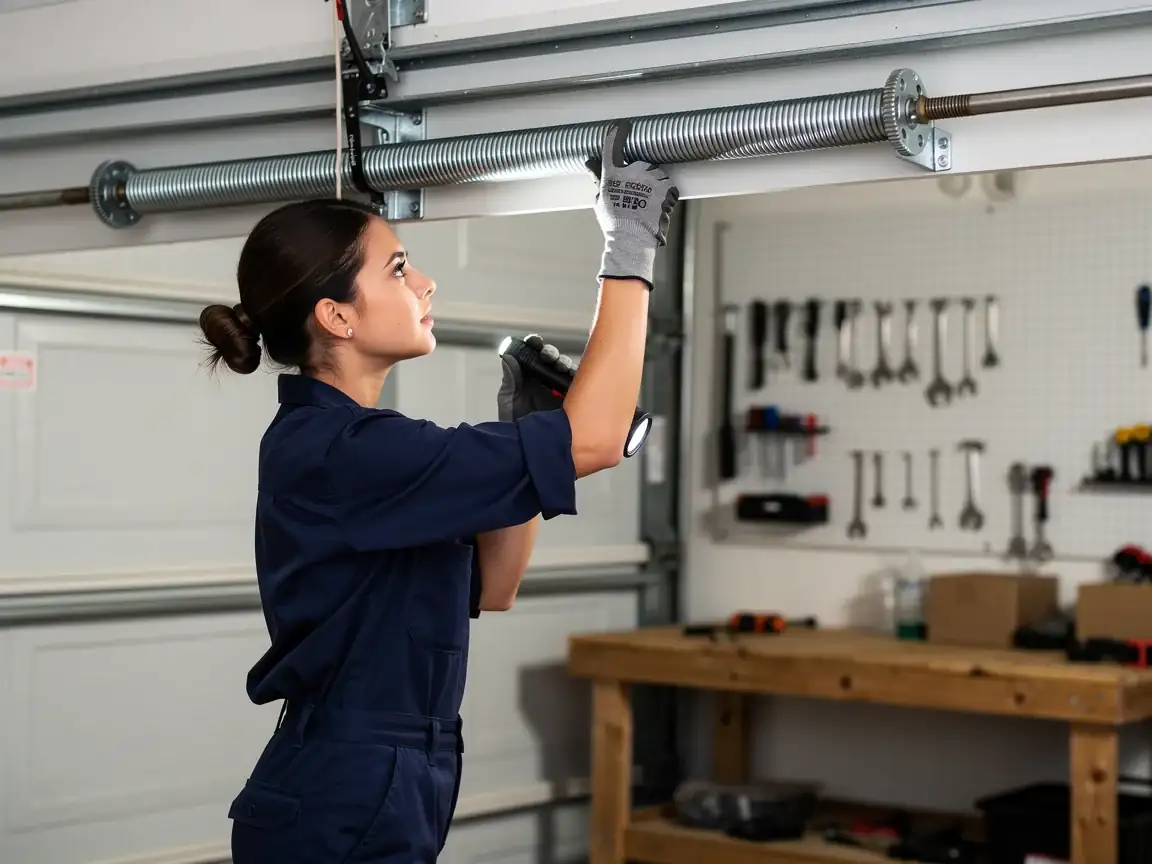
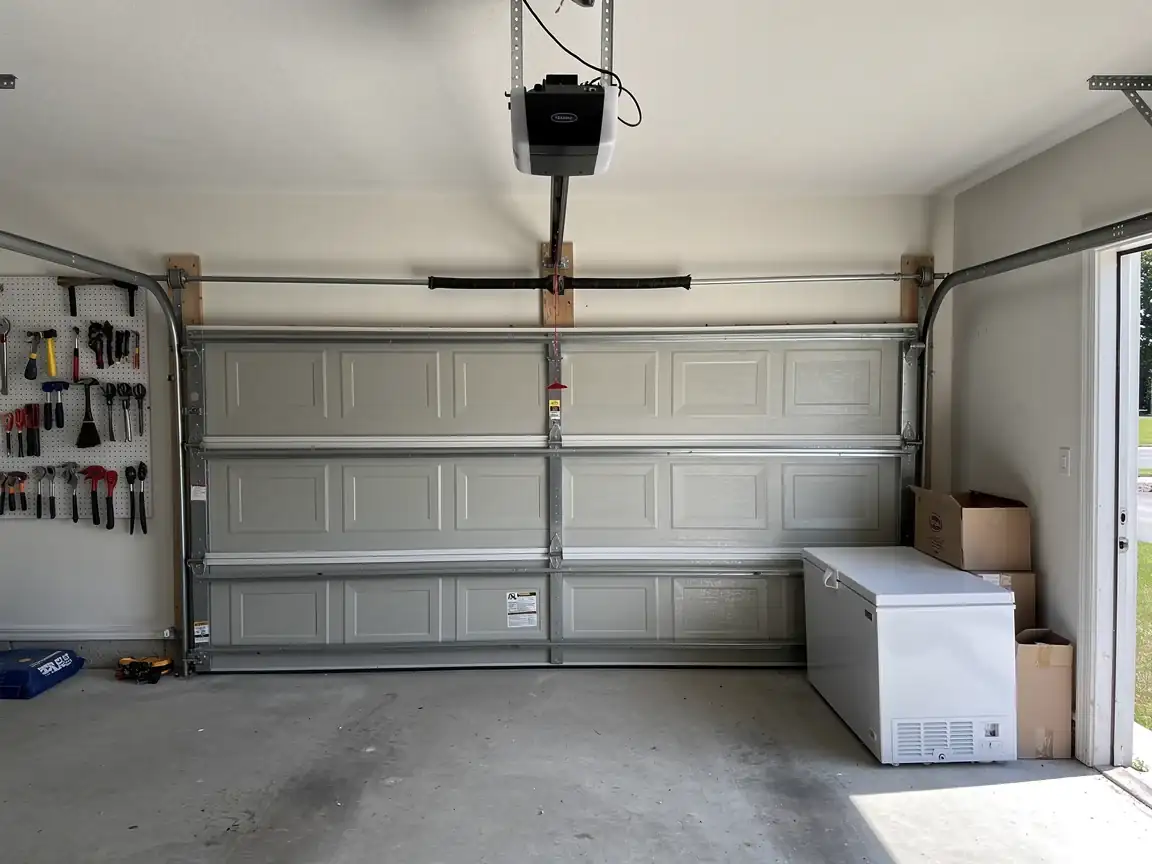
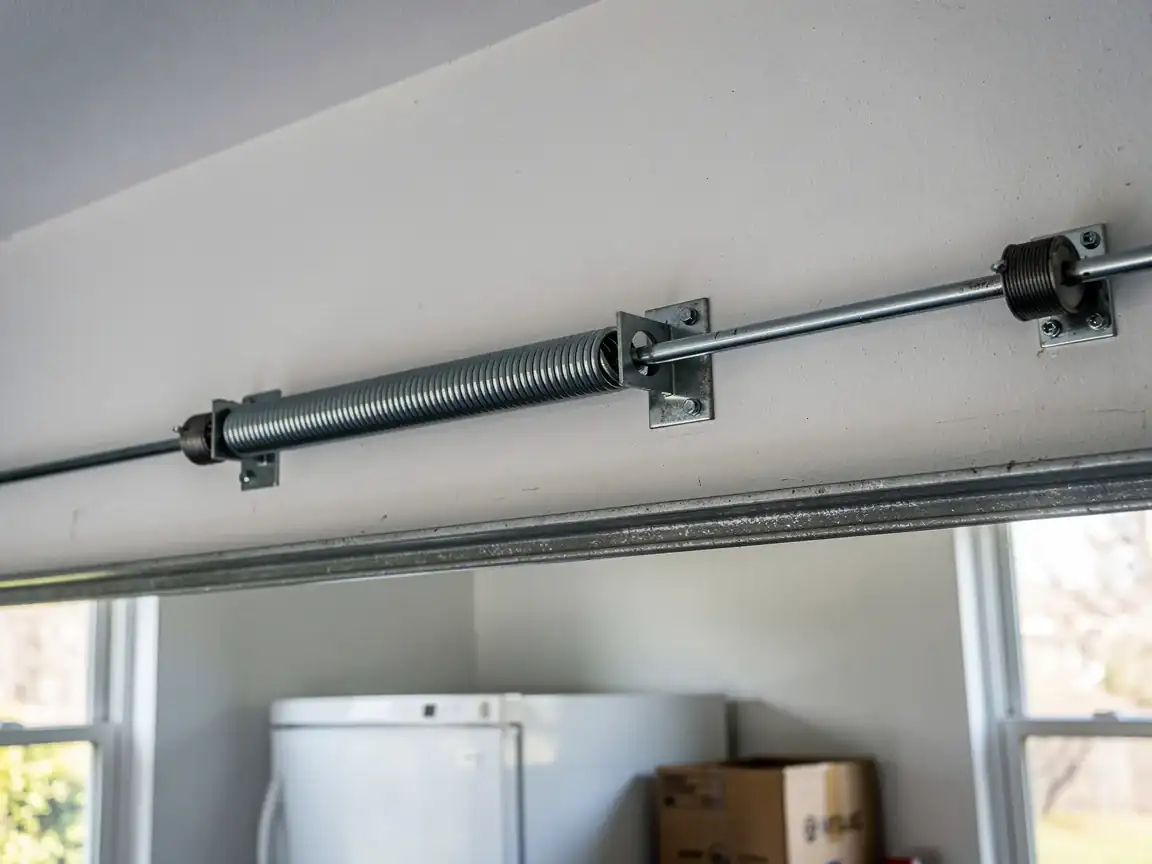
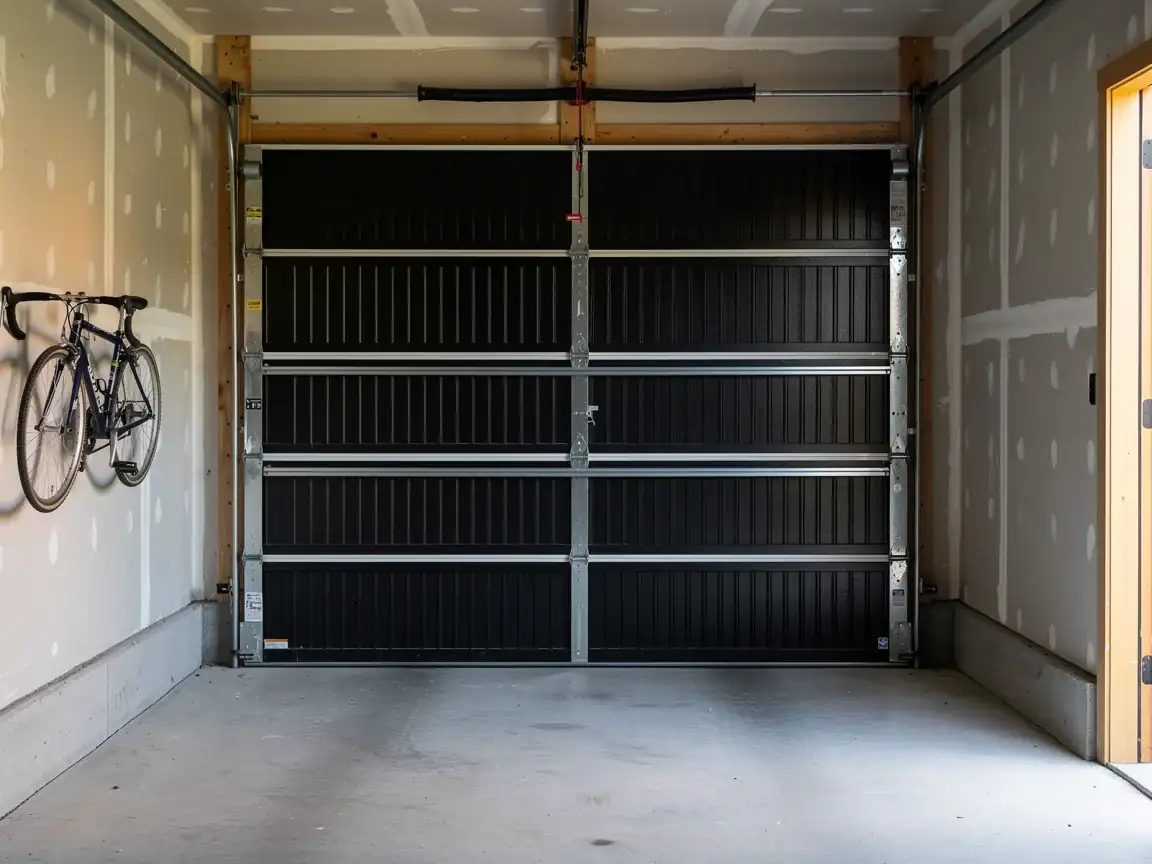
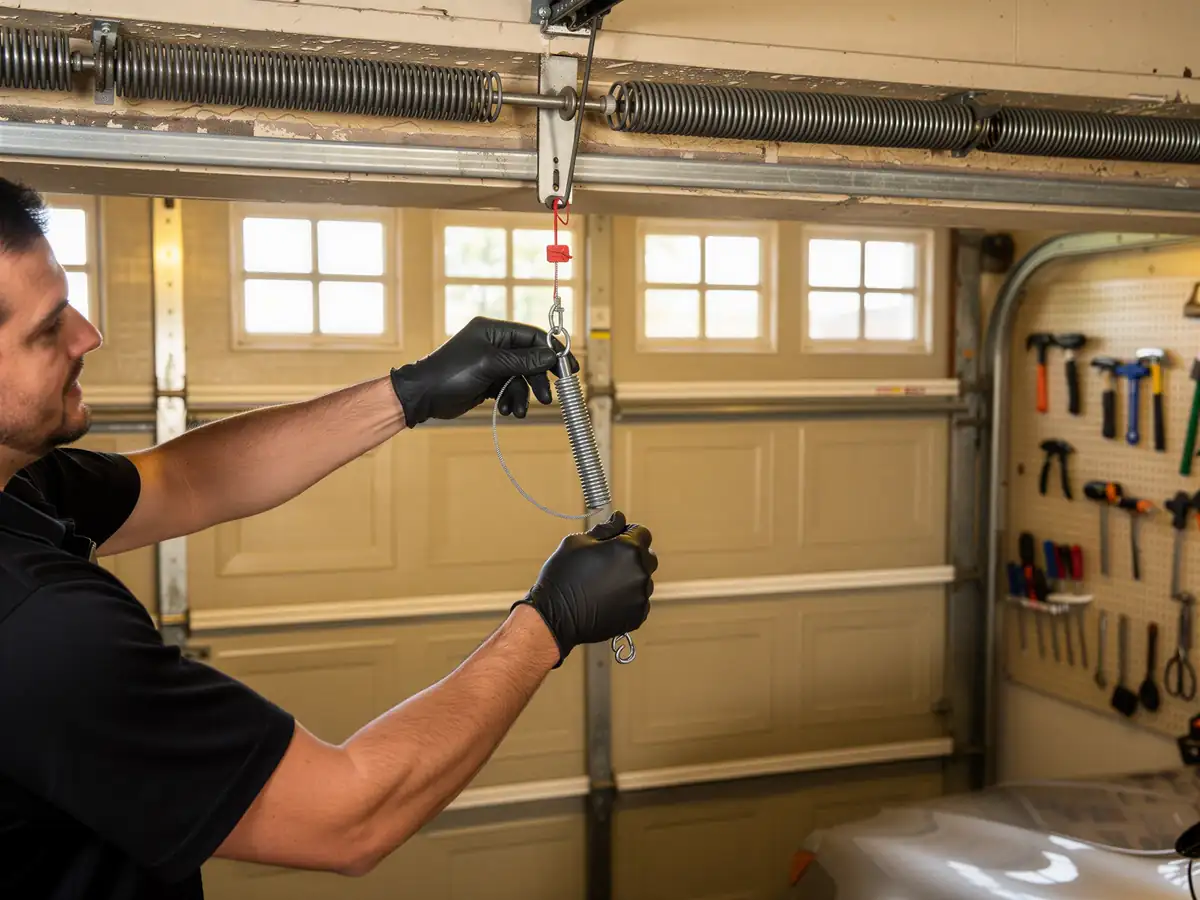
There's a limit to what you should touch yourself, and the torsion spring is it. The spring on a door this age is under enough tension to do real damage if it lets go while you're working on it, and we don't walk homeowners through replacing one over the phone - that's not us being precious about the job, it's that the margin for a mistake is a trip to the ER, not a redo.
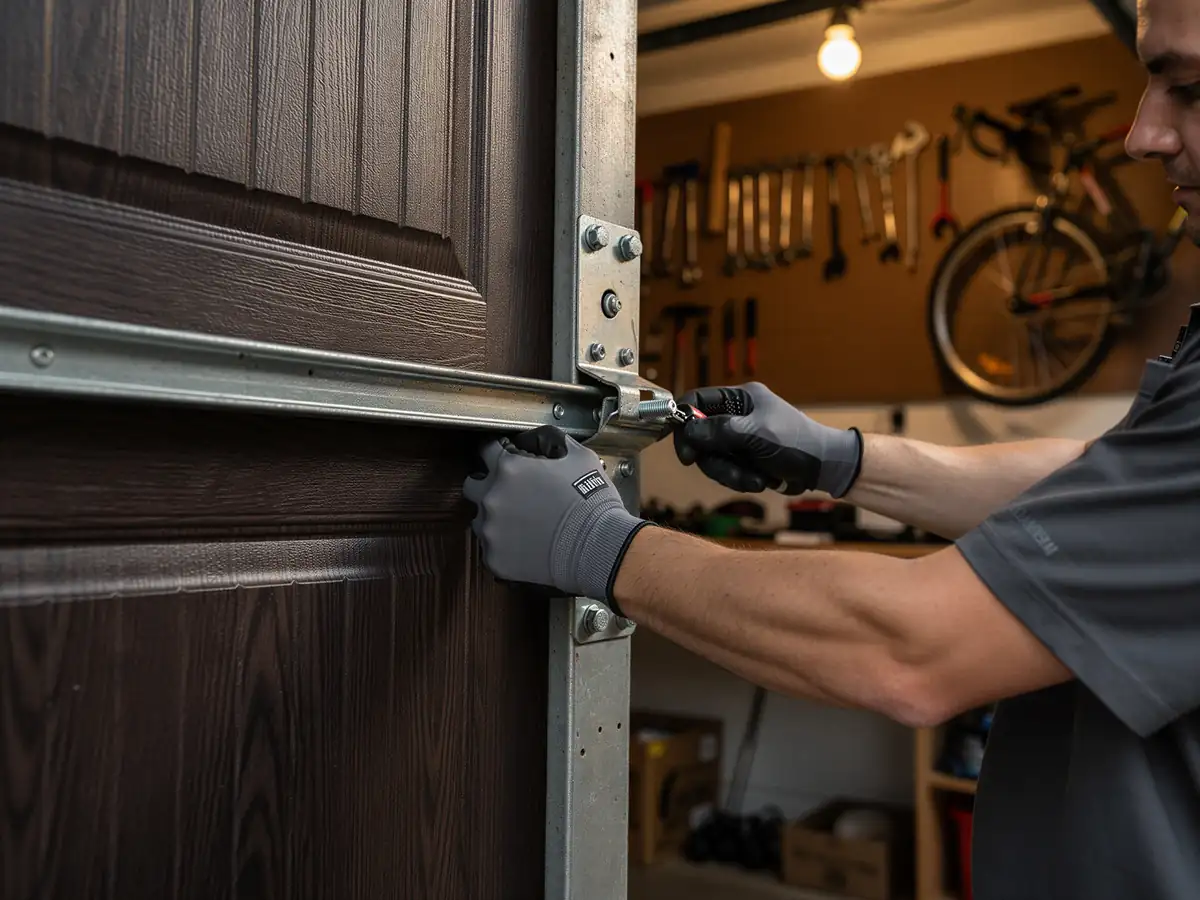
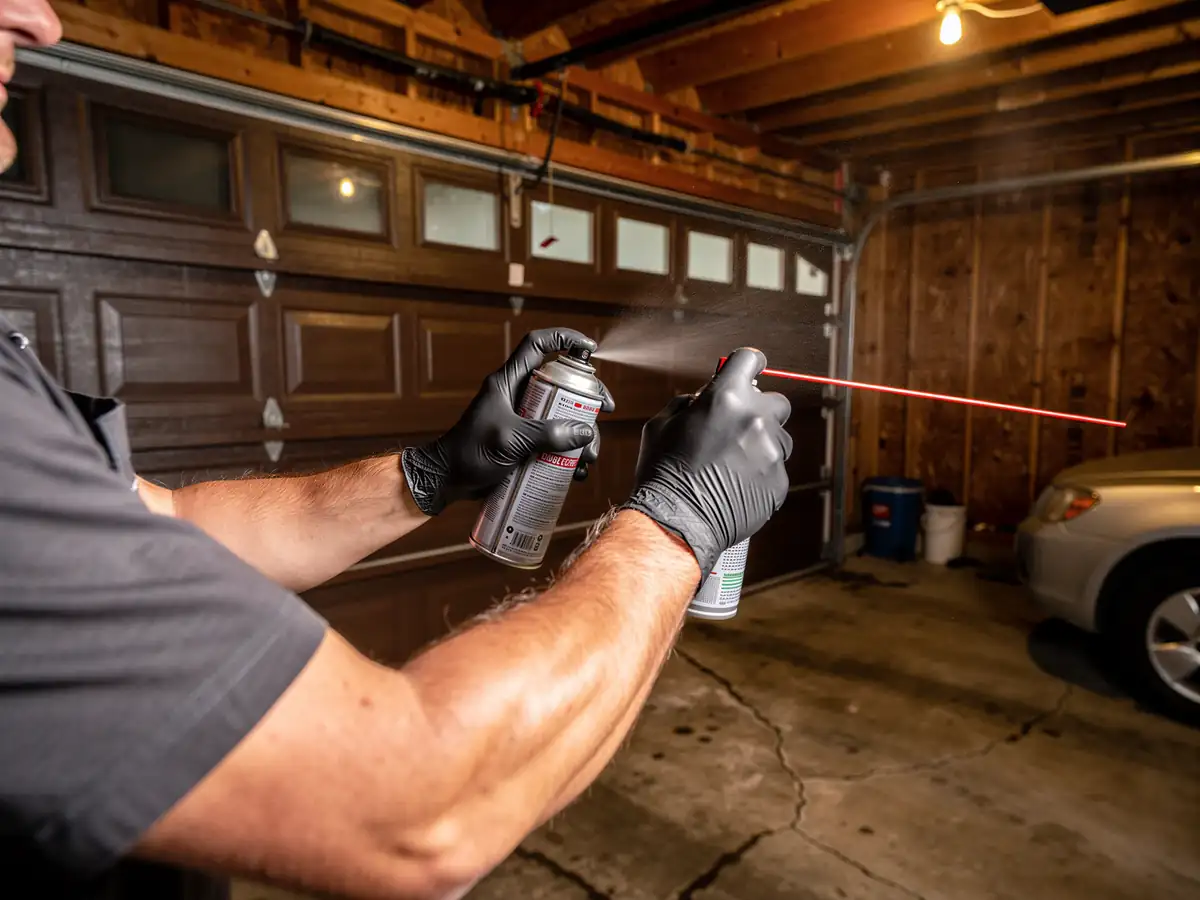
What you can check yourself: the weatherstrip along the bottom and sides, which on an original 1986 door is probably cracked or flat by now and is a cheap swap. You can also listen for the door - a grinding or popping sound on the way up usually means a roller, and you can look at the track for visible rust or a bent section, especially near the bottom where road salt splashes up in winter.
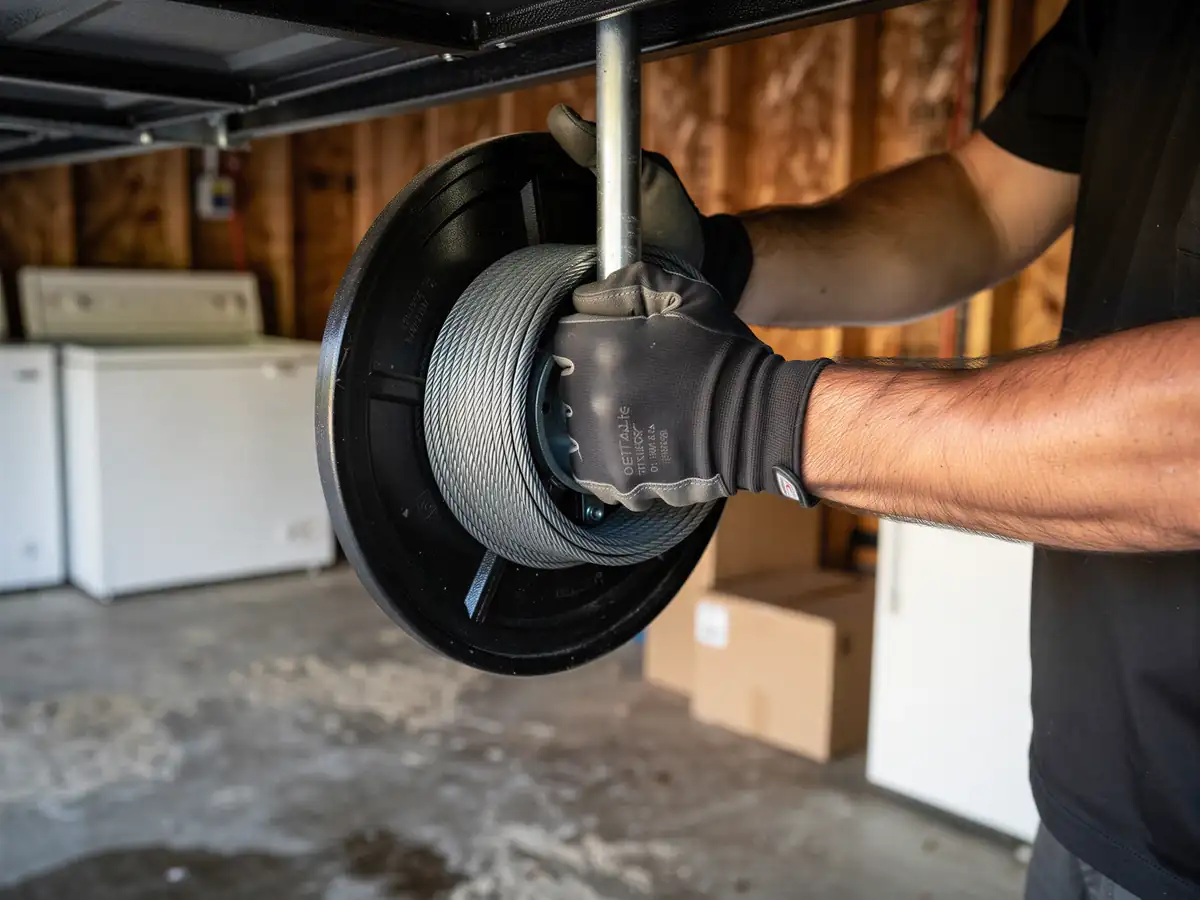
If the door won't open at all, or it opens a few inches and stops, that's spring or cable, and that's a call, not a project.
Stocked Parts
For a door built around 1986, the parts that fail first are predictable
Torsion springs sized for a standard single or double door of that era, steel rollers to replace the nylon ones that have gone brittle in the cold, and end bearing plates that have worn from decades of the same stress point taking the load. We carry these on the truck because they come up often enough in houses of this age across the area.
Openers are a mixed bag
A house built in 1986 may have had its opener swapped once or twice since, so we check the unit itself before assuming anything, rather than guessing based on the age of the door.
What we don't carry is obscure
A specialty custom panel or a discontinued opener board from a long-dead manufacturer. If a part's been out of production for twenty years, we tell you that up front rather than stringing out a repair that replacement would solve faster and, usually, cheaper.
The Symptom
The call we get most from houses this age, in this climate, is a door that worked fine the night before and won't budge in the morning - usually on the kind of hard-freeze day this area gets plenty of in winter. That's almost always the torsion spring, worn down from decades of cycles and finished off by steel going stiff in the cold.
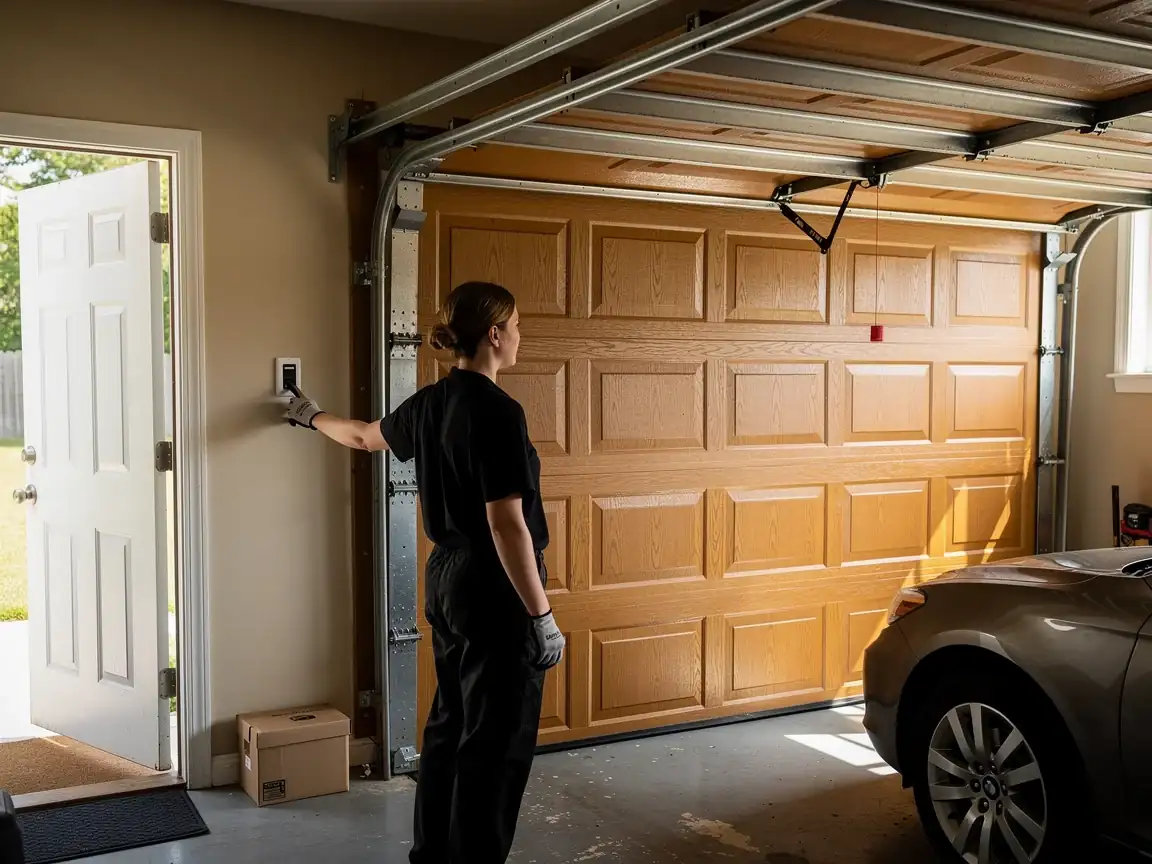
A second version of the same symptom: the door opens partway and reverses, or the opener strains and hums without lifting the door at all. That's the spring again, just caught mid-failure instead of fully snapped - the opener is trying to do a job the spring isn't helping with anymore, and it won't last much longer in that state.
Either way, with a door from this era, we don't treat it as a one-off part failure. We check the second spring too, even if only one broke, because they're usually installed the same year and under the same load.
For general service hours and other work we do out of Fargo, see our Fargo garage door page. For more on what we cover around Harwood, see our Harwood page.