What the Repair Takes
Most garage doors standing in Harwood went up around 1986
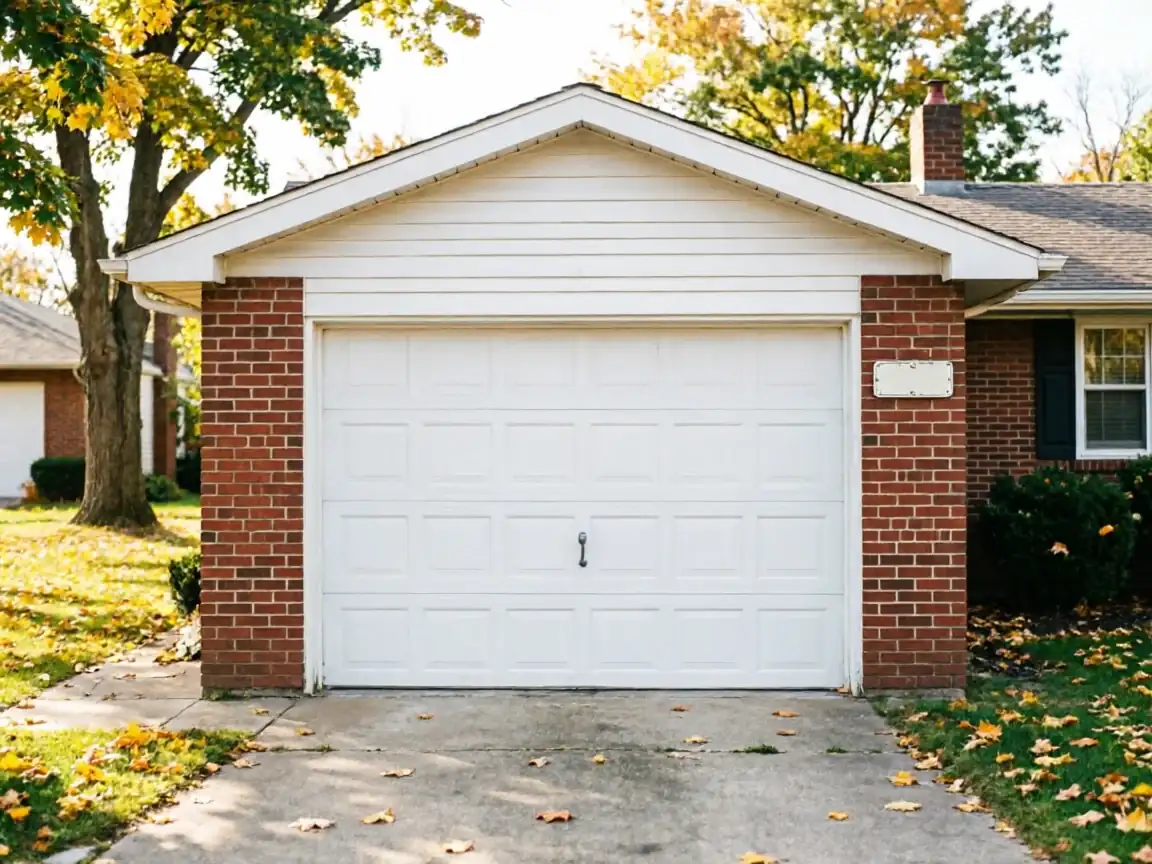
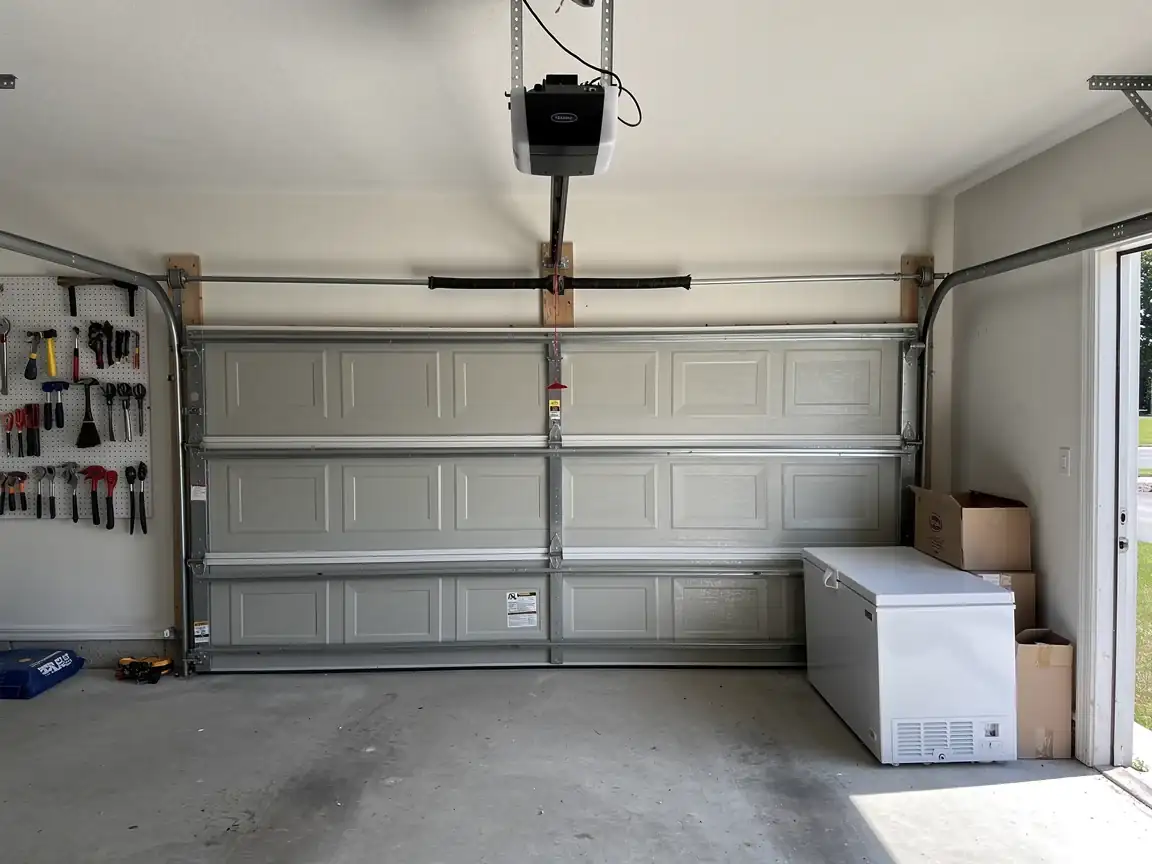
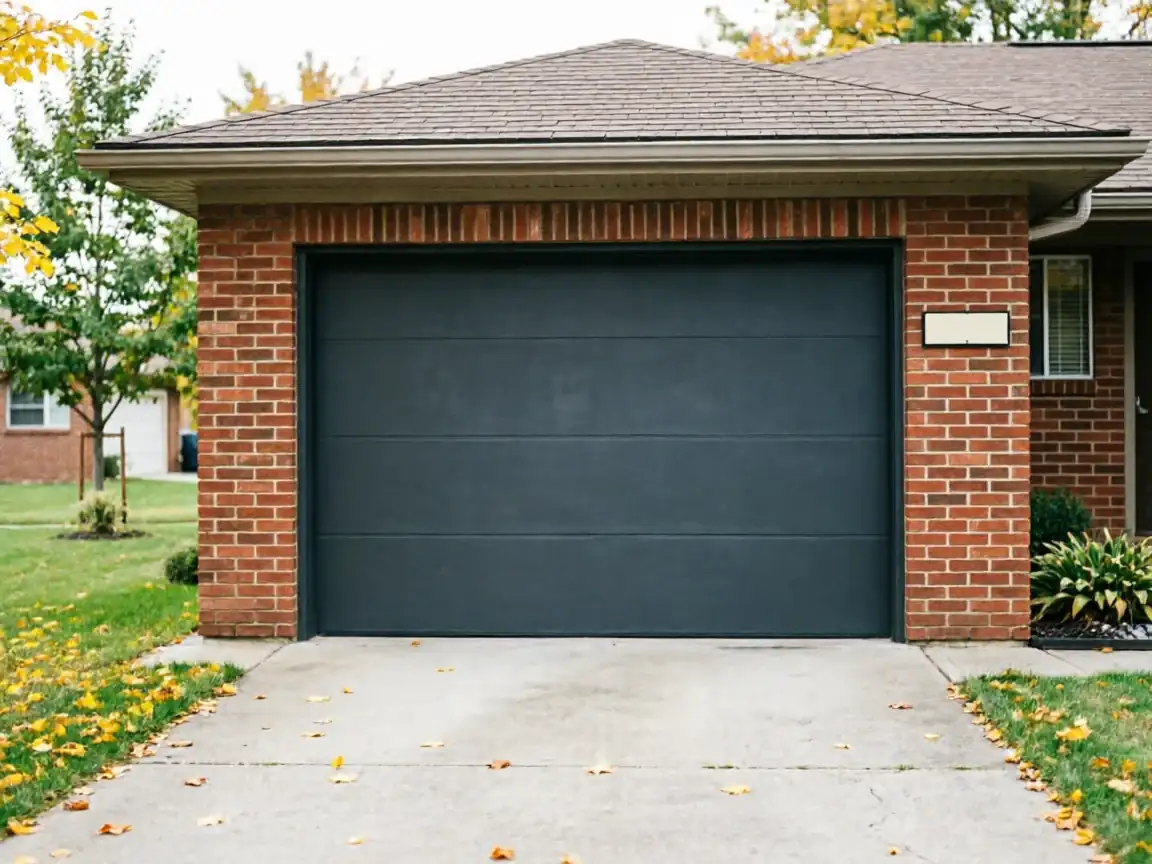
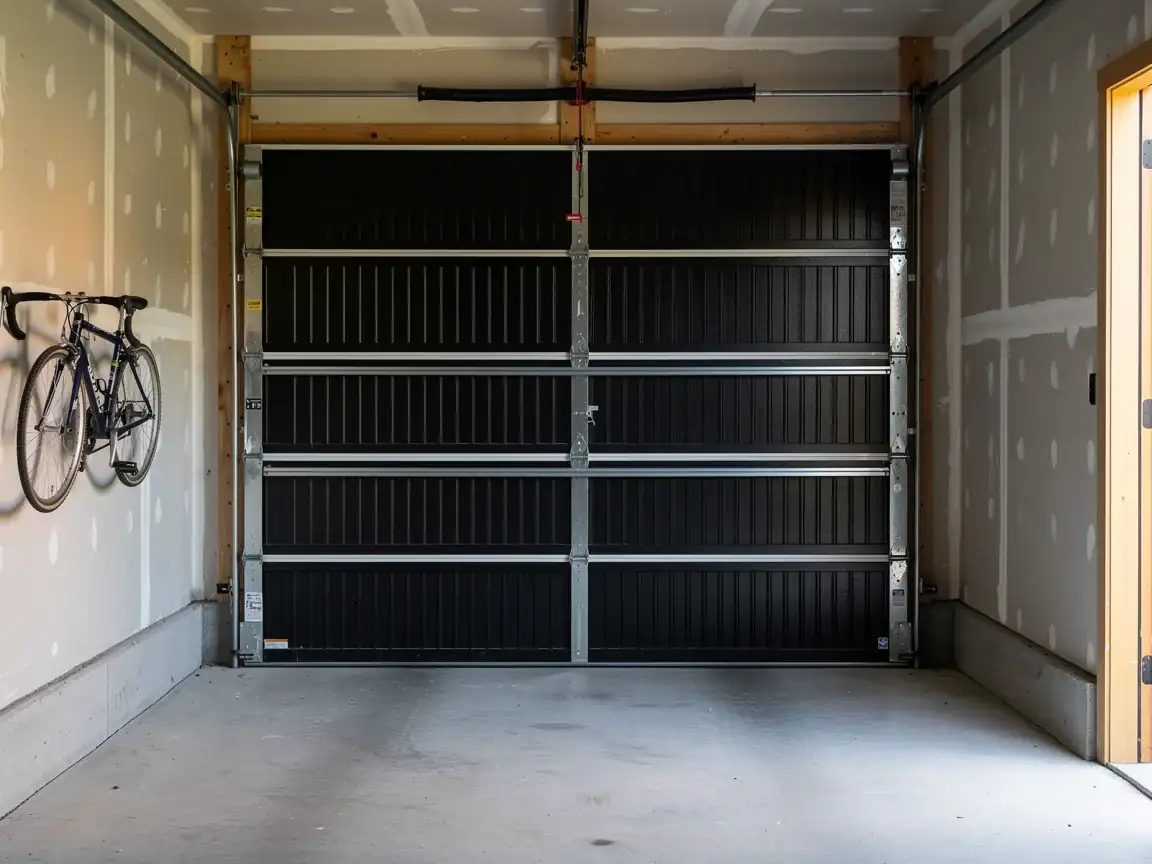
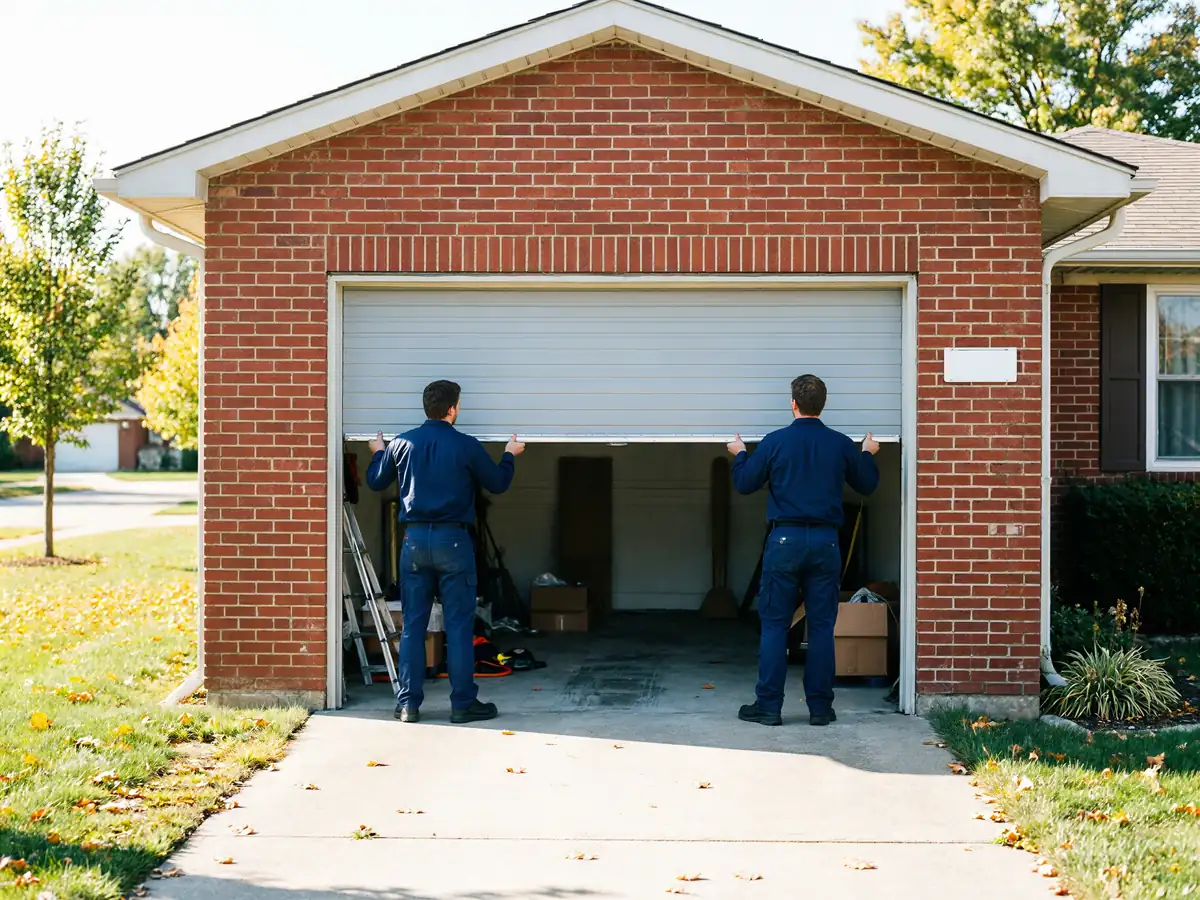
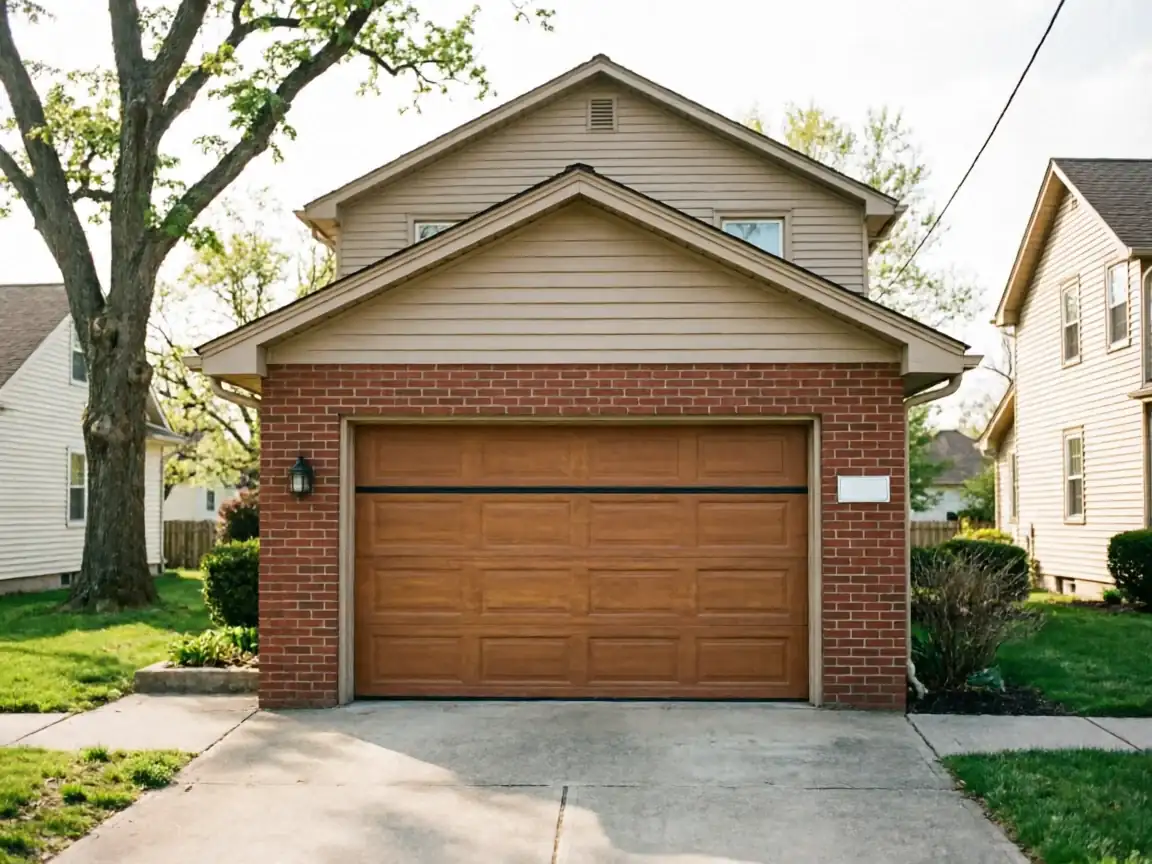
Which puts them square in the middle of the area's 1980s-90s building wave. That means steel sectional doors, usually 16x7 for a two-car opening, with embossed panels and a texture meant to pass for wood grain from the street. Insulation wasn't standard in that build era the way it is now, so a lot of these doors are single-layer steel over a hollow back - light, which made them easy to dent, and now makes a damaged panel easy to replace without touching the rest of the door.
Panel replacement means pulling the damaged section, not the whole door
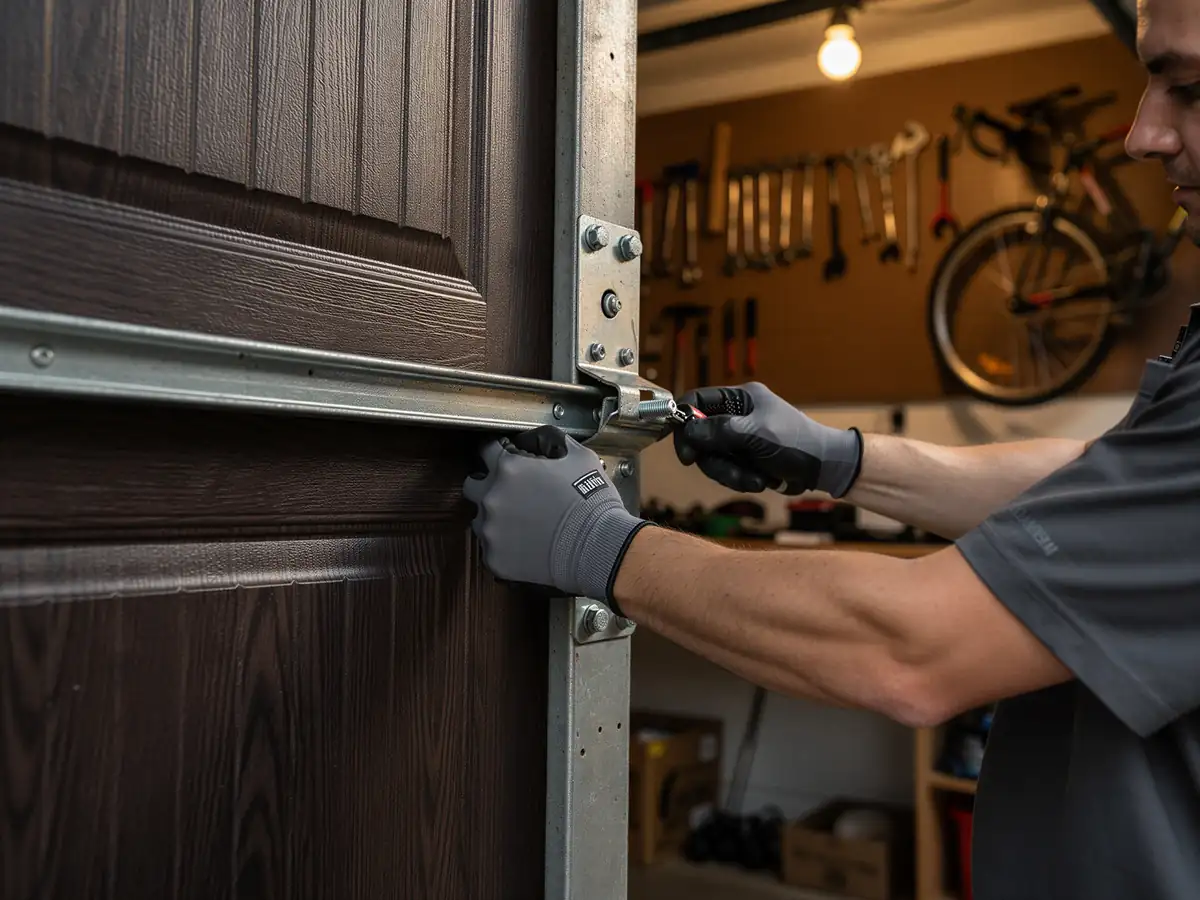
We unbolt the hinges above and below the bad panel, slide it out of the track, and bolt in a matching or close-matching replacement. The job hinges on matching the panel's width, the hinge spacing, and the profile of the embossing - get any of those wrong and the new panel rocks or binds in the track. On a door this age, exact factory matches aren't always sitting on a shelf, so part of the estimate is sourcing a panel that lines up close enough to seal and run clean.
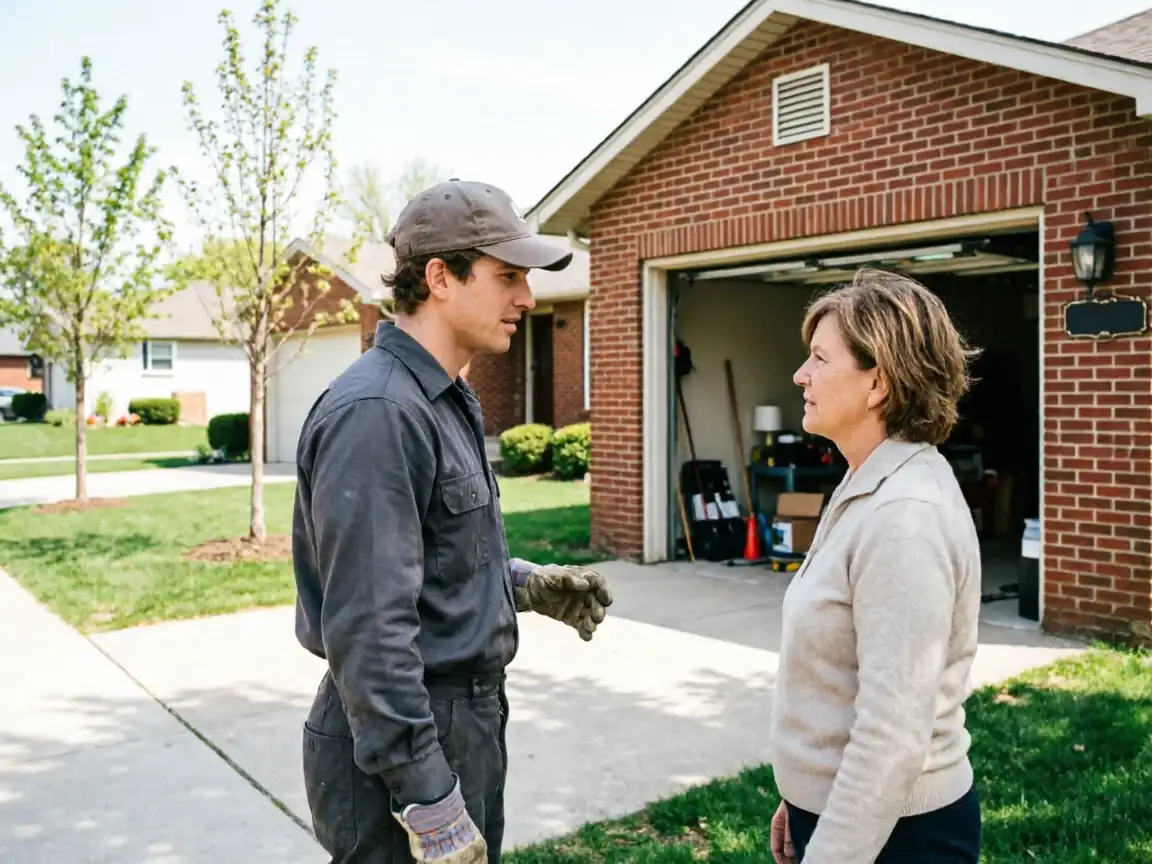
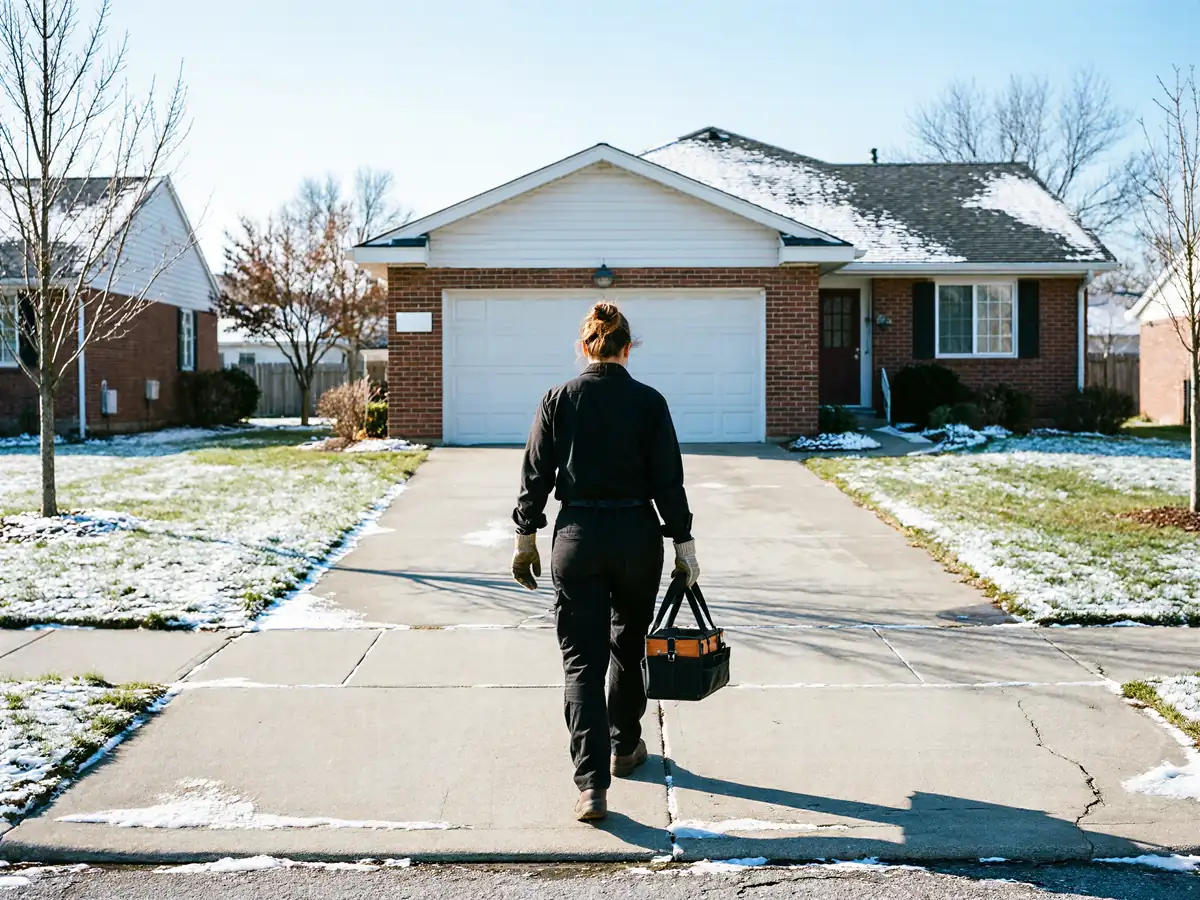
We come out from Fargo, 8 miles in, to look at the door before quoting
Measurements and matching matter more than the drive.
- 8 miles
Why This Fails Locally
This region sits in a cold-severe climate band, and a cracked or bowed panel on a mid-80s steel door doesn't just look bad - it's a gap. Thin steel from that era flexes more than current doors, and once a panel takes a hit, the seam where it meets its neighbor opens slightly. Through a Harwood winter that gap pulls in wind-driven snow and lets heat walk straight out of the garage, which matters more here than in a milder climate because the stakes of a bad seal are higher for longer stretches of the year.
The other local wrinkle is the household math. Harwood has roughly 248 households, a small enough base that panels aren't getting replaced in volume the way they might across the wider service area's 8,064 owner-occupied houses. A door failing here is more often an isolated job on an original panel that's been in place since the house was built, not a quick swap off a shelf of frequently-moved stock.
Income here runs higher than the regional median - $145,000 against the area's $116,364 - which tends to mean owners replace rather than patch once a panel's cracked, but that's a homeowner choice, not something we push.
Doing It Yourself
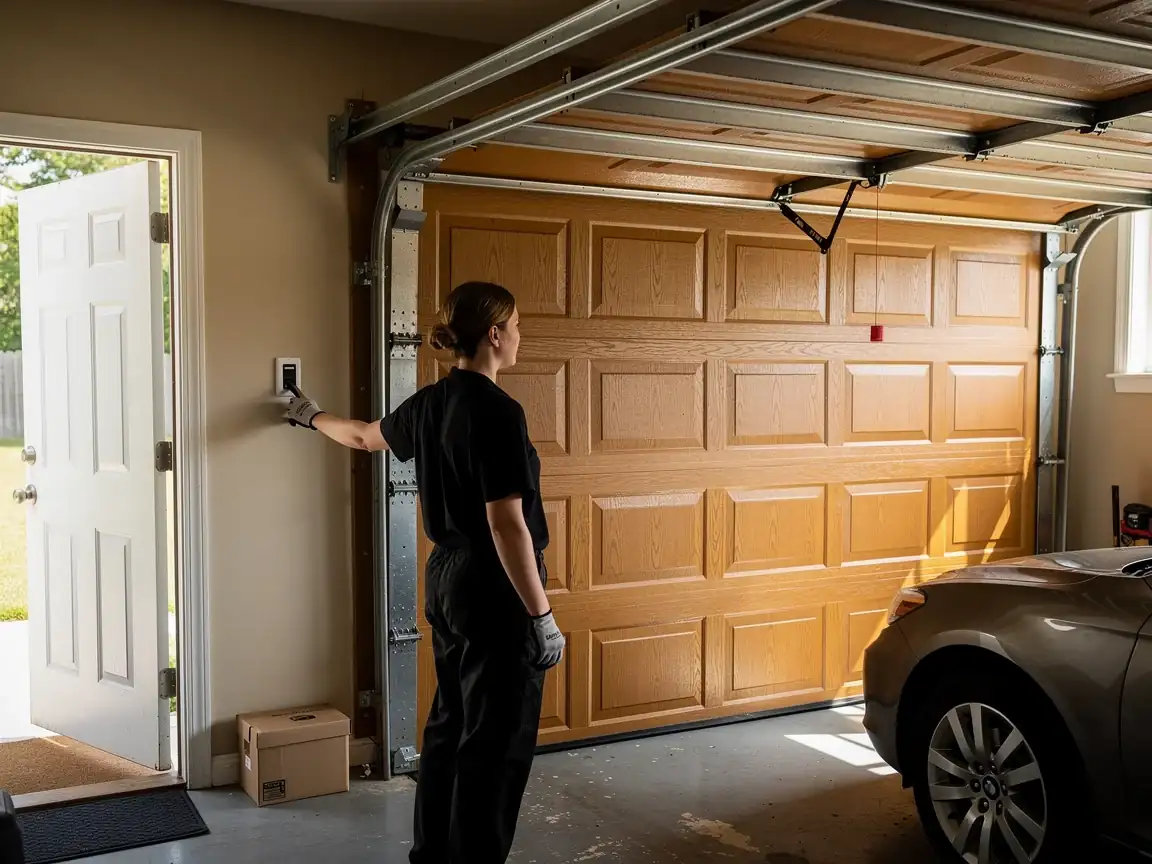
A single panel bolts on with exposed hardware, so it looks like a weekend job, and sometimes it is. If the door is up and off its spring tension - meaning it's fully open and you've blocked it there, or it's disconnected from the opener - swapping a bottom panel that isn't carrying structural load is within reach for someone comfortable with a socket set and a ladder.
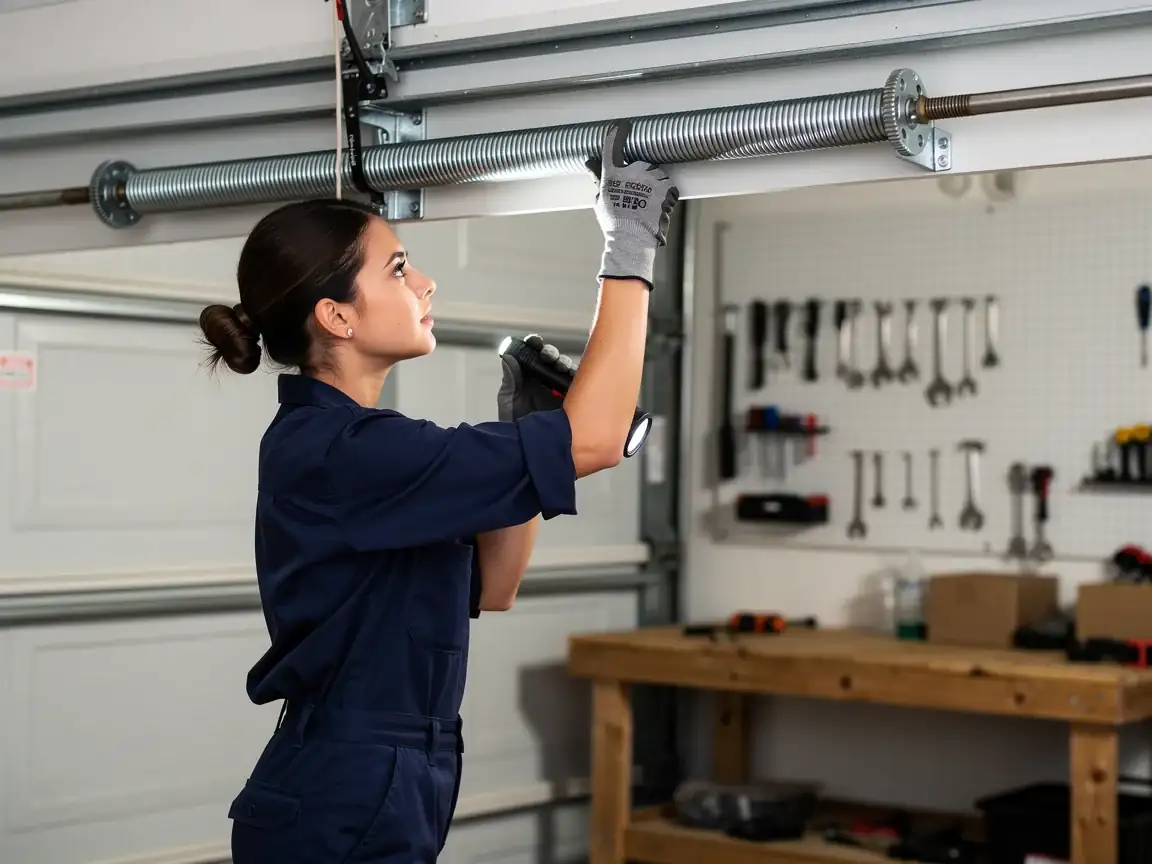
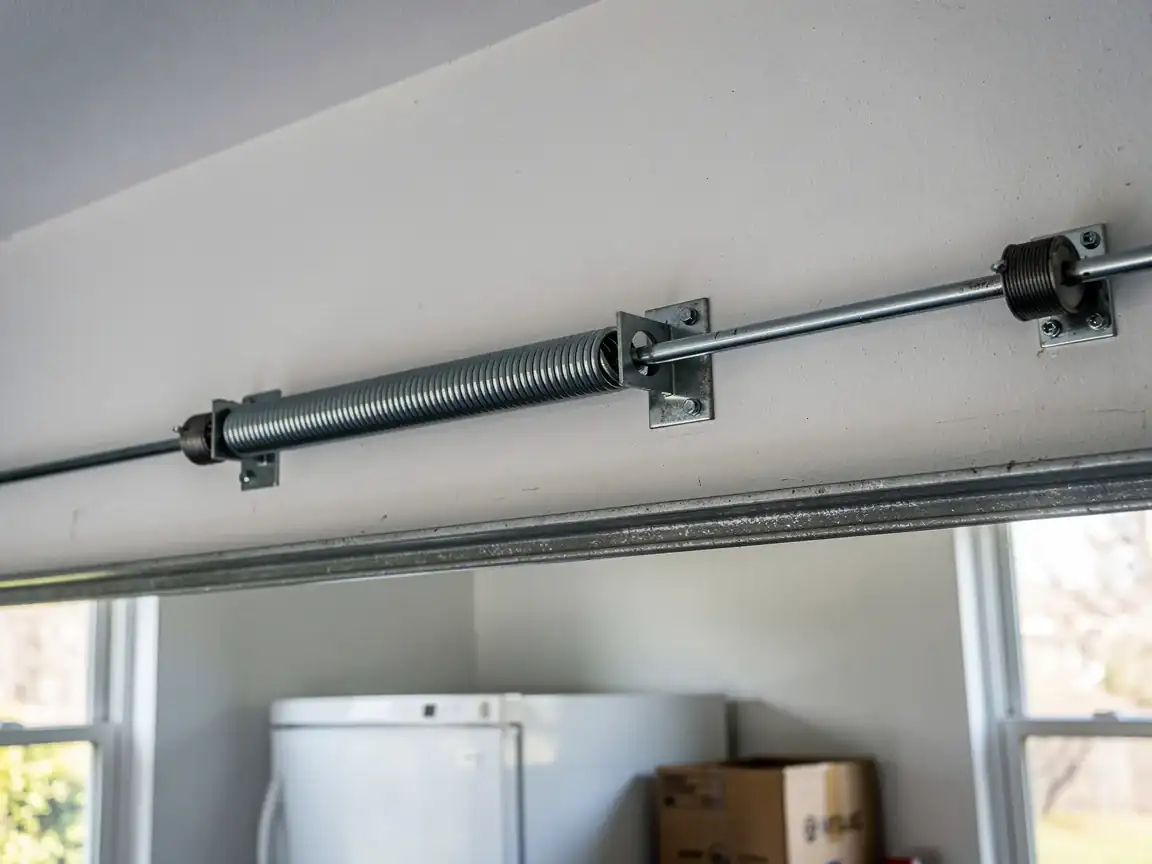
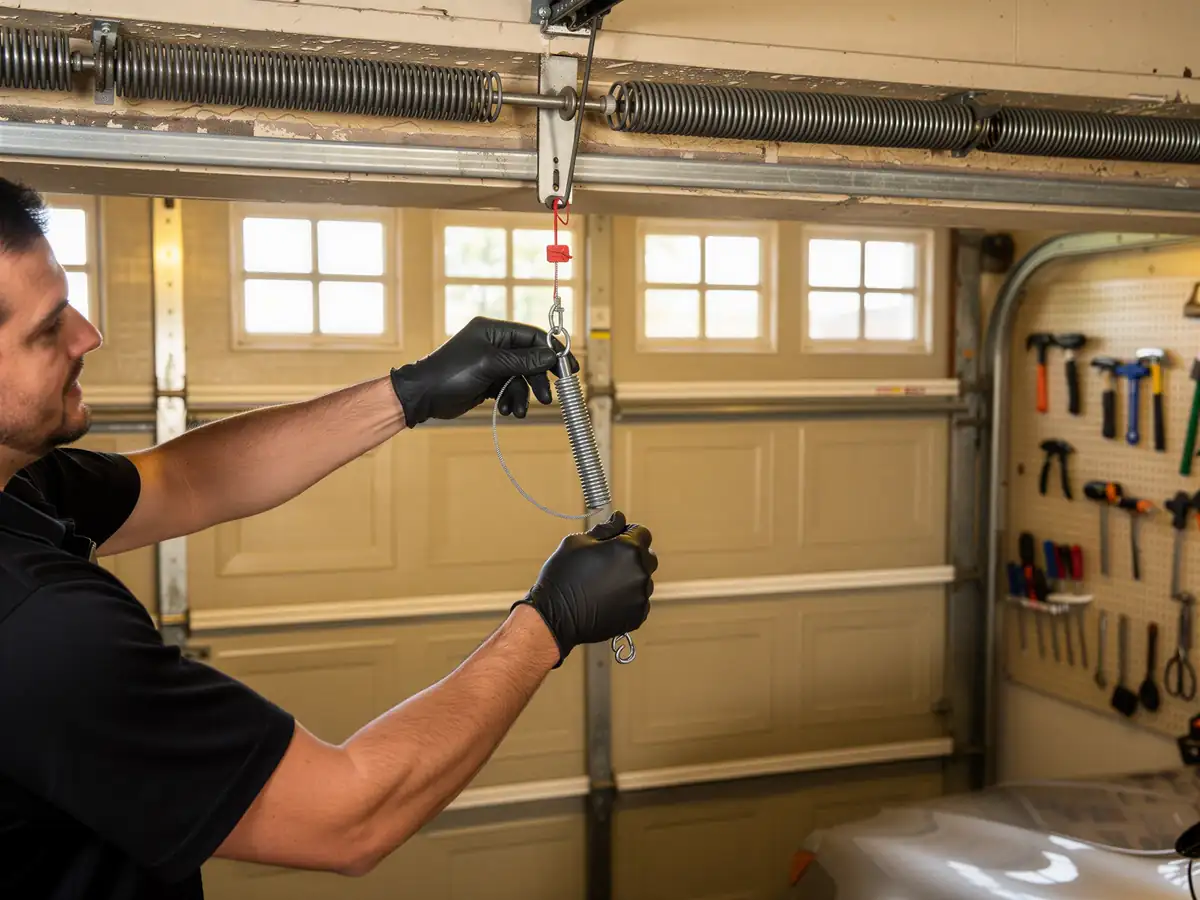
Where it goes wrong on an 86-era door is the hinge alignment. These doors were built with hinges set to a tighter tolerance than some panels sold today, and if the replacement panel's hinge holes don't sit exactly where the old ones did, the door will run crooked in the track - binding on one side, chattering on the opener, wearing the roller unevenly within months. You also can't safely touch a panel above the bottom one without taking real weight off the torsion spring first, and a spring under tension on an older door is not a place to guess.
Our limitation here: we don't sell loose panels over the counter for a DIY install. If we come out, it's to install what we bring, measured and matched to your door - not to hand over a part and leave the alignment risk with you.
Stocked Parts
We carry common steel panel sizes and a few standard embossing profiles that cover a good share of what's still standing from the 1980s-90s building wave across the service area
For a door built around 1986, that often gets us close - sometimes an exact match, sometimes a near-match that blends in once it's painted.
What we don't carry on the truck is every discontinued panel pattern from that decade
Some manufacturers changed embossing dies and panel widths more than once through the 80s and 90s, and a few of those exact profiles aren't made anymore. When that's the case, we'll say so at the estimate - options are usually a close-match panel, a full matching replacement from a current line, or in some cases swapping only the section and accepting a slight texture difference low on the door where it's least noticeable.
We also stock standard hinges, rollers, and the fasteners that go with a panel swap
Since those parts wear out around the same time a panel finally gives out, and replacing them together saves a second trip.
The Symptom
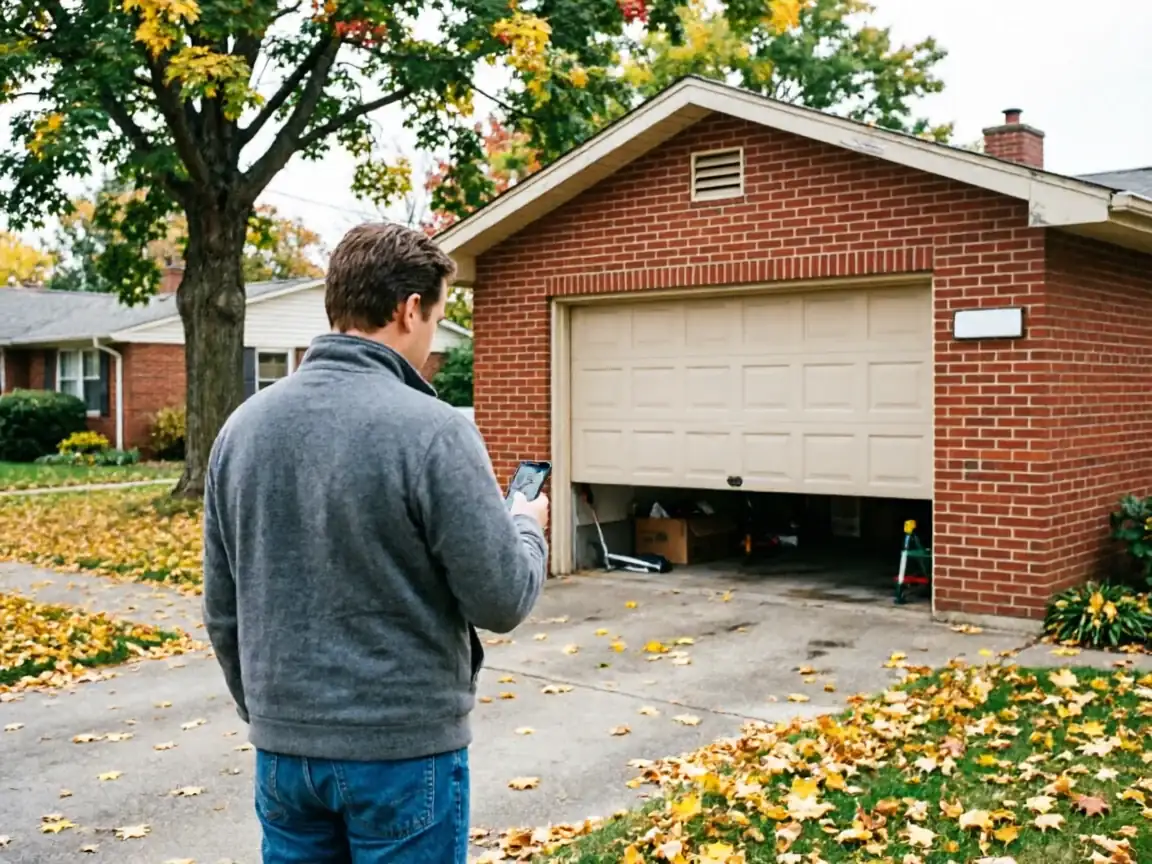
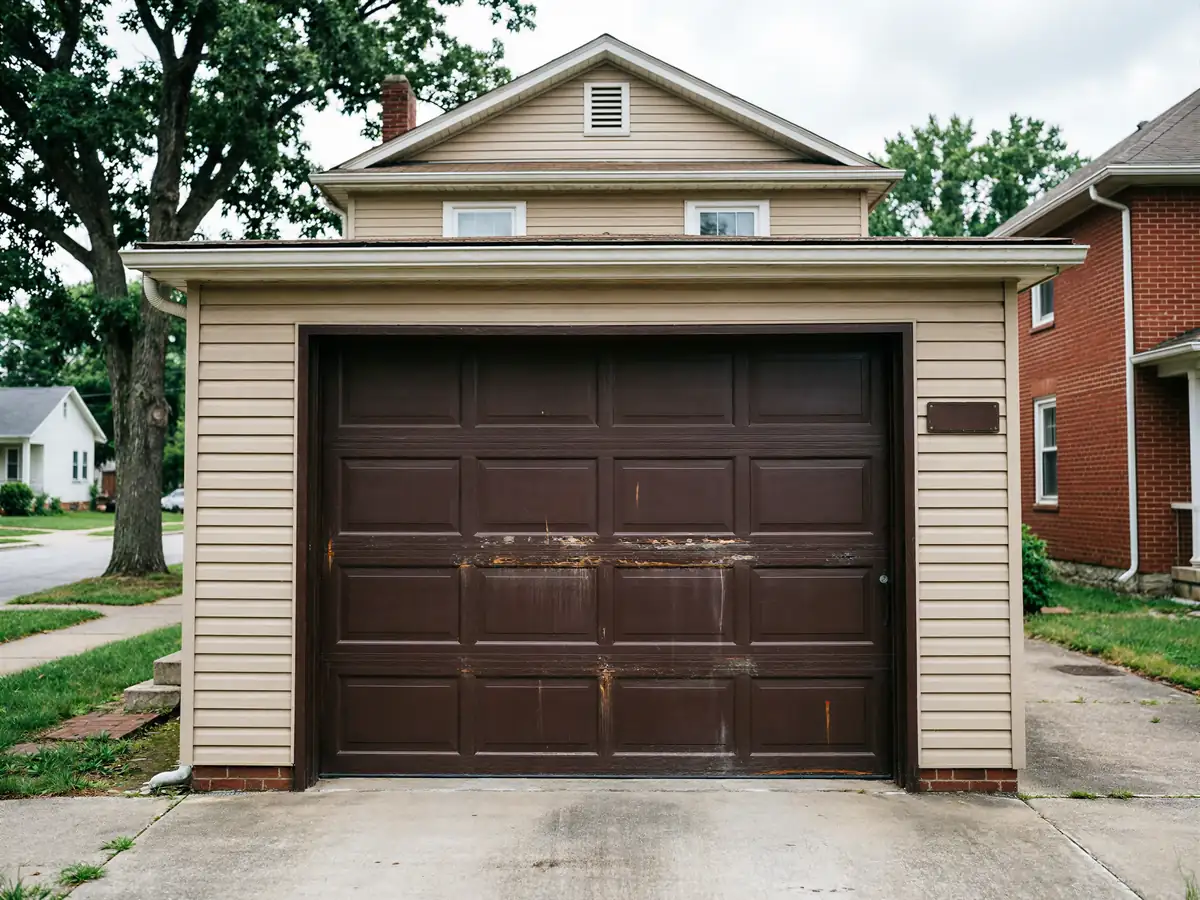
The giveaway on a door this age is usually a horizontal crease or a caved-in section low on the door, often from a backed-into car or a snowblower knock, with the panel still holding its shape everywhere else. Sometimes it's a seam that's pulled apart at a hinge point rather than a dent - the steel fatigued after 35-plus years of opening and closing rather than taking one hard hit.
If the door still opens and closes but drags, chatters, or the opener strains more than it used to, that's often the bent panel binding slightly in the track rather than a motor problem. If the whole section is caved in and the door won't seat flush against the weatherstrip at the bottom, cold air is getting through, which in a cold-severe climate is worth fixing before deep winter rather than after.
We can usually tell from a couple of photos and a few questions whether it's a straightforward panel swap or something that's pulled the track or hinges out of alignment too - worth mentioning before we make the drive out from Fargo.