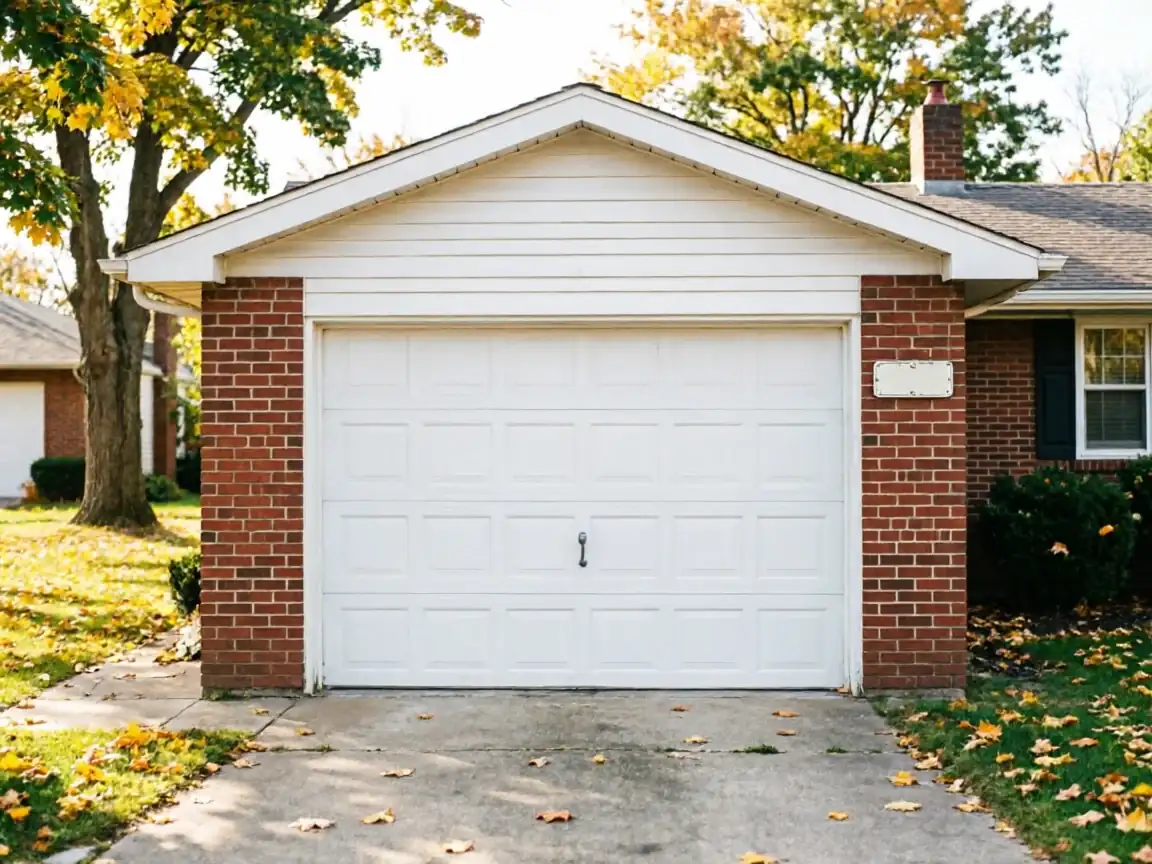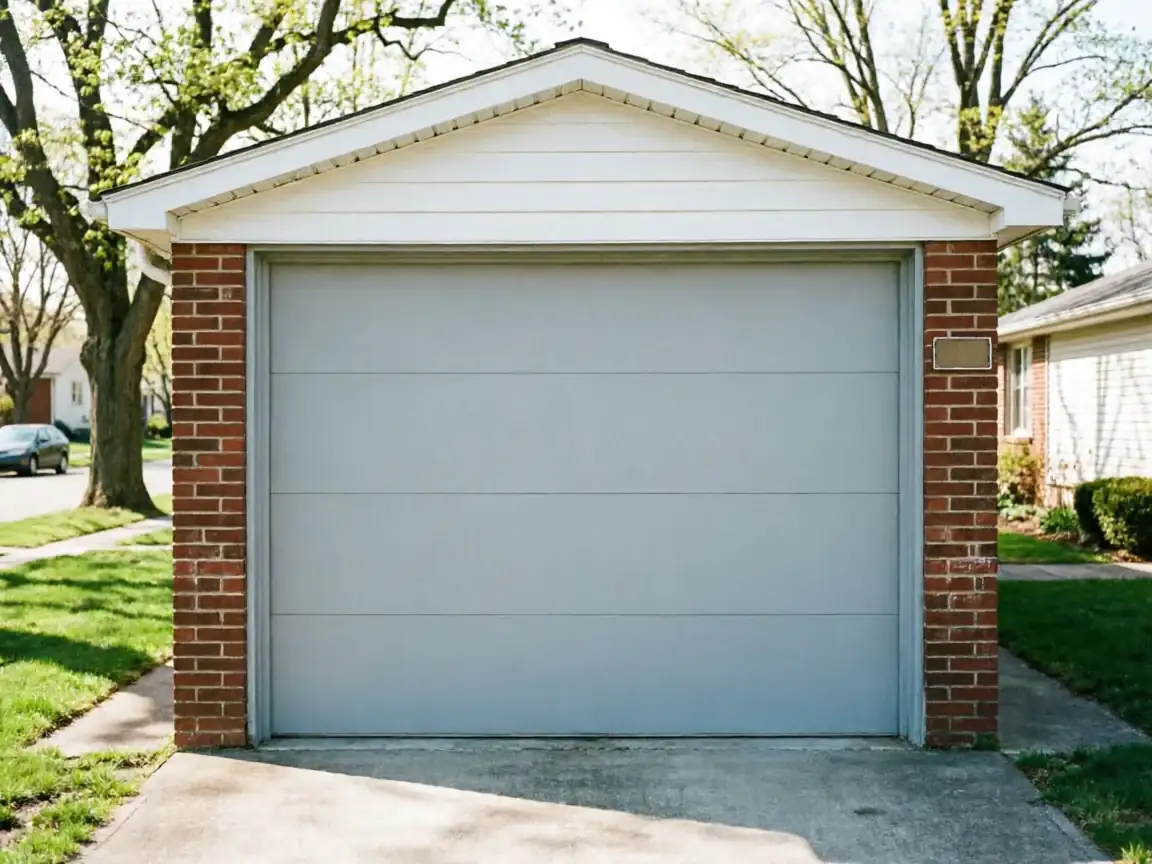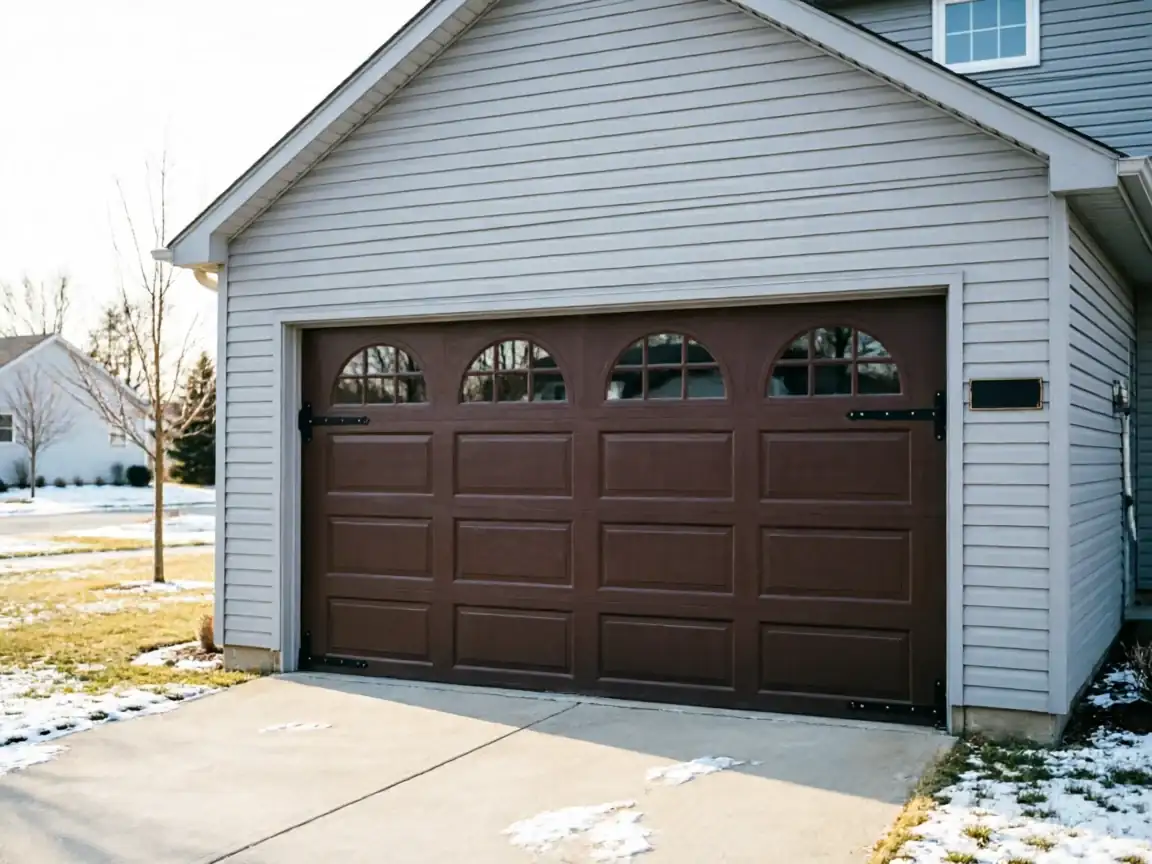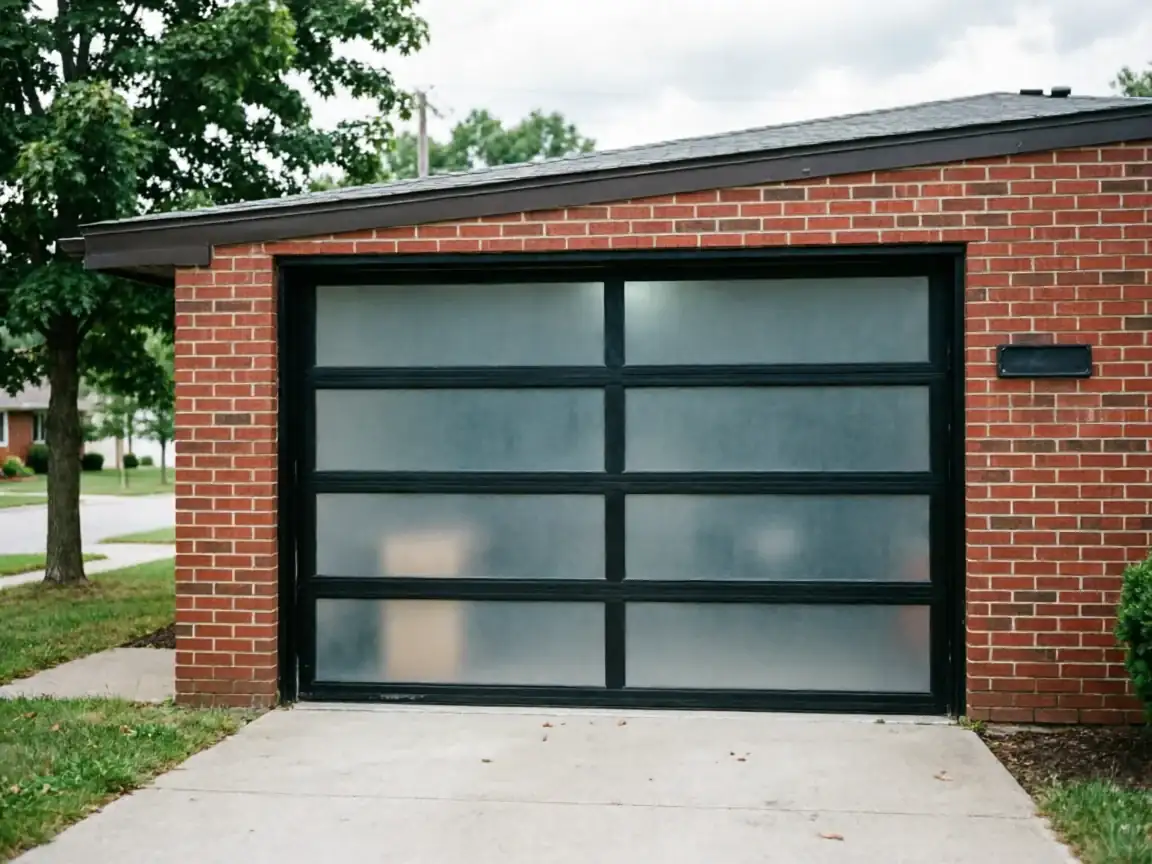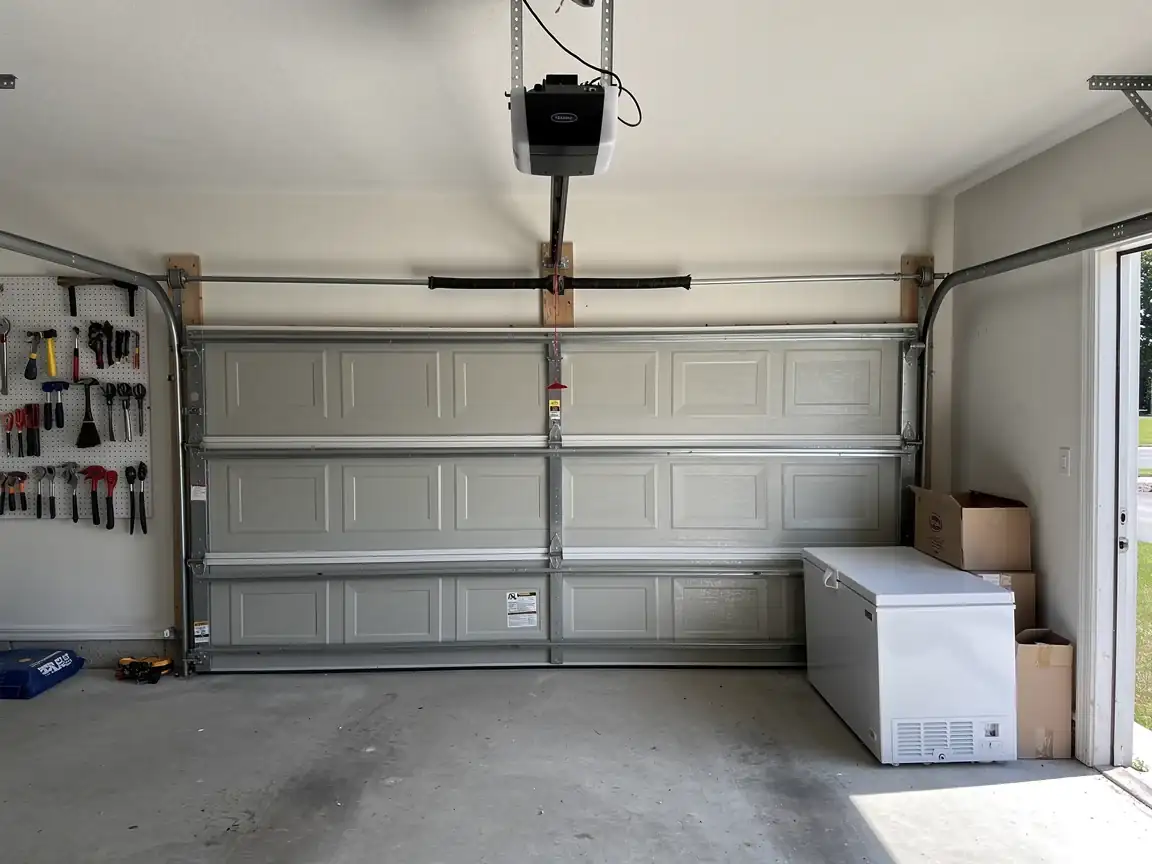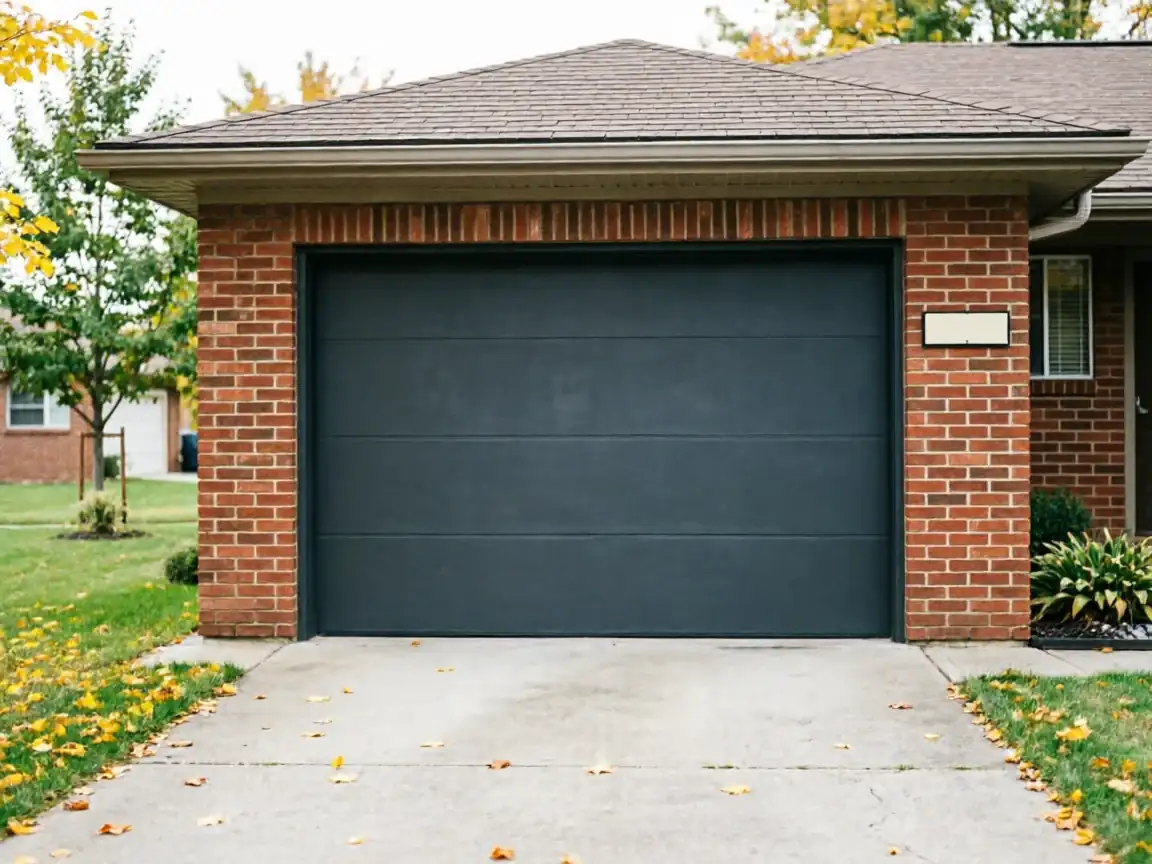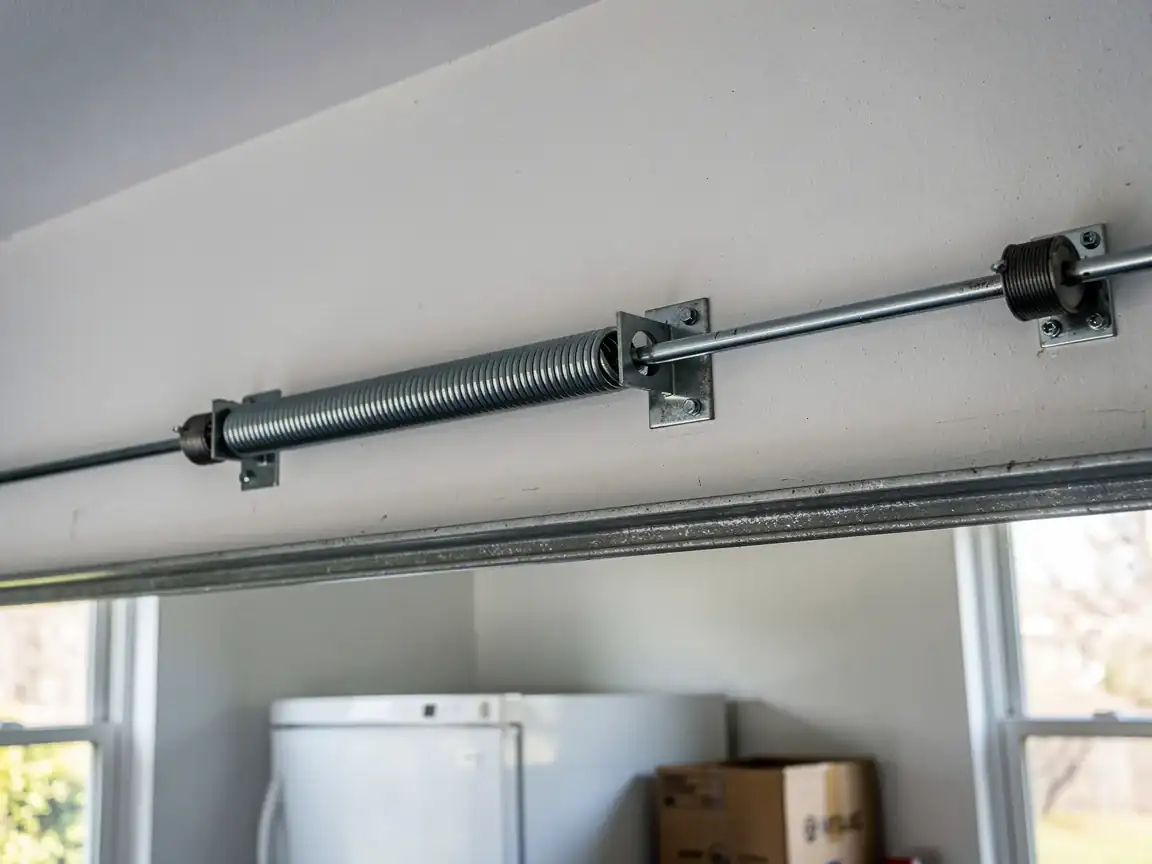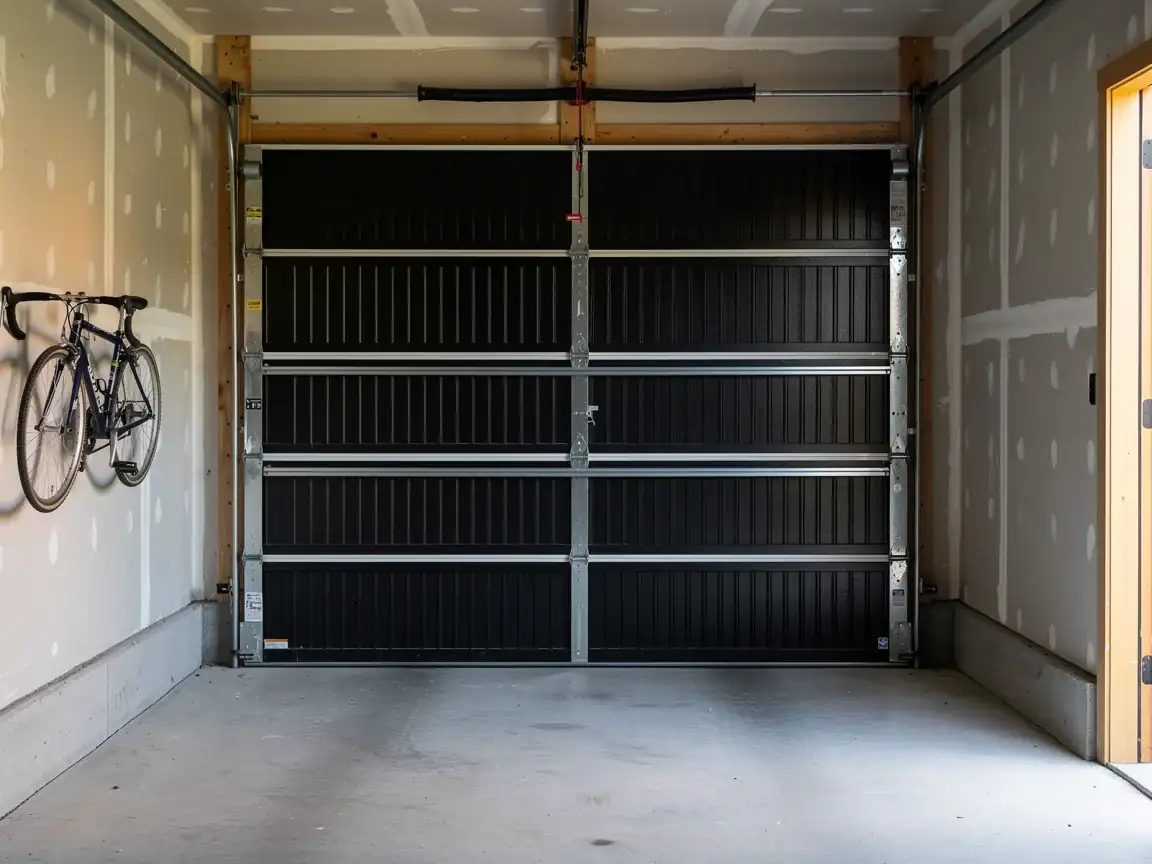
The Symptom
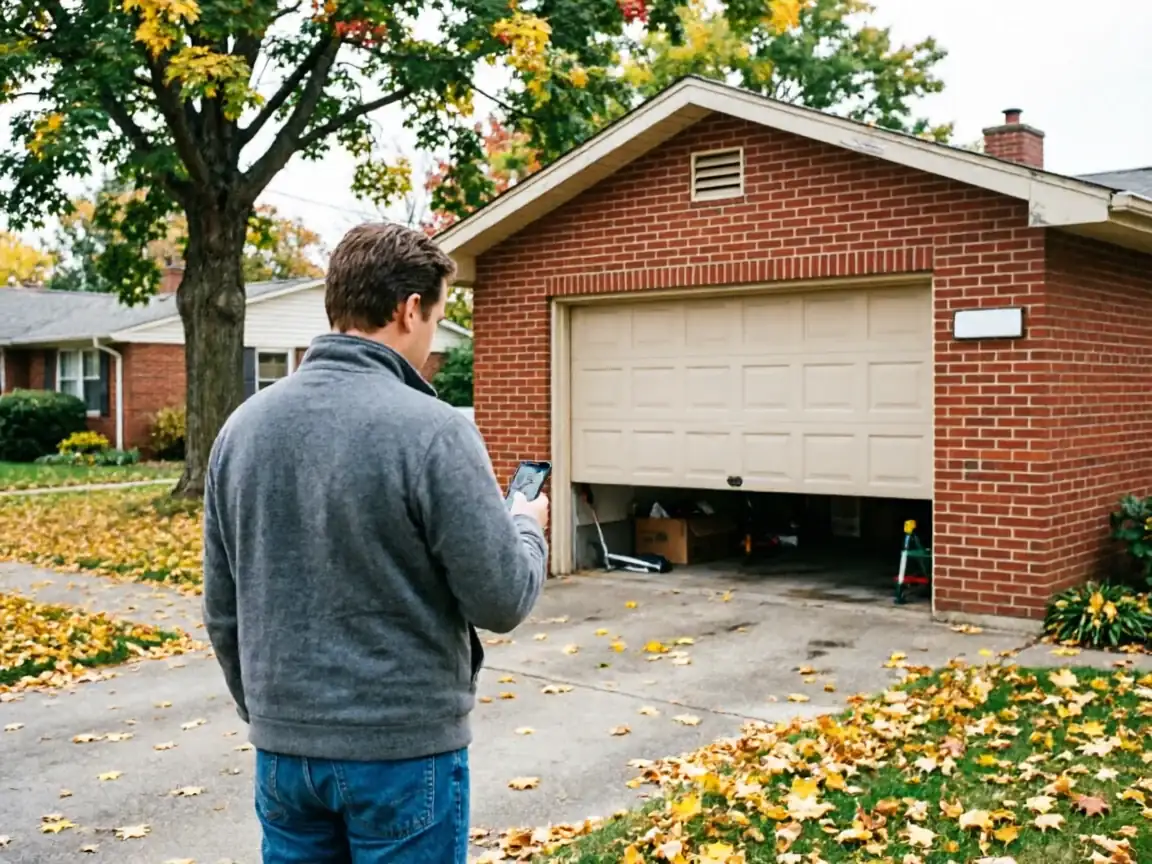
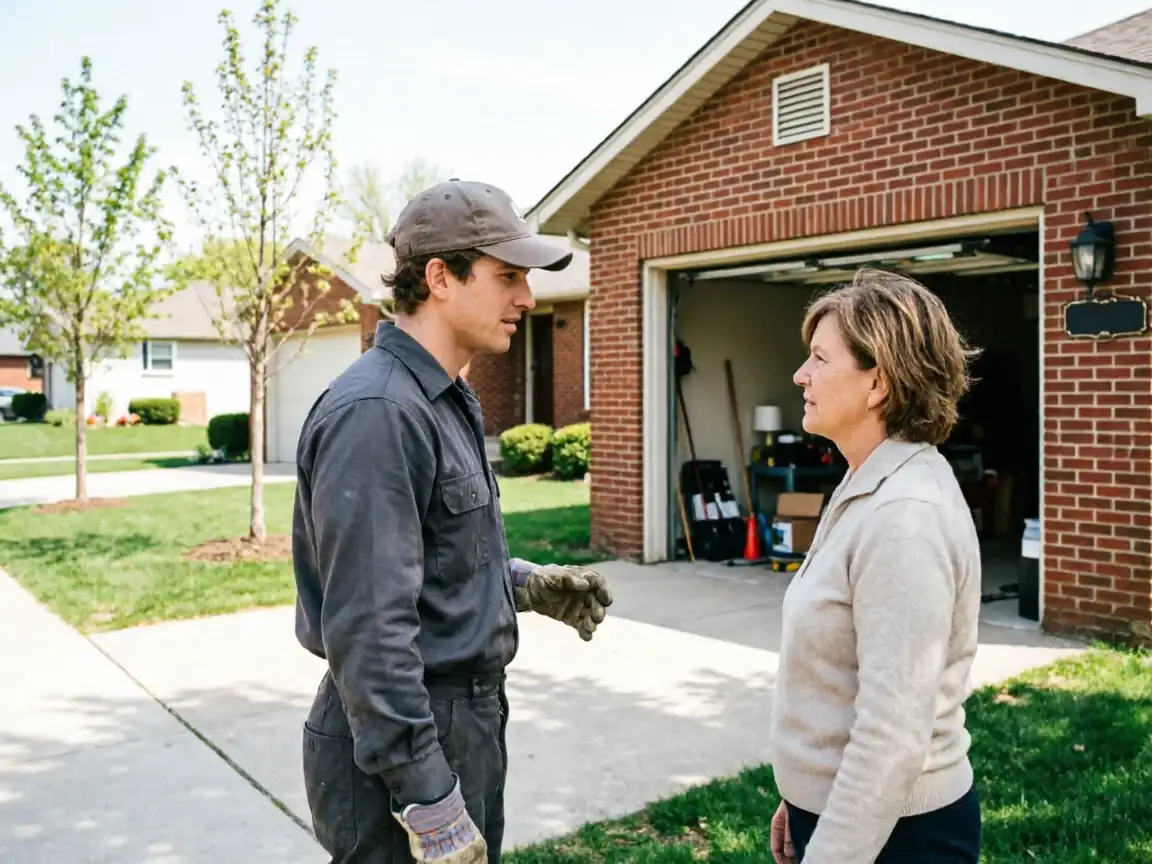
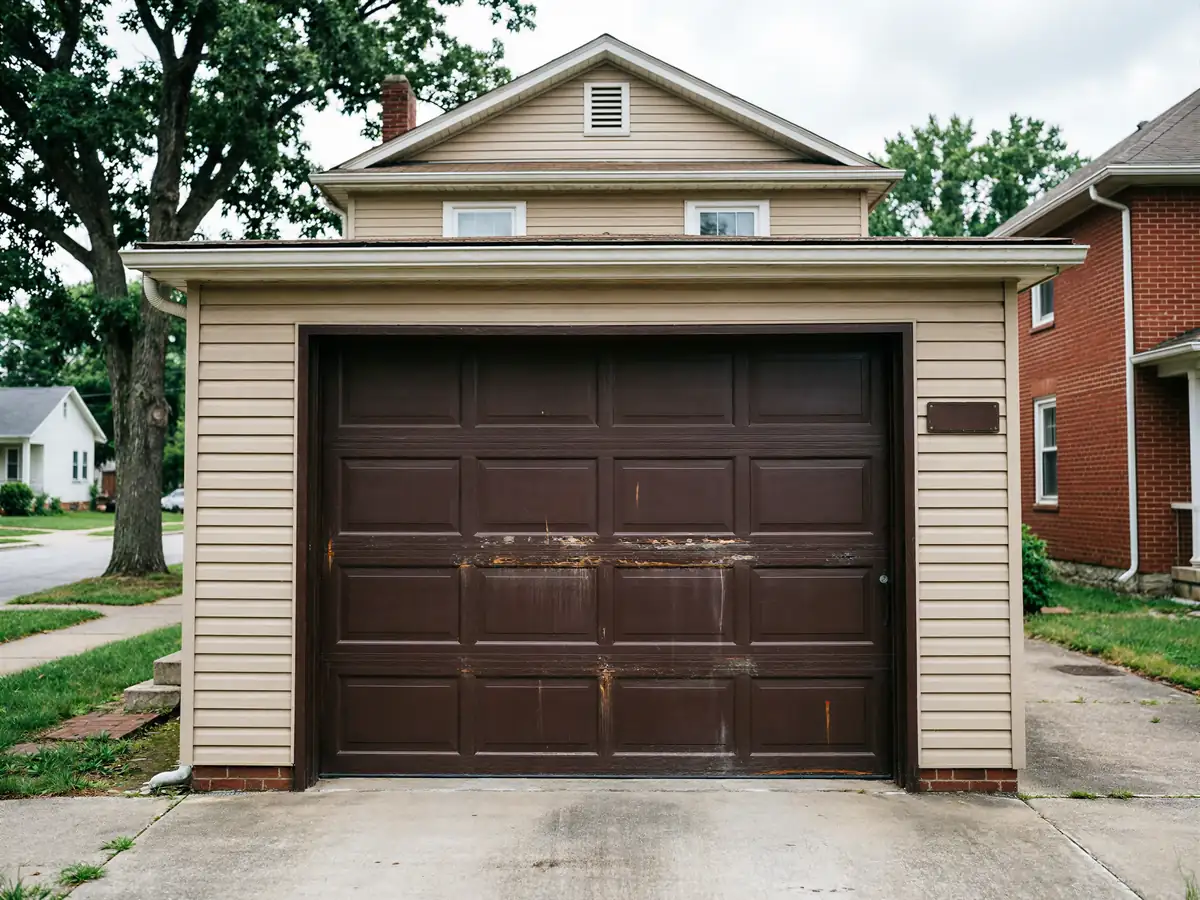
Most of Horace went up after 2001, newer than the 1969-2006 spread that covers the rest of the service area and well past the 1980s-90s stock common closer to Fargo. That means fewer rust-seized hinges and worn wood jambs, and more builder-grade torsion springs and stamped-steel rollers hitting the end of their rated cycle count around the same time, since whole blocks were built within a few years of each other. The common complaint we hear from this side of things isn't a door that won't open - it's a door that's noticeably louder than it used to be, or one that closes crooked by a half inch. Cold is the other factor. The area sits in a severe cold climate band, and factory lubricant on original hardware thickens hard by January, which shows up as a sluggish open or an opener that strains on the first try of the morning. None of that means the door is failing. It usually means the grease is twenty years old and the spring tension has drifted slightly from where it was set at installation.
Doing It Yourself
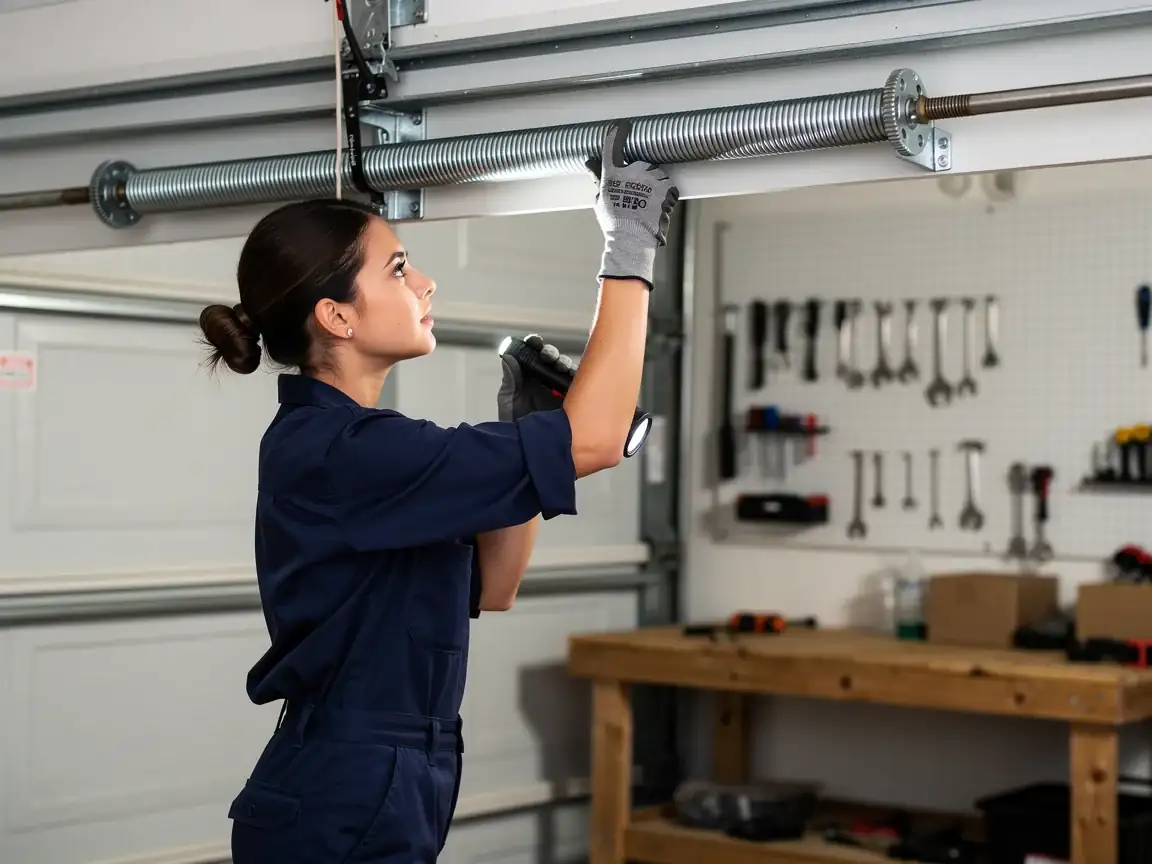
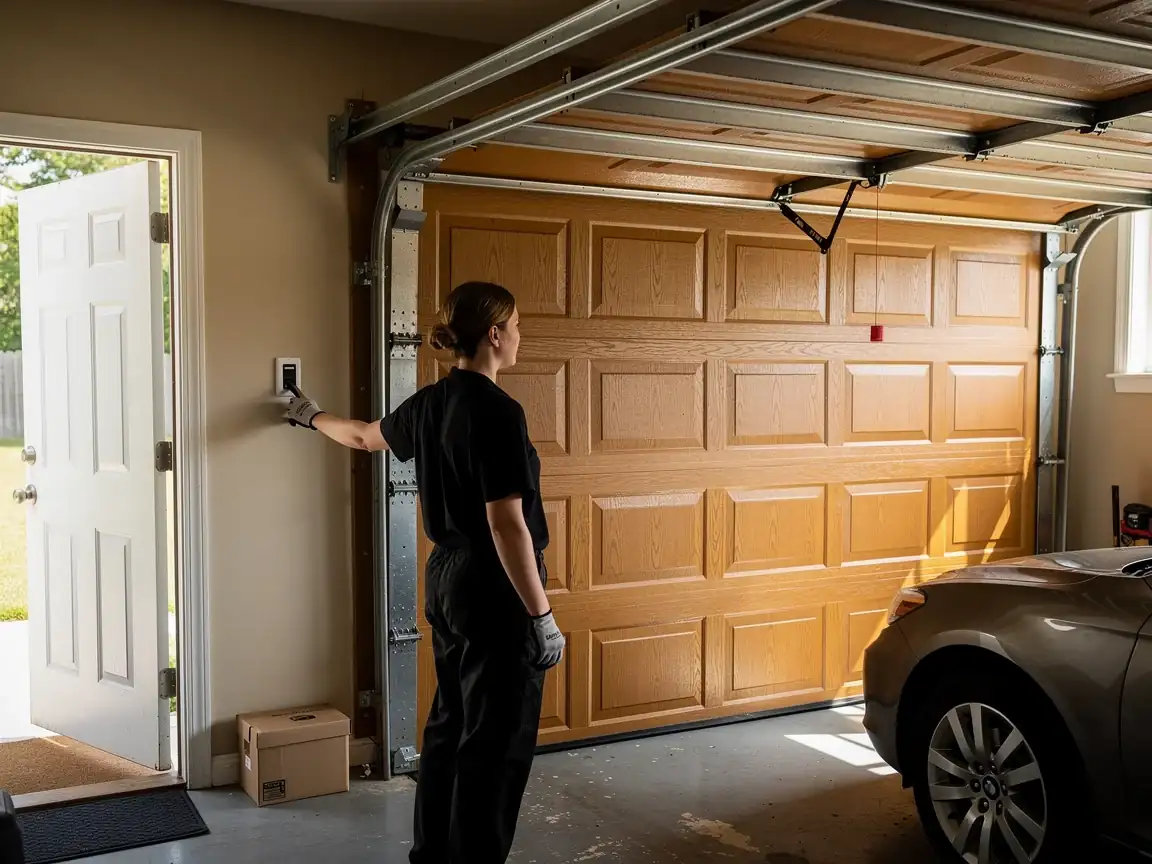
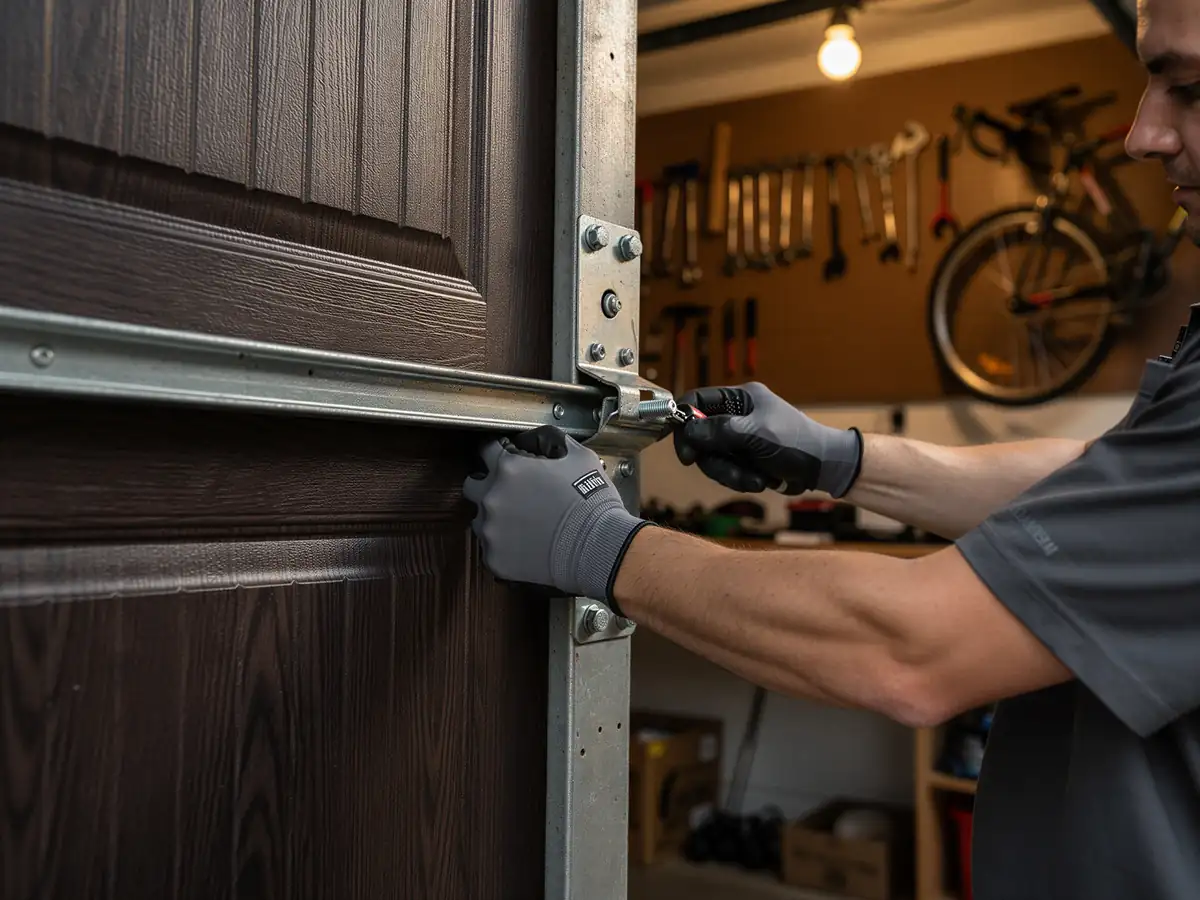
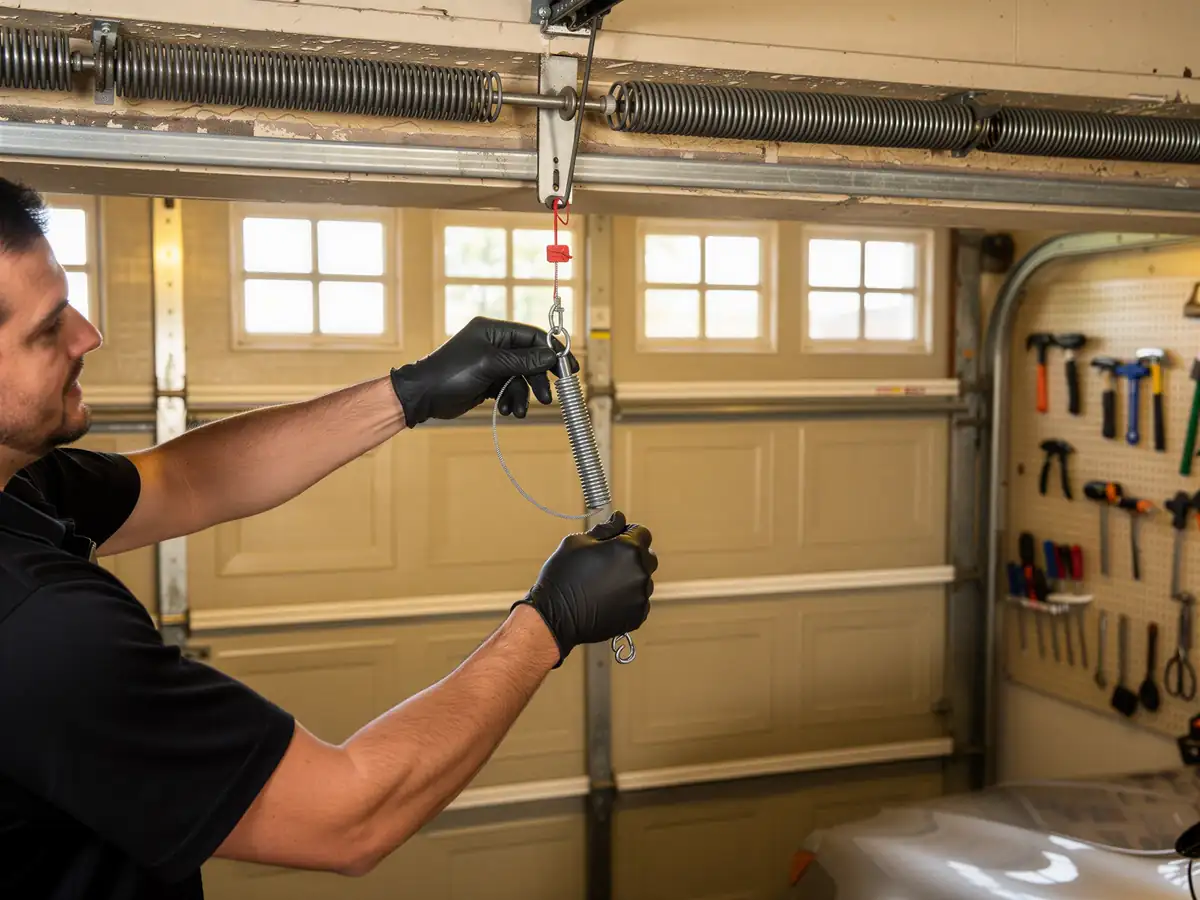
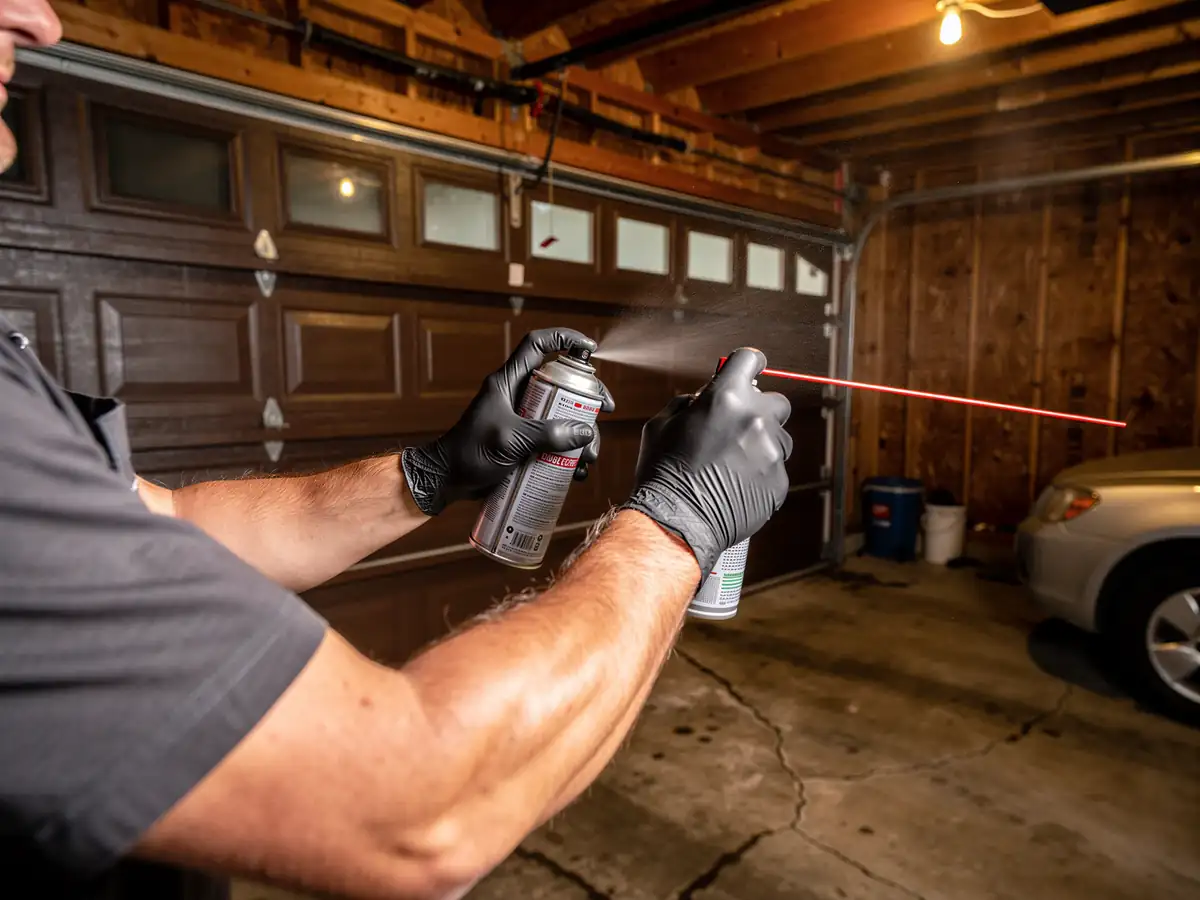
There's a real list of things worth checking before you call anyone. Pull the release cord and move the door by hand - it should travel smoothly and stay put at waist height without sliding down. If it drops, the spring has lost tension and that's not a DIY fix; springs under load are the one part of this job we don't recommend touching yourself, full stop. You can wipe down the tracks and check for visible gaps where the rollers ride, and you can look at the weatherstripping along the bottom panel for cracking, which cold makes worse every winter it's left alone. A can of garage-door-specific lubricant on the hinges and rollers (not WD-40, which washes grease out rather than adding it) is a fair DIY task twice a year. Listen for new sounds too - a squeal is usually just dry hinges, but a bang or a loud pop on open or close means something let go, and that's a call, not a project.
Stocked Parts
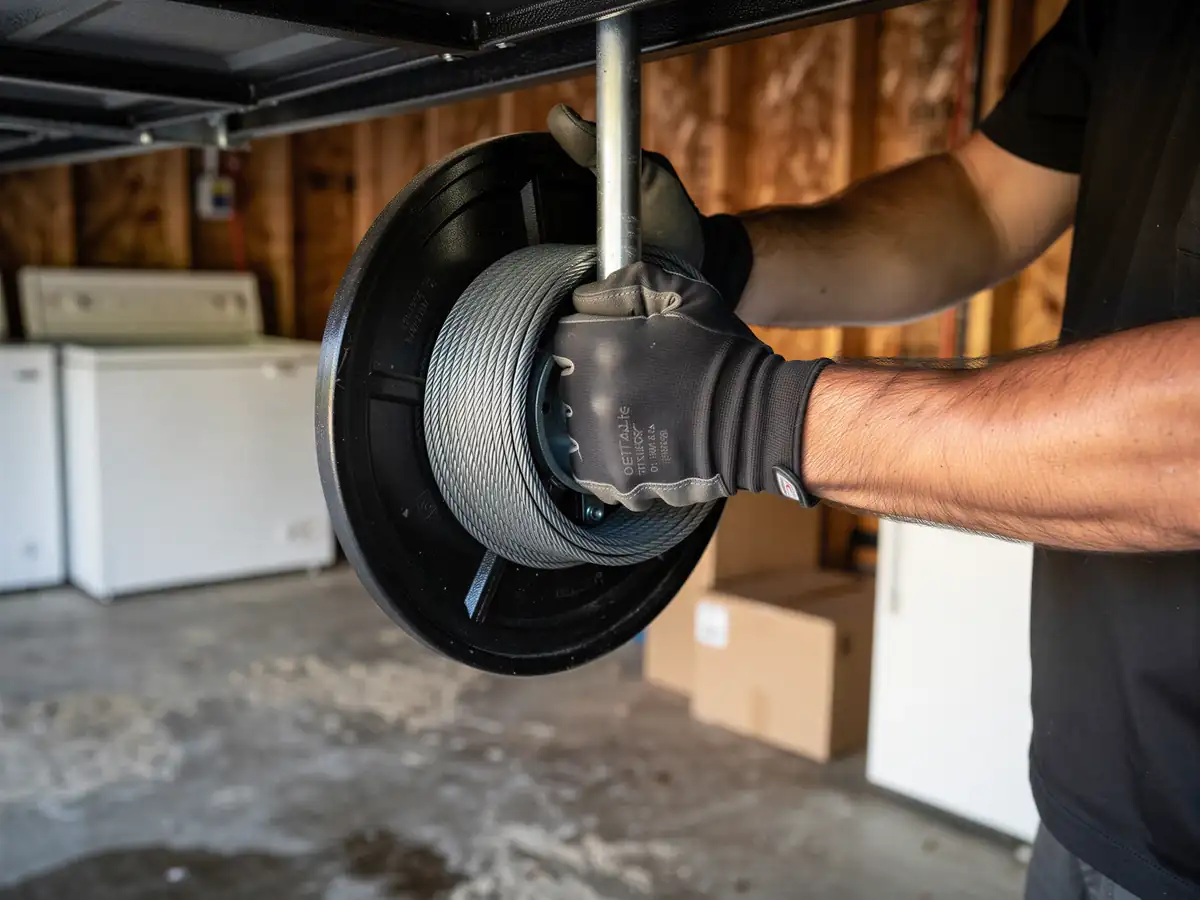
The truck carries the parts that fail most on doors from this era: standard torsion springs in common sizes, steel and nylon rollers, hinges, cables, and the weatherstrip profiles used on doors built in the early 2000s build-out. That covers the bulk of what a maintenance visit turns up. What we don't carry for every job is manufacturer-specific opener circuit boards or odd panel sections for doors that have been discontinued - those sometimes mean a second visit once the part is in, and we'll say so rather than promise a same-day fix we can't back up. Given the median household income out here runs well above the wider area's figure, we also see more owners asking about upgraded hardware during a routine visit - heavier springs, quieter rollers - rather than waiting for a failure. We stock enough of that mid-tier hardware to swap it on the spot in most cases.