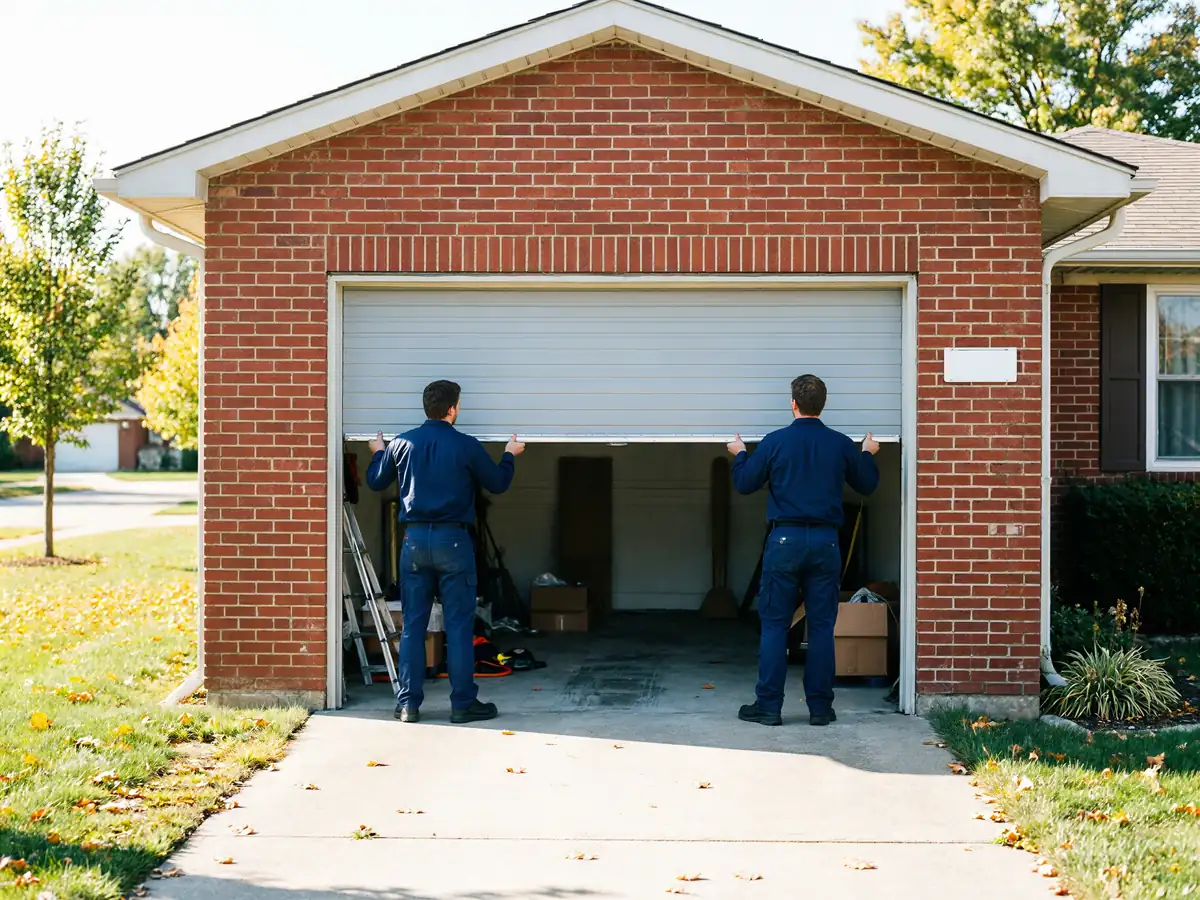
The Symptom
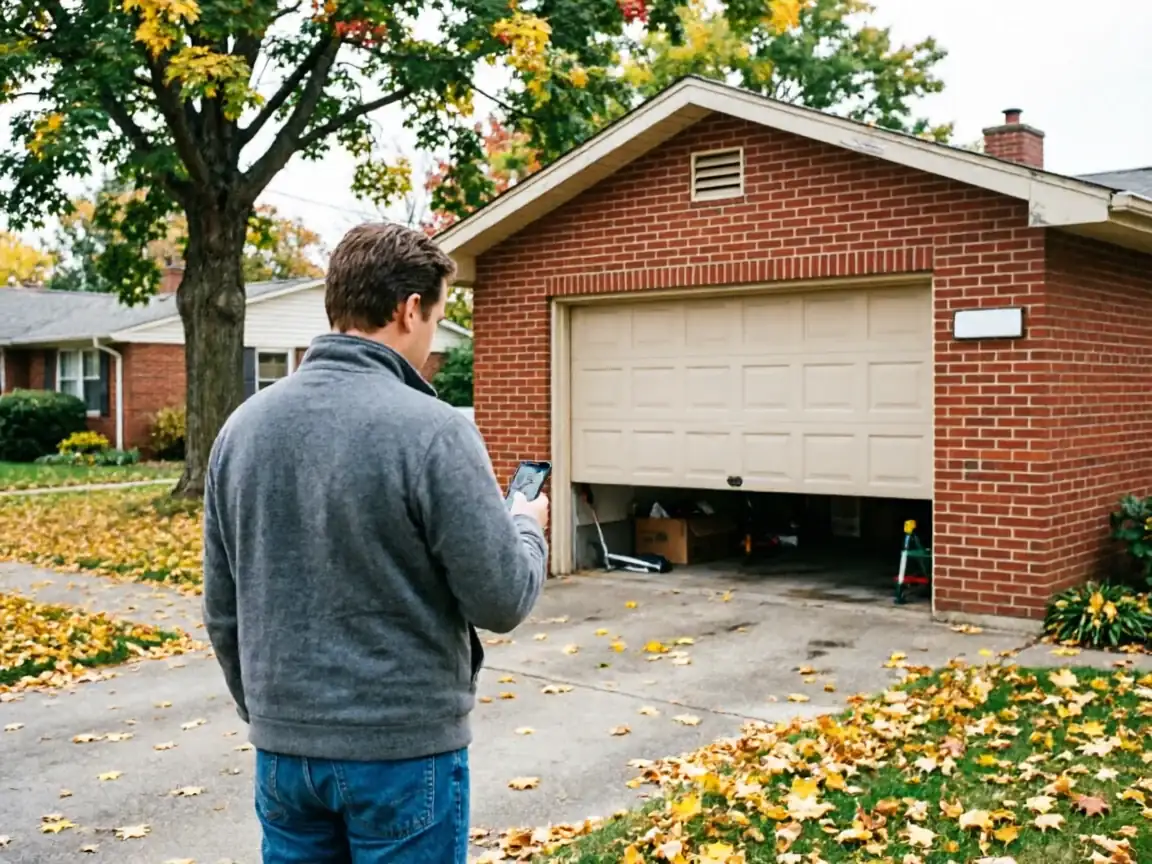
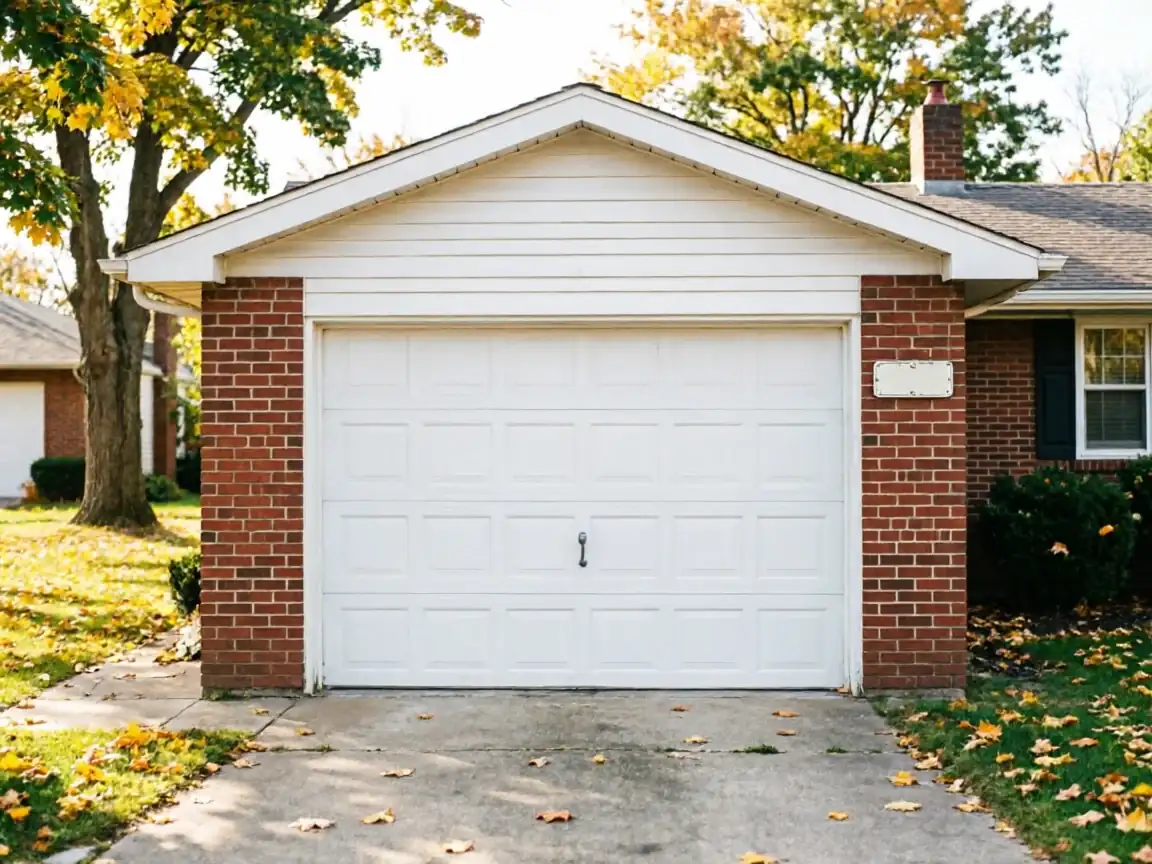
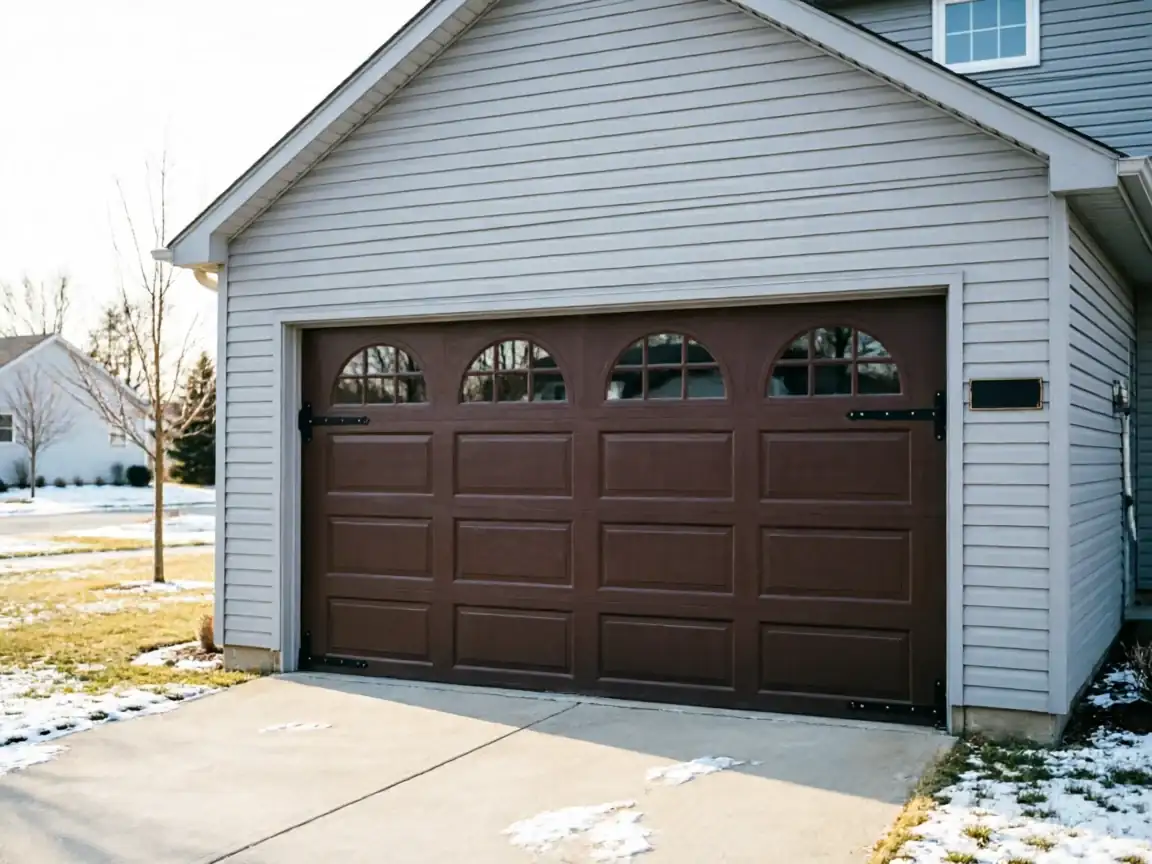
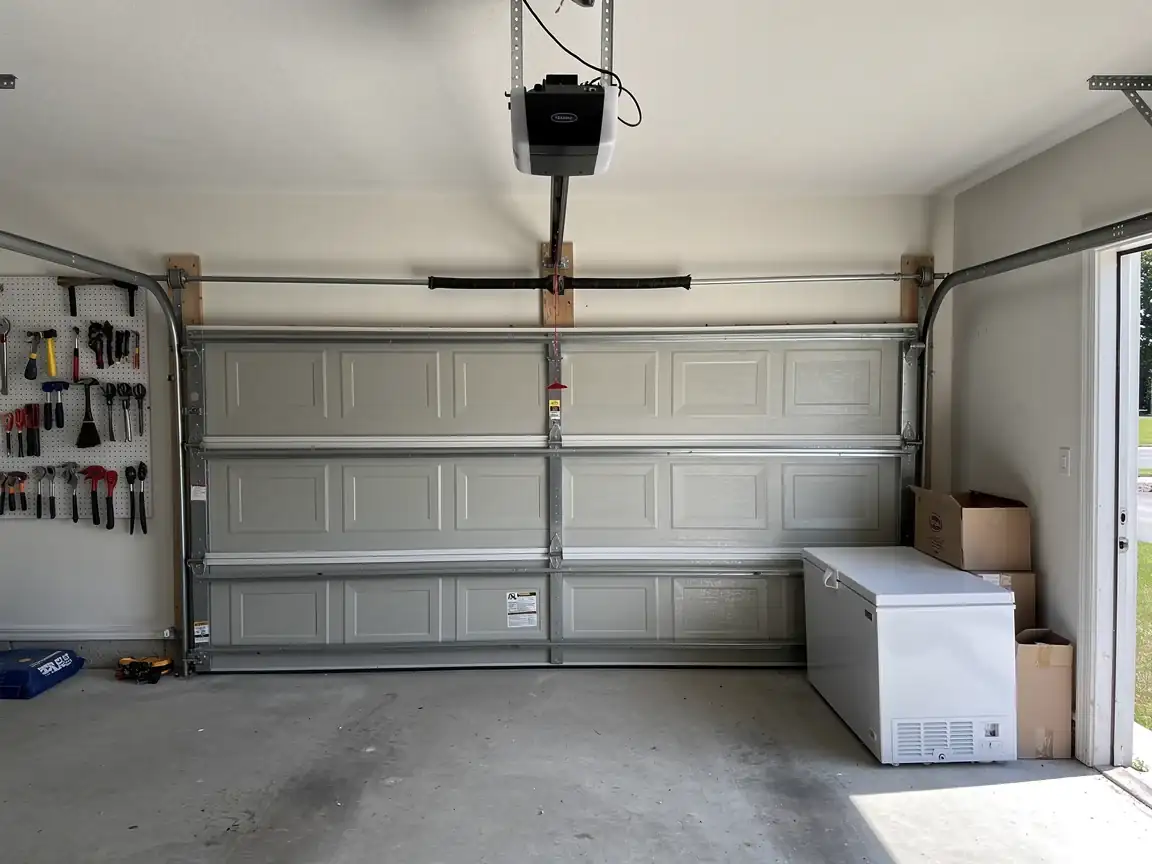
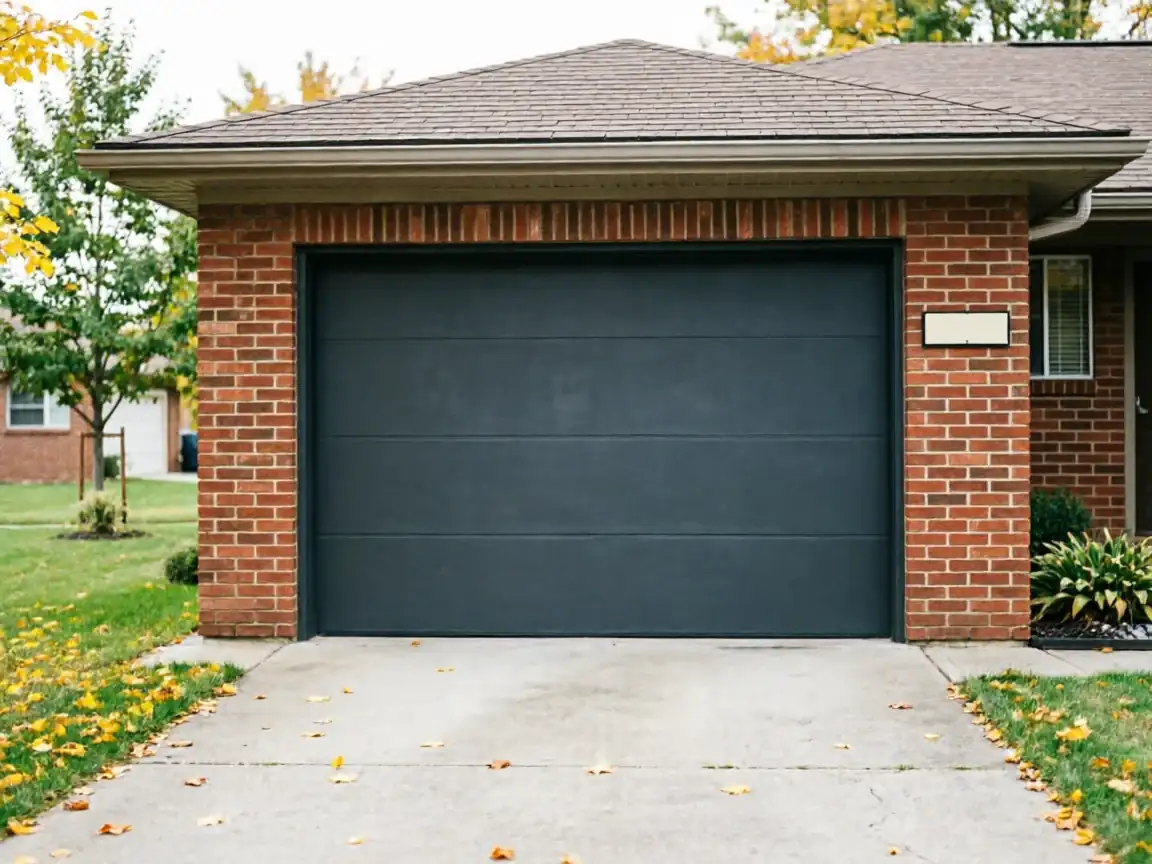
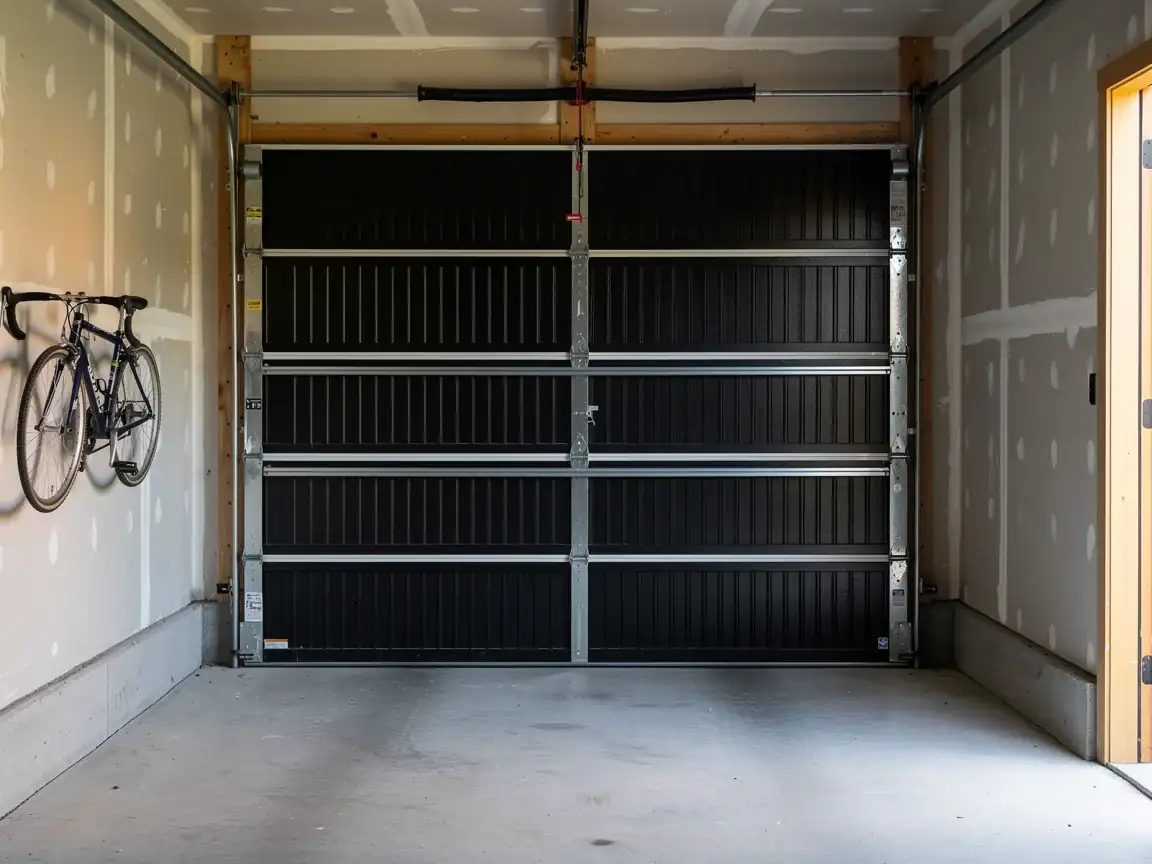
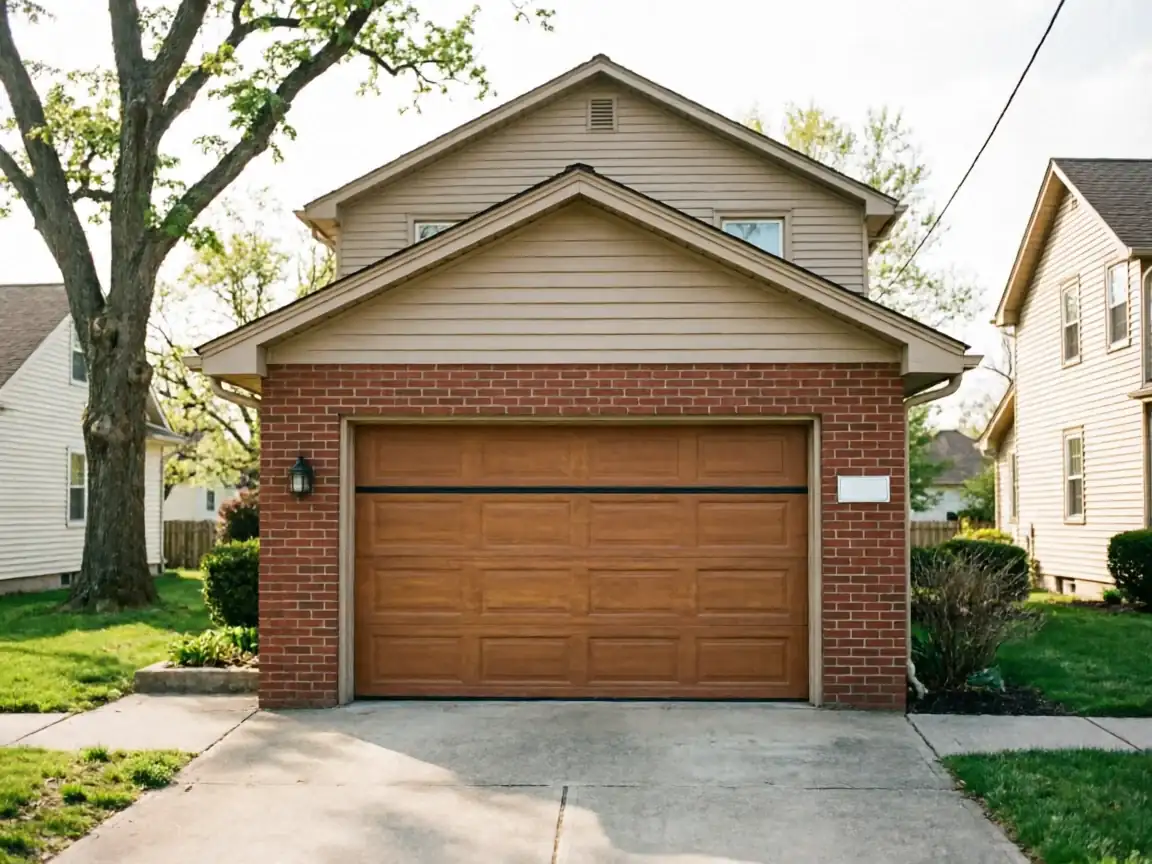
Because most houses in Horace were built around 2001, not in the 1970s-80s run that makes up a lot of older Fargo stock, the common failures here lean toward a different set of parts. You're less likely to have the old one-piece doors on side-mounted hardware that show up closer to downtown, and more likely to have steel sectional doors on torsion springs with a chain or belt-drive opener from the early 2000s. Those openers are old enough now that the circuit boards and logic boards are starting to fail, and the springs on a house that age are often on their second set already if the door gets regular use. In a severe cold climate like this one, low temperatures stiffen steel and make brittle springs more likely to let go on the first really cold morning of the season - that's a call we get a lot once the weather turns. If your door is slow to respond to the remote, reverses partway up, or the spring makes a loud bang and then won't lift at all, that tracks with what a 2001-era door in this climate tends to do as it ages, not with a brand-new problem.
Doing It Yourself
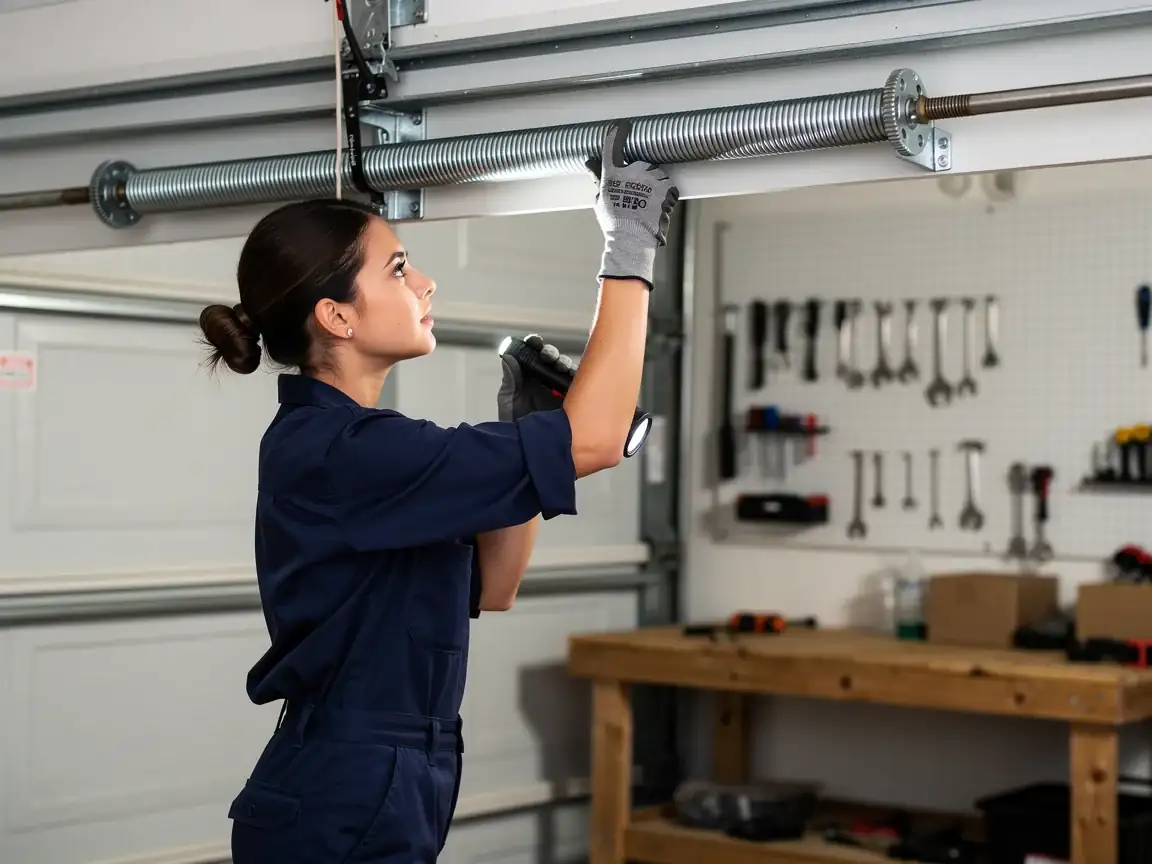
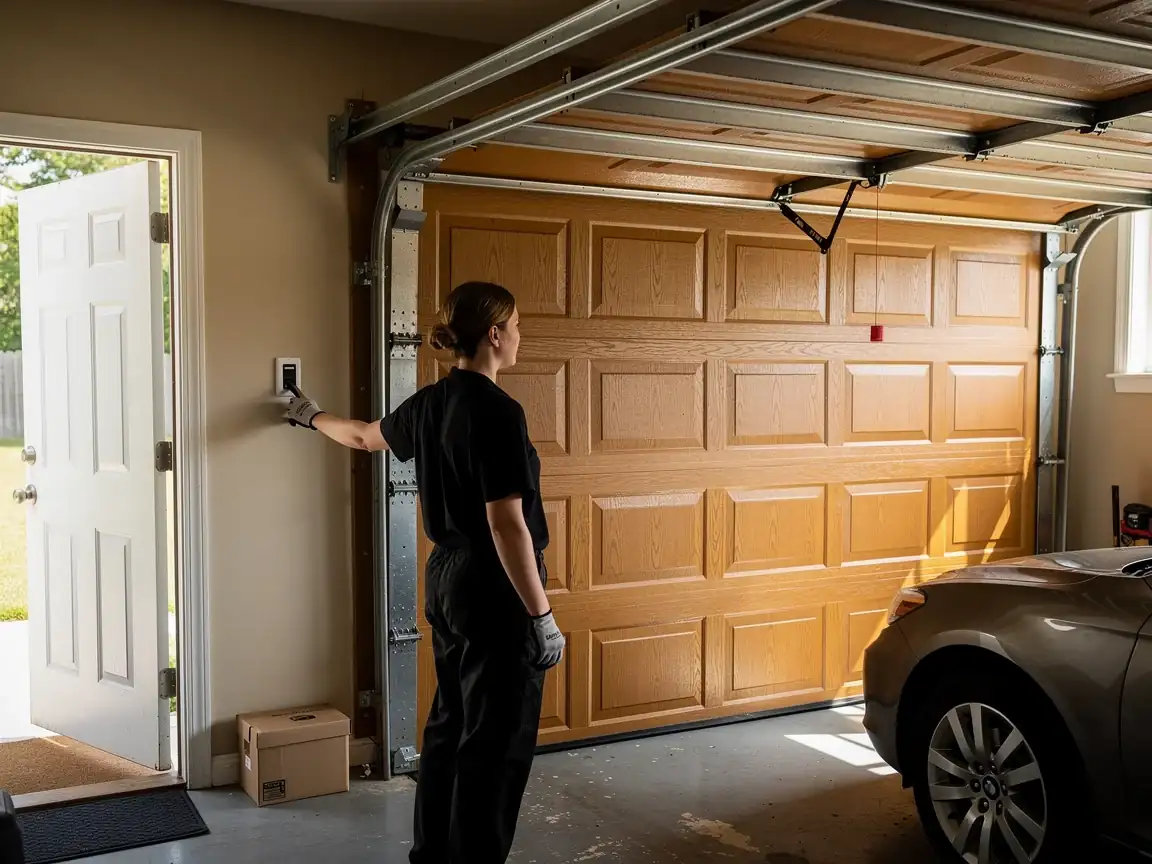
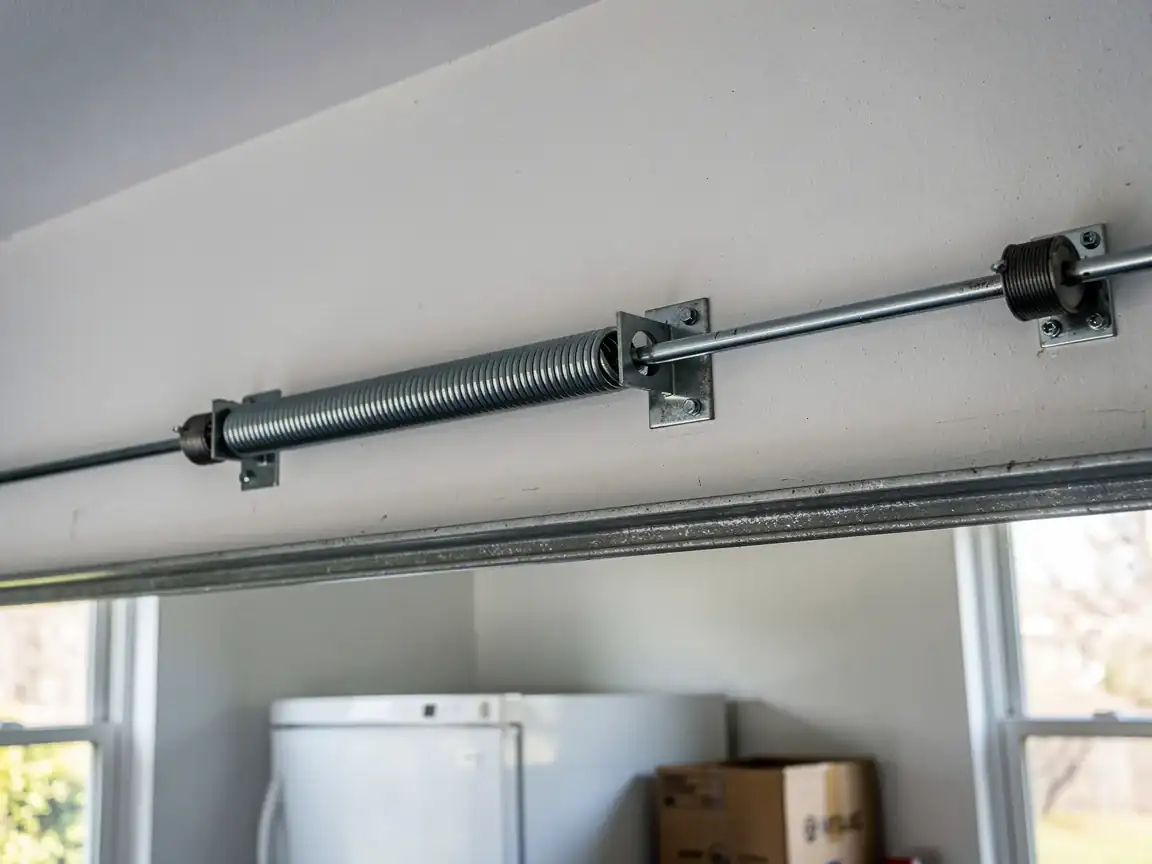
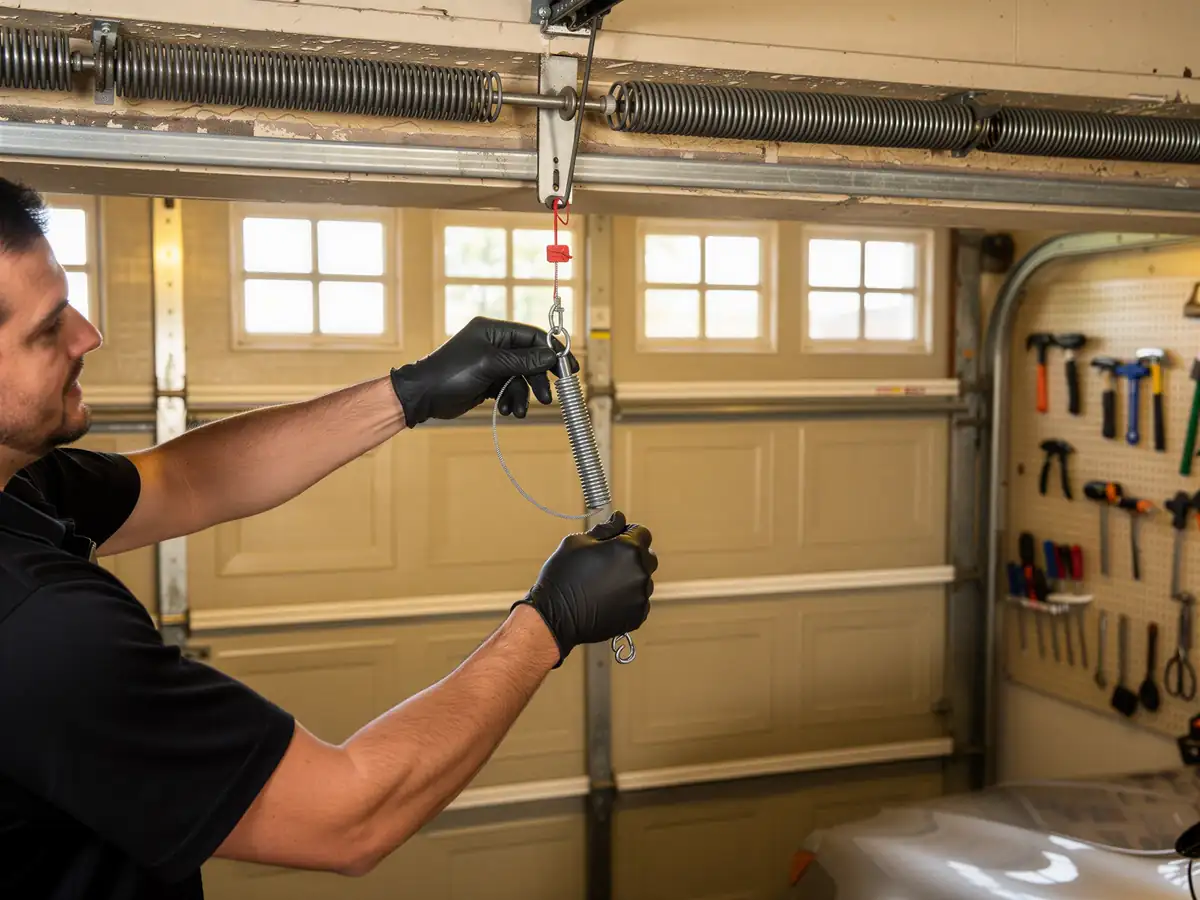
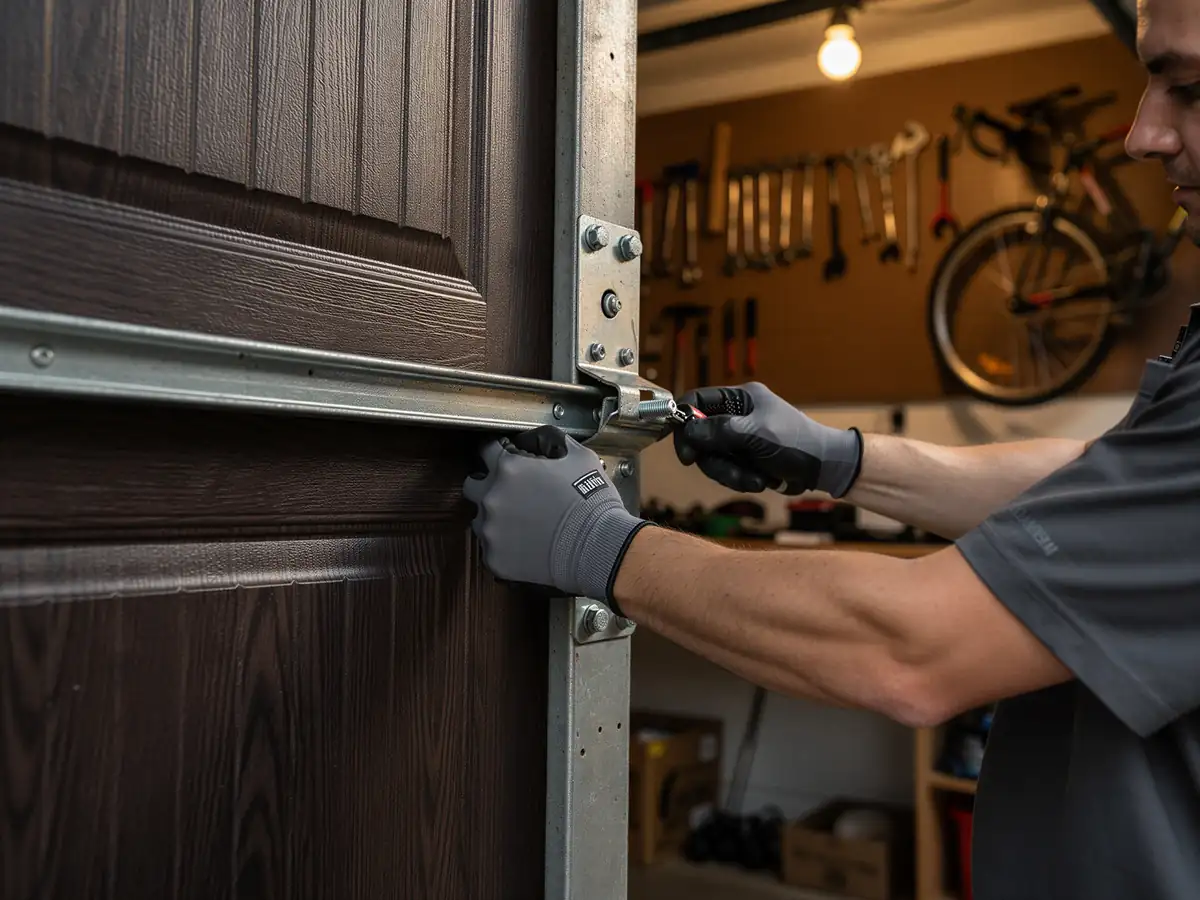
Some of this you can check yourself before calling anyone. If the door won't respond to the opener at all, make sure the wall switch and remote both have power and the opener itself is plugged in - sounds obvious, but a tripped outlet is a free fix. You can also look at the tracks for visible dents or a roller that's jumped out, and tighten loose bolts on the brackets if you can reach them safely. What you should not do is touch the torsion spring. It's wound under enough tension to break bones, and on a house this age the spring has usually been under load for twenty-plus years without replacement - that's exactly the kind of spring that lets go fast when you start working on it. Cable tension and spring replacement are not DIY jobs regardless of how handy you are. If the door is heavy to lift by hand, is off its track, or the spring has visibly separated, stop and call. Saving an afternoon isn't worth a trip to the ER, and a spring that's already fatigued from two decades of cold-weather cycling doesn't give much warning before it fails.
Stocked Parts
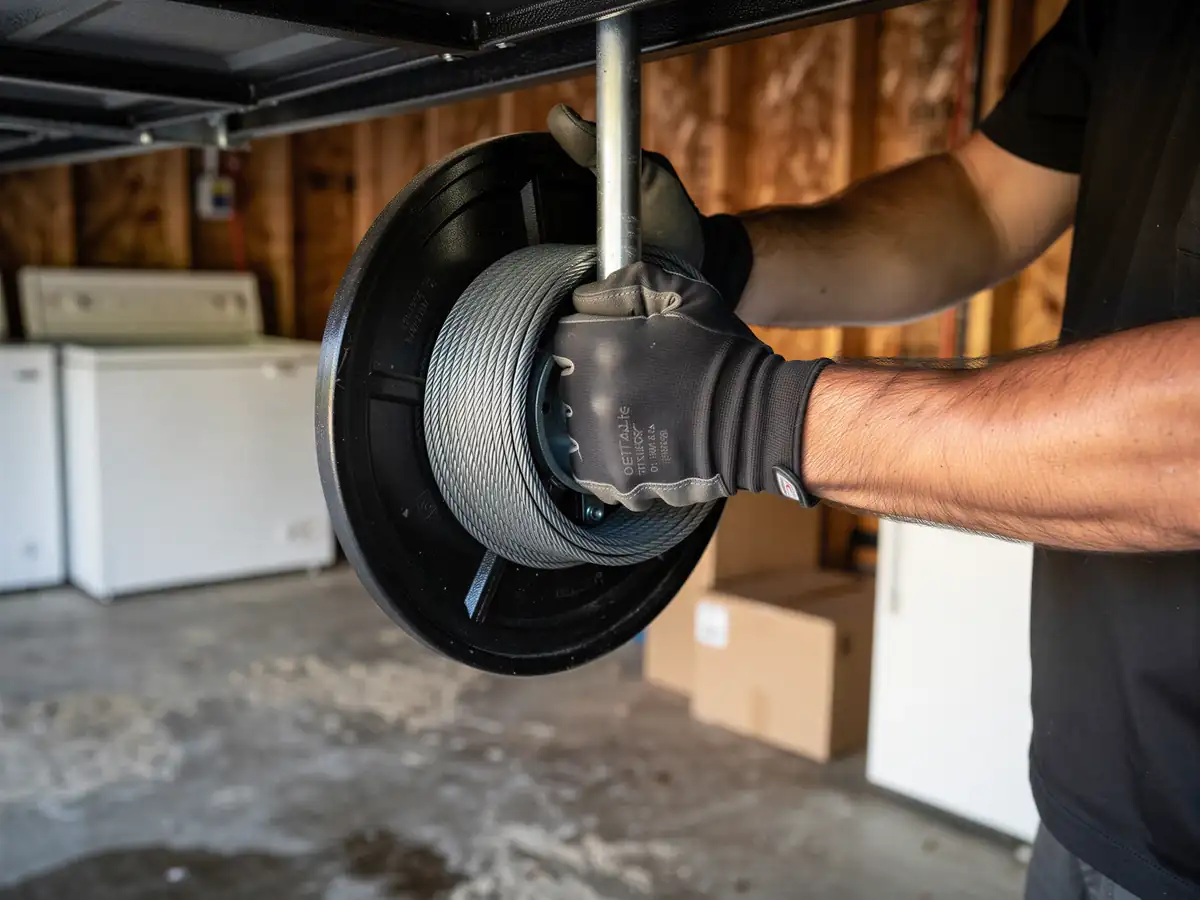
We carry what fits the housing stock we actually see out this way: torsion springs sized for steel sectional doors, standard rollers and cables, and the common safety sensor and logic board parts that fail on chain and belt-drive openers from the early 2000s. That lines up with Horace, where the median build year sits around 2001 - newer than the 1969 end of the range across the wider service area, but still old enough that original springs and openers are wearing out on a predictable schedule. What we don't keep on the truck is anything for the oldest one-piece or wood-panel doors, since that's not common in a neighborhood built mostly in one era around 2001. If your door turns out to need an obsolete part - an opener model that's been out of production a while - we'll have to order it, and that's the one honest gap in same-visit service we won't pretend doesn't exist.